The Name Noble-eightfold-path.php in Chinese/Japanese on a Personalized Wall Scroll.
Click the "Customize" button next to your name below to start your personalized noble-eightfold-path.php calligraphy artwork...
Switched to secondary search mode due to lack of results using primary.
These secondary results may not be very accurate. Try a different but similar meaning word or phrase for better results. Or:
Look up in my Japanese Kanji & Chinese Character Dictionary(My dictionary is a different system then the calligraphy search you just tried)
If you want a special phrase, word, title, name, or proverb, feel free to contact me, and I will translate your custom calligraphy idea for you.
1. 1. Right Understanding / Right Perspective / Right View / Perfect View
2. 2. Right Resolve / Right Thought / Right Intention / Perfect Resolve
3. 3. Right Speech / Right Talk / Perfect Speech
4. 4. Right Action / Perfect Conduct
6. 5. Right Living / Right Livelihood / Perfect Livelihood
7. 6. Right Effort / Right Endeavor / Perfect Effort
8. 7. Right Mindfulness / Right Memory / Perfect Mindfulness
9. 8. Right Concentration / Perfect Concentration
10. In the Abyss of Infinite Bitterness - Turn to the Shore
11. Ardent / Fierce
12. Armor
13. Bamboo
14. Beautiful Virtue
15. Beauty / Beautiful Princess
16. Bon Voyage
17. Thorns / Bramble / Briar Patch / Wild Rose
18. Confucius: Golden Rule / Ethic of Reciprocity
19. The Great Path has No Gate
20. Daoism / Taoism
21. Divine Spirit
22. Doctor
23. Dogen
25. Eternal Love
28. Destiny Determined by Heaven
29. Fate / Opportunity / Chance
30. Five Elements
32. Four Noble Truths: Suffering
33. Four Noble Truths: Desire and Attachment
34. Four Noble Truths: Elimination of Desire or Attachment
35. Four Noble Truths: Path Leading Away From Suffering
40. Haidong Gumdo
43. Honor
44. Hu
45. Intuitive Wisdom / Inner Light
47. Nobleman
48. Justice / Rectitude / Right Decision
49. Kensho Jobutsu - Enlightenment - Path to Buddha
50. Ken To Ashi Do
51. Meet the Buddha, Kill the Buddha
52. Kodokan
53. Kunshi no Ken
54. The Way of Learning Has No End
55. Le
56. Life Energy / Spiritual Energy
57. Just as Liquor Turns a Face Red, Gold Turns a Heart Black
58. Listen to Both Sides and be Enlightened, Listen to One Side and be in the Dark
59. Luong
61. Men Die for Wealth, Birds Die for Food
62. The Middle Way
64. Mountain Travels Poem by Dumu
65. Namu Dai Bosa
66. Never Forget
68. There is No Royal Road to Learning
69. Noble
71. All Tenets of the Noble Eightfold Path
72. Noble
73. Noble Warrior
75. Precious
76. Pride
77. Prideful Mind / Self-Respecting Heart
78. Reiki
80. Respect
81. Responsibility
82. Samudaya
83. Seido Juku
84. Self-Discipline Martial Arts
86. The Single Life
87. Respectful Heart
88. Success
89. Sword
90. Taekwondo
91. Taoist / Daoist
92. Turtle
93. Warrior’s Path
1. Right Understanding / Right Perspective / Right View / Perfect View
Samyag Dristhi / Samyag Drsti / Samma Ditthi
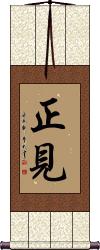
正見 is one of the Noble Eightfold Paths of Buddhism. Right View, along with the Right Thought, constitutes the path to Wisdom.
To get to the correct view of the world, you must first understand and follow Four Noble Truths.
Note: This term is exclusively used by devout Buddhists. It is not a common term, and remains an unknown concept to most Japanese and Chinese people.
See Also: Buddhism | Enlightenment | Noble Eightfold Path
2. Right Resolve / Right Thought / Right Intention / Perfect Resolve
Samyak Samkalpa / Samma Sankappa
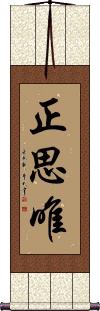
正思唯 is one of the Noble Eightfold Paths of Buddhism. Right Thought, along with the Right View, constitute the path to Wisdom.
In Buddhism, Right Thought, in simple terms, means to free yourself from having ill will towards anyone or anything. It also suggests that you remain harmless to other living creatures.
This can also be defined as “Resolve in favor of renunciation, goodwill, and non-harming of sentient beings.”
 There is an ancient/alternate version of the third character for this selection. You can see that alternation third character to the right. If you want your selection to use that older character, just click on the character to the right, instead of the button above.
Note: This term is exclusively used by devout Buddhists. It is not a common term, and remains an unknown concept to most Japanese and Chinese people.
See Also: Buddhism | Enlightenment | Noble Eightfold Path
3. Right Speech / Right Talk / Perfect Speech
Samyag Vaca / Samma Vaca / Samma Vacha
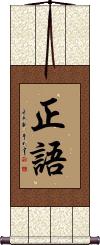
正語 is one of the Noble Eightfold Paths of Buddhism. Right Speech, along with Right Action and Right Living, constitute the path to Virtue.
Right Speech is abstaining from lying, abstaining from divisive speech, abstaining from abusive speech, abstaining from idle chatter, abstaining from slander, abstaining from gossip, or any form of harmful or wrong speech.
This term is exclusively used by devout Buddhists. It is not a common term, and remains an unknown concept to most Japanese and Chinese people.
See Also: Buddhism | Enlightenment | Noble Eightfold Path
4. Right Action / Perfect Conduct
Samyak Karmanta / Samma Kammanta
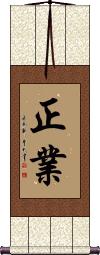
正業 is one of the Noble Eightfold Paths of Buddhism. Right Action, along with Right Speech and Right Living, constitute the path to Virtue.
The five precepts of Right Action are...
1. Refrain from destroying living beings (no murder or any form of taking a life).
2. Refrain from stealing.
3. Refrain from sexual misconduct (adultery, rape, etc.).
4. Refrain from false speech (lying or trickery).
5. Refrain from intoxicants that lead to heedlessness (no drugs or alcohol).
This concept can be summarized as “Avoidance of actions that conflict with moral discipline.”
Note: In Japanese, when read by a non-Buddhist, this will mean “the right job/vocation.”
This term is exclusively used by devout Buddhists. It is not a common term, and remains an unknown concept to most Japanese and Chinese people.
See Also: Buddhism | Enlightenment | Noble Eightfold Path
Five Codes of Tang Soo Do
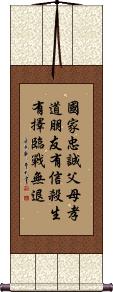
国家忠诚父母孝道朋友有信杀生有择临战无退 are the five codes of Tang Soo Do.
I suggest you have this arranged in five columns when you get to the options page for your custom calligraphy wall scroll.
Here are my translations of each of the five codes:
國家忠誠 Be loyal to your country.
父母孝道 Regarding parents, behave in a filial way.
朋友有信 Be faithful in friendship.
殺生有擇 When fighting for life and death, make noble choices.
臨戰無退 No retreat in battle.
Note: “Tang Soo Do” is a romanization of 唐手道. It's 당수도 in Korean Hangul. It can also be romanized as “Tangsudo” or “Dangsudo.”
5. Right Living / Right Livelihood / Perfect Livelihood
Samyag Ajiva / Samma Ajiva
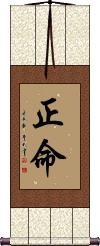
正命 (right living) is one of the Noble Eightfold Paths of Buddhism.
Right Living, along with Right Speech and Right Action, constitute the path to Virtue.
Right Living means that a Buddhist should only take a job or pursue a career in a field that does no harm. Buddhists should not work in the arms trade, as pimps or in the field of prostitution, as a butcher or in a shop that kills or sells meat, in a laboratory that does animal research, or in any other business that involves scheming or unethical behavior.
Another definition: Avoidance of professions that are harmful to sentient beings, such as slaughterer, hunter, dealer in weaponry or narcotics, etc.
This term is exclusively used by devout Buddhists. It is not a common term, and remains an unknown concept to most Japanese and Chinese people.
See Also: Buddhism | Enlightenment | Noble Eightfold Path
6. Right Effort / Right Endeavor / Perfect Effort
Samyag Vyayama / Samma Vayama
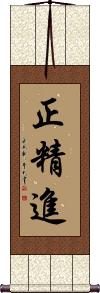
正精進 is one of the Noble Eightfold Paths of Buddhism. Right Effort, along with Right Mindfulness and Right Concentration, constitute the path to Concentration or Perfect Thought.
The proper effort is not the effort to make something particular happen. It is the effort to be aware and awake in each moment, the effort to overcome laziness and defilement, and the effort to make each activity of our daily meditation. This concept is about pursuing wholesome things that promote good karma.
Another definition: Cultivation of what is karmically wholesome and avoidance of what is karmically unwholesome.
This term is exclusively used by devout Buddhists. It is not a common term, and remains an unknown concept to most Japanese and Chinese people.
See Also: Buddhism | Enlightenment | Noble Eightfold Path
7. Right Mindfulness / Right Memory / Perfect Mindfulness
Samyak Smriti / Samyak Smrti / Samma Sati
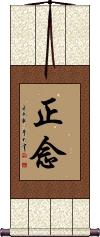
正念 is one of the Noble Eightfold Paths of Buddhism. Right Mindfulness, along with Right Effort and Right Concentration, constitute the path to Concentration or Perfect Thought.
Right Mindfulness is about remaining focused on one's body, feelings, mind, and mental qualities. It's also about being ardent, aware, and mindful, and supposes that you've already put aside worldly desire and aversion.
Monk Bhikkhu Bodhi described this as “The mind is deliberately kept at the level of bare attention, a detached observation of what is happening within us and around us in the present moment.” When practicing right mindfulness, the mind is trained to remain in the present, open, quiet, and alert, contemplating the present event.
Another definition: Ongoing mindfulness of body, feelings, thinking, and objects of thought.
This term is exclusively used by devout Buddhists. It is not a common term, and remains an unknown concept to most Japanese and Chinese people.
See Also: Buddhism | Enlightenment | Noble Eightfold Path
8. Right Concentration / Perfect Concentration
Samyak Samadhi / Samma Samadhi
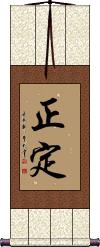
正定 is one of the Noble Eightfold Paths of Buddhism. Right Concentration, along with Right Effort and Right Mindfulness, constitute the path to Concentration or Perfect Thought.
Right Concentration has to do with leaving behind sensuality, unwholesome states, as well as pleasure and pain. 正定 is a complex idea, but once you have achieved the shedding of worldly sensation, you can truly concentrate and find a higher level of awareness.
Another definition: Concentration of mind that finds its high point in the four absorptions.
This term is exclusively used by devout Buddhists. It is not a common term, and remains an unknown concept to most Japanese and Chinese people.
See Also: Buddhism | Enlightenment | Noble Eightfold Path
In the Abyss of Infinite Bitterness - Turn to the Shore
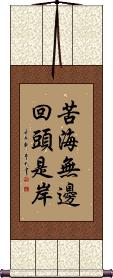
苦海無邊, 回頭是岸 can be translated almost directly as “The sea of bitterness has no bounds, turn your head to see the shore.”
Often this proverb refers to how Buddhist enlightenment can allow one to shed off the abyss of worldly suffering. But it can apply to other religions. If you find yourself trapped in the hardship of this worldly life, take a new turn, and seek a path to salvation.
Ardent / Fierce
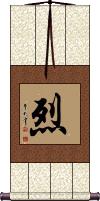
烈 is a Chinese word that means ardent; intense; fierce; stern; upright; to give one's life for a noble cause.
In another context, this character can refer to one's exploits or achievements.
In the Buddhist context, this is burning, fierce, virtuous, and/or heroic.
While technically, it had the same meaning in Japanese, it's usually a female given name, Retsu in Japanese these days.
Armor
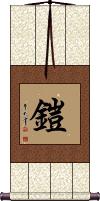
鎧 is a simple way to write armor/armour in Chinese, Japanese Kanji, and old Korean Hanja.
 This can also be Yoroi (a Japanese place name). It can also refer to mail as chain mail.
Bamboo
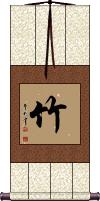
竹 is the character that means bamboo in Chinese, Japanese Kanji, and old Korean Hanja.
In Asian cultures, bamboo is often seen as a symbol of a noble gentleman (tall, straight, and honest).
There are also some multi-character bamboo words that regard individual bamboo plants, species of bamboo, bamboo as lumber, and edible bamboo shoots. However, this single character seems most appropriate for a wall scroll and covers the whole category of Asian bamboo.
Beautiful Virtue
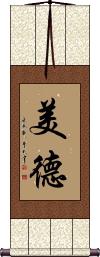
美德 written in Chinese or Korean Hanja can also mean “grace of character” or “noble virtue.”
 There is a slight variation in the modern Japanese Kanji form of the second character. If you want the modern Japanese version, please click on the special Kanji shown to the right instead of the button above. Note that the traditional Chinese form is still readable and understood by Japanese people (
it’s
the ancient Japanese form anyway).
There is a slight variation in the modern Japanese Kanji form of the second character. If you want the modern Japanese version, please click on the special Kanji shown to the right instead of the button above. Note that the traditional Chinese form is still readable and understood by Japanese people (
it’s
the ancient Japanese form anyway).
Beauty / Beautiful Princess
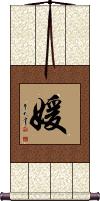
媛 means, a beauty; beautiful (woman); princess; a young lady of noble birth; girl; small & lovely.
媛 is used a bit more commonly in Chinese than in Japanese.
Note: This can be the female given name “Hime” in Japanese.
Bon Voyage
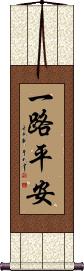
一路平安 is a wish for someone to have a pleasant journey.
It's probably the closest way to translate “bon voyage” into Chinese.
The first two characters mean one road or one path. The second two characters mean “safe and sound” or “without mishap.”
一路平安 means the same thing in Japanese but is not the most common selection for a wall scroll.
Thorns / Bramble / Briar Patch / Wild Rose
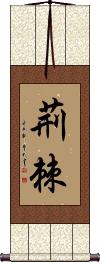
荊棘 is a Chinese and Japanese Kanji word that means: thistles and thorns; brambles; thorny undergrowth; wild rose; bramble; briar patch; briars; thicket; the bush.
Sometimes this term is used figuratively to refer to an obstacle or source of difficulty that makes your path difficult.
Confucius: Golden Rule / Ethic of Reciprocity
Do not do to others what you do not want done to yourself
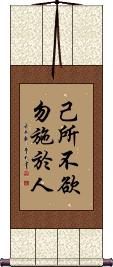
Some may think of this as a “Christian trait,” but actually, it transcends many religions.
This Chinese teaching dates back to about 2,500 years ago in China. Confucius had always taught the belief in being benevolent (ren), but this idea was hard to grasp for some of his students, as benevolence could be kind-heartedness or an essence of humanity itself.
When answering Zhong Gong's question as to what “ren” actually meant, Confucius said:
己所不欲勿施于人 or “When you go out, you should behave as if you were in the presence of a distinguished guest; when people do favors for you, act as if a great sacrifice was made for you. Whatever you wouldn't like done to you, do not do that thing to others. Don't complain at work or home.”
Hearing this, Zhong Gong said humbly, “Although I am not clever, I will do what you say.”
From this encounter, the Chinese version of the “Golden Rule” or “Ethic of Reciprocity” came to be.
The characters you see above express, “Do not do to others whatever you do not want to be done to yourself.”
See Also: Tea | Benevolence
The Great Path has No Gate
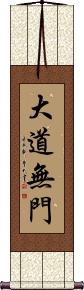
大道無門 is a Buddhist proverb that means “The Great Way has no entrance,” “The Great Way is gateless,” or “The Great Path lacks a gate.”
This can be translated in many other ways.
This concept was authored within a long sacred text by 無門慧開 (known as Wúmén Huìkāi in Chinese or Mumon Ekai in Japanese). He was a Chinese Chan Master (in Japanese, a Zen Master) who lived between 1183 and 1260 AD. His most famous work was a 48-koan collection titled “The Gateless Barrier” or “The Gateless Gate” (無門關 Wú Mén Guān in Chinese, or 無門関 Mu Mon Kan in Japanese). This calligraphy title is a notable line from this collection.
I like this reference to the source of this proverb: The Gateless Gate 無門關
Daoism / Taoism
Literally: The Way or Road
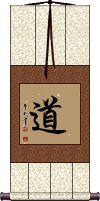
道 is the character “dao” which is sometimes written as “tao” but pronounced like “dow” in Mandarin.
道 is the base of what is known as “Taoism.” If you translate this literally, it can mean “the way” or “the path.”
Dao is believed to be that which flows through all things and keeps them in balance. It incorporates the ideas of yin and yang (e.g. there would be no love without hate, no light without dark, no male without female.)
The beginning of Taoism can be traced to a mystical man named
Lao Zi (604-531 BC), who followed, and added to the teachings of Confucius.
More about Taoism / Daoism here.
Note that this is pronounced “dou” and sometimes “michi” when written alone in Japanese but pronounced “do” in word compounds such as Karate-do and Bushido. It's also “do” in Korean.
Alternate translations and meanings: road, way, path; truth, principle province.
Important Japanese note: In Japanese, this will generally be read with the road, way, or path meaning. Taoism is not as popular or well-known in Japan so Daoist/Taoist philosophy is not the first thing a Japanese person will think of when they read this character.
See our Taoism Page
Divine Spirit
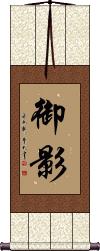
御影 is a Japanese word that means divine spirit or honorific language for “spirit of the dead.”
This can also refer to an image of a deity, buddha, royal, noble, etc.)
In the Buddhist context, it can mean (wooden) images of saints or deities.
御影 is also a Japanese name, Mikage.
Note: This is also a word in Chinese but not used very often in China (except perhaps by certain Buddhists).
Doctor
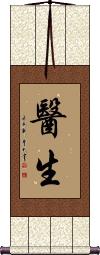
醫生 is the title used to refer to medical doctors or physicians in China.
Note: Sometimes, this same term is used in Korean, but not common.
The meaning is close to “healer [of] life” as the first character, 醫, can mean medicine, the healing art, healing, curing, medical, to cure, or to treat. The second character, 生, means birth or life.

 In Japan, they use a simplified version of the first character (医生 is also used as the Simplified Chinese version of Doctor). If you want this version, please click the characters to the right instead of the button above.
Dogen
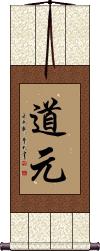
Usually, when people are looking for 道元 or “Dogen,” they are referring to the Japanese Zen monk by this name.
He lived from 1200-1253. This Dogen name or title literally means “The Way Origin” or “Beginning of the Path.” It is understood to mean “beginning of right doctrine or faith” in the context of his name and work to establish the Sōtō school of Zen in Japan.
To accomplish that task, this humble monk traveled from Japan and across China to find the more original or pure forms of Buddhism.
Enlightened Warrior
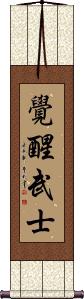
覺醒武士 is not a commonly used title in Chinese but is sometimes used in Martial arts and military contexts to refer to a warrior who seems always to be fully aware, enlightened, knowledgeable, noble, and just.
The first two characters are a word that means: to awaken; to come to realize; awakened to the truth; the truth dawns upon one; scales fall from the eyes; to become aware.
The last two characters mean warrior but can also refer to a samurai, soldier, or fighter.
Eternal Love
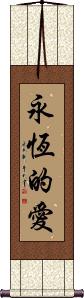
永恆的愛 is the best way to write “Eternal Love” in Chinese.
The first two characters mean eternal, eternally, everlasting, and/or perpetual.
The third character is a possessive article which sort of makes this selection mean “Love of the eternal kind.”
The last character is “love.”
This version is best if your audience is Chinese. We also have a Japanese version of eternal love.
See Also: Forever Love | Love
Eternal Love
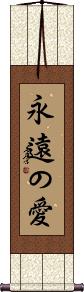
永遠の愛 is a great way to write “Eternal Love” in Japanese.
The first two characters mean eternal, eternity, perpetuity, forever, immortality, and permanence.
The third character is a possessive article which sort of makes this selection mean “Love, of the eternal kind.”
The last character is “love.”
Cultural note: Most of the time, it is taboo to use the word “love” in Japanese. For instance, a Japanese man will say, “I like you,” rather than, “I love you,” to his spouse/girlfriend. However, this entry for eternal love is acceptable because of the way it is composed.
This entry is only appropriate if your audience is Japanese. We also have a Chinese version of this eternal love.
See Also: Forever Love | Love
Extreme Faithfulness
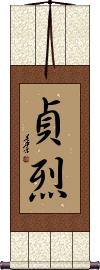
貞烈 is the Japanese Kanji for “Extreme Faithfulness.”
The first Kanji means “firm adherence to one's principles,” chastity (of a woman), chaste, etc.
The second Kanji means ardent, intense, fierce, stern, upright, to give one's life for a noble cause, exploits, achievements, virtuous, and in some contexts, heroic.
Now you get the idea why this refers to someone who is extremely faithful (to a cause, themselves, their religious beliefs, or their philosophy.
Family / Household
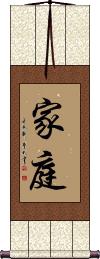
家庭/傢庭 is a common way to express family, household, or home in Chinese, Japanese Kanji, and old Korean Hanja.
However, for a wall scroll, we recommend the single-character form (which is just the first character of this two-character word). If you want that, just click here: Family Single-Character
The first character means “family” or “home.” The second means “courtyard” or “garden.” When combined, the meaning is a bit different, as it becomes “household” or “family.” The home and/or property traditionally has a strong relationship with family in Asia. Some Chinese, Korean, and Japanese families have lived in the same house for 7 or more generations!
Destiny Determined by Heaven
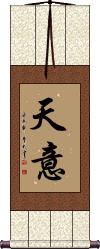
天意 is a way to express destiny in a slightly religious way.
天意 means “Heaven's Wish” or “Heaven's Desire,” with the idea of fate and destiny being derived as well. It suggests that your destiny comes from God / Heaven and that your path has already been chosen by a higher power.
My Japanese dictionary defines this word as “divine will” or “providence,” but it also holds the meaning of “the will of the emperor.” Therefore, I don't suggest this phrase if your audience is Japanese - it feels strange in Japanese anyway.
Fate / Opportunity / Chance
The Buddhist idea of Fate
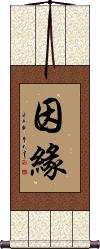
因緣 is the Buddhist concept of a chance meeting or an opportunity that presents itself by fate.
Sometimes this is used to describe a cosmic chain of events or cause and effect.
It also is used to describe predestined relationships between people - and sometimes married couples (although if you want one about marriage, try this: Fate / Destiny of Lovers.
因緣 can also be translated as origin, karma, destiny, affinity, connection, and relation. This all depends on context - seen alone on a wall scroll, this will be read with a “fate/chance” meaning by a Chinese person or a Korean person who can read Hanja.
The more complex definition of this word would be, “Direct causes and indirect conditions, which underlie the actions of all things.”
This concept is known as nidana in the original Sanskrit. Also sometimes presented as hetupratyaya (or “hetu and prataya”), which I believe is Pali.
Note: Japanese will tend to use this version of the second Kanji: 
If you order this from the Japanese master calligrapher, expect that you’ll get this version. However, this word often carries a negative connotation in Japanese (bad things happen), as it is used that way in a certain Japanese idiom. Therefore, this may not be the best choice if Japanese is your target language.
See Also: Buddhism | Opportunity
Five Elements
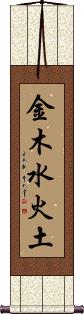
金木水火土 is a list of the Chinese characters for the five elements in a comfortable order (meaning that they “feel right” to a Chinese person who views this arrangement).
The order is metal, wood, water, fire, and earth.
Note that sometimes the metal element is translated as gold. And earth refers to soil versus the whole planet earth.
See Also: Wood | Fire | Water | Earth | Metallica | Five Elements
Flying Tigers AVG
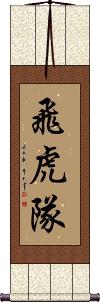
飛虎隊 is the full Chinese title of the “Flying Tigers Group.”
These were the American pilots that volunteered to go to China and fight the Japanese before the entry of the USA into World War Two. These fighter pilots were so esteemed in China that fallen American pilots could always find refuge in villages and safe passage and escape to areas of China that were not occupied by Japan at that time. Chinese villagers helped such fallen pilots with full knowledge that when the Japanese occupation forces found out, all the men, women, and children in the village would be massacred by Japanese troops (there are more than a few known cases of such massacres).
The Flying Tigers successfully kept supply lines to the Chinese resistance open and divided Japanese forces at a crucial time while America prepared to join WWII officially.
A wall scroll like this honors the men who risked or gave their lives as noble volunteers and is a reminder of the best moment in the history of Sino-American relations.
These three characters literally mean “flying tiger(s) group/team/squad.”
Note: Hanging these characters on your wall will not make you any friends with Japanese people who are aware of this history (most Japanese have no idea, as Japan’s involvement in WWII has all but been erased from school textbooks in Japan).
Four Noble Truths: Suffering
Dukkha
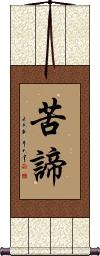
苦諦 relays that part of life in this universe is suffering.
All living things experience some form of suffering, according to Buddhist teaching.
This title is about accepting and understanding that the world is full of suffering.
This term is exclusively used by devout Buddhists. It is not a common term, and is remains an unknown concept to most Chinese, Japanese, and Korean people.
See Also: Buddhism | Enlightenment
Four Noble Truths: Desire and Attachment
Samudaya
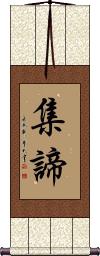
集諦 represents the idea that the core of suffering is often the concept of desire or attachment.
This can be carnal desire, monetary desire, or the attachment you have to something that you are unwilling to part with (such as a fancy car). 集諦 is a simplification of the second noble truth which is an exploration into the root causes of suffering - it's deeper than I can go in a few sentences.
This term is exclusively used by devout Buddhists. It is not a common term, and is remains an unknown concept to most Chinese, Japanese, and Korean people.
See Also: Buddhism | Enlightenment
Four Noble Truths: Elimination of Desire or Attachment
Nirodha
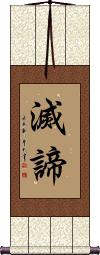
滅諦 suggests that once you eliminate desire or attachment to worldly things, only then can you achieve enlightenment.
Realize that things are impermanent. That fancy car, beautiful spouse, big house, and impressive career are things you can't take with you. These things are a flash in the pan compared to the infinite span of history, generations to come, time, and space.
This term is exclusively used by devout Buddhists. It is not a common term, and is remains an unknown concept to most Japanese, Korean, and Chinese people.
See Also: Buddhism | Enlightenment
Four Noble Truths: Path Leading Away From Suffering
Magga
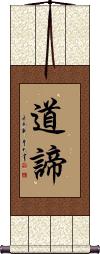
道諦 is the idea that once you have dealt with your desires and left all desire and attachment behind, only then are you on the path away from suffering (and on your way to enlightenment).
道諦 is also called the path to liberation in some English texts on Buddhism.
This term is exclusively used by devout Buddhists. It is not a common term, and remains an unknown concept to most Chinese, Japanese and Korean people.
See Also: Buddhism | Enlightenment
Four Noble Truths (Buddhism)
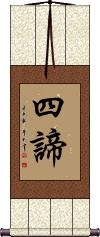
四諦 is the title of the Four Noble Truths as taught in virtually all sects of Buddhism.
These truths are suffering (dukkha), desire/attachment (samudaya), release from desire/attachment (nirodha), and the path leading away from suffering (magga).
The suggestion behind these truths is that all things in nature suffer. All things in nature have desire and attachment for things in the physical world. The enlightened can release themselves from the bonds of desire and attachment. And finally, once they release all desire and attachment, the enlightened will find a path that leads away from suffering.
This term is exclusively used by devout Buddhists. It is not a common term, and remains an unknown concept to most Japanese, Chinese, and Korean people.
See Also: Buddhism | Enlightenment
Four Noble Truths (Full List)
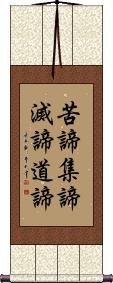
苦諦集諦滅諦道諦 is the list of tenets of the Four Noble Truths as taught in virtually all sects of Buddhism.
They are suffering (dukkha), desire/attachment (samudaya), release from desire/attachment (nirodha), and the path leading away from suffering (magga).
Fudo Myo-o / Wisdom King
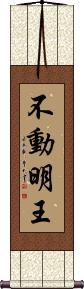
不動明王 is the fierce form of the Buddha Vairocana, and the most important of the Myō-ō or Ming Wang class of deities.
Romanized as Fudō Myō-ō, in Japanese Buddhism or Bùdòng Míngwáng / Pu-Tung Ming-Wang in Chinese Buddhism,
Originally Acala/Achala (अचल “The Immovable”), Acalanātha (अचलनाथ “Immovable Lord”) or Āryācalanātha (आर्याचलनाथ, “Noble Immovable Lord”).
In English, this deity is sometimes called “Wisdom King.”
Goju Martial Arts

剛柔武道 can mean “Goju Martial Arts,” or “Goju Martial Way.”
剛柔 = Hard and soft or balanced power and yielding.
武道 = Martial way, martial arts, or an ethical/lifelong path of training.
Guan Gong / Warrior Saint
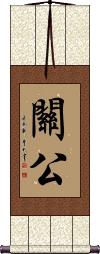
關公 is a Chinese title, Guan Gong, that means Lord Guan (The warrior saint of ancient China).
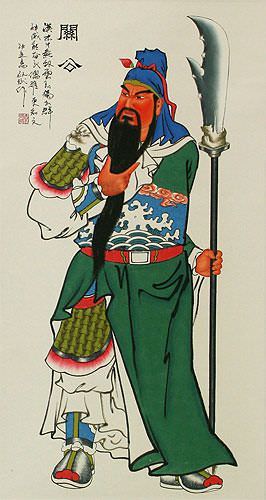 While his real name was Guan Yu / 關羽, he is commonly known by the title of Guan Gong (關公).
Some Chinese soldiers still pray to Guan Gong for protection. They would especially do this before going into battle. Statues of Guan Gong are seen throughout China.
Haidong Gumdo
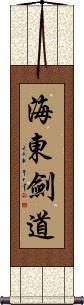
海東劍道 is the Korean martial arts style that means Eastern Sea Sword Way.
The character meanings break down this way:
海 = Sea
東 = East/Eastern
劍 = Sword
道 = Way/Path/Style/Method
This can sometimes be romanized as “Hae Dong Kum Do,” “Haidong Kendo,” “Hae Dong Geom Do,” “Haedong Geomdo,” or “Haedong Kumdo.”
If you want this written in modern Korean Hangul (해동검도) instead of Hanja (Chinese), click on the Hangul characters next to the Korean flag above, instead of the regular button.
Noble Eightfold Path
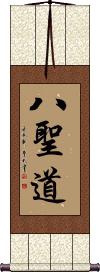
八聖道 is one of two titles for the Buddhist Noble Eightfold Path.
This version specifically has the “noble” idea in the middle character, which also means holy, sacred, wise and good, or upright.
The other title also romanizes as Hasshoudou or Hasshōdō in Japanese but is written 八正道.
High Mountain Long River
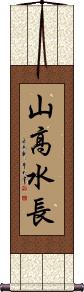
山高水長 is a Chinese idiom that means “high as the mountain and long as the river.”
It figuratively means “noble and far-reaching.”
Not sure this is valid or commonly used in Korean. It probably was borrowed into Korean a few hundred years ago but is obscure now.
Honor
(Modern Japanese version)
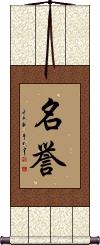
名譽 is a version of honor that is about having or earning the respect of others and about your reputation.
It is the status of being worthy of honor (not to be confused with doing honorable things or specific actions - see our other “honor” listing for that).
 Both modern Japanese and modern mainland Chinese use the same simplified version of the second character of honor. You can make a special request for the traditional second character as shown to the right (just click on that character to the right of you want to order that version). Before WWII, both Japan and China used the traditional form but modern Japanese and Chinese use this simplified form. Koreans still use the traditional form when they are not writing in their modern Hangul glyphs.
This is also a virtue of the Samurai Warrior
See our page with just Code of the Samurai / Bushido here

胡 is a common Chinese surname with ancient origins, often linked to noble lineages (like Duke Hu of Chen, a descendant of Emperor Shun), or the ancient State of Hu.
Other rare surnames such as 虎 (tiger), and 黃 or 許 romanize as Hu in some dialects.
Intuitive Wisdom / Inner Light
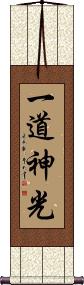
一道神光 is a Buddhist term that means “inner light,” or “intuitive wisdom.”
This actually reads, “[the] one path/way [of] spiritual light.” It implies that your spirit knows the way, and will light the path for you.
I walk my own path
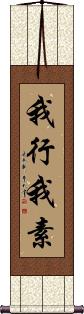
我行我素 is a way to say, “I walk my own path,” or “to continue in one's own way,” in Chinese.
This does not always have a completely positive connotation. It can mean ignoring advice or to persist in your path, no matter what others say or think.
Nobleman
Junzi / chun-tzu / gunja / kunshi
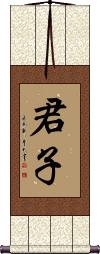
This means nobleman, person of noble character, man of virtue; wise man, or a true gentleman
君子 can be romanized as chün-tzu or jūnzǐ from Chinese and gunja from Korean. This has the same meaning in Japanese, but in another context, can be the female given name Kunshi.
Justice / Rectitude / Right Decision
Also means: honor loyalty morality righteousness
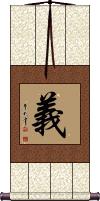
義 is about doing the right thing or making the right decision, not because it's easy but because it's ethically and morally correct.
No matter the outcome or result, one does not lose face if tempering proper justice.
義 can also be defined as righteousness, justice, morality, honor, or “right conduct.” In a more expanded definition, it can mean loyalty to friends, loyalty to the public good, or patriotism. This idea of loyalty and friendship comes from the fact that you will treat those you are loyal to with morality and justice.
義 is also one of the five tenets of Confucius's doctrine.
 There's also an alternate version of this character sometimes seen in Bushido or Korean Taekwondo tenets. It's just the addition of a radical on the left side of the character. If you want this version, click on the image to the right instead of the button above.
This is also a virtue of the Samurai Warrior
See our page with just Code of the Samurai / Bushido here
See Also: Judge | Unselfish: Perfectly Impartial | Ten
Kensho Jobutsu - Enlightenment - Path to Buddha
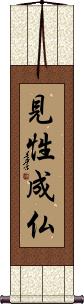
見性成仏 or Kenshō Jōbutsu is the initial enlightenment that leads to self-awareness, becoming Buddha, and the path to enter Nirvana.
Kenshō Jōbutsu is a complex concept in Japanese Buddhism. 見性成仏 is probably better translated as “Seeing one’s nature and becoming a Buddha.”
See Also: Buddhism | Enlightenment | Ten
Ken To Ashi Do

拳と足道 is the title “Ken To Ashi Do” in Japanese.
拳 = fist
と = and
足 = foot
道 = martial way / path
Literally: “Way of Fist and Foot”
Meet the Buddha, Kill the Buddha
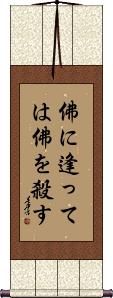
This controversial Buddhist koan means “On encountering Buddha, you should kill him.”
This is the short concise Japanese version of an original statement by ninth-century Chinese Buddhist monk Linji Yixuan, “If You Meet The Buddha On The Road, Kill Him.”
This takes some explaining... The concept here is that if you think you have seen, experienced, or achieved true enlightenment, the chances that you really have are so slim that you should kill or dismiss that idea.
Another suggestion is that one's path to becoming a Buddha is one's own, and one should not get caught up in religious fervor, and avoid “showing off” that they are a Buddhist.
Helpful references for this concept:
Lion's Roar addresses “If You Meet The Buddha On The Road, Kill Him”
Kill the Buddha
Note: Because this selection contains some special Japanese Hiragana characters, it should be written by a Japanese calligrapher.
Kodokan
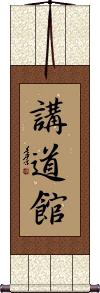
講道館 is a title that refers to a certain kind or school of Judo martial arts.
Here's how the characters break down in meaning for this one:
1. Mutual Assistance or Association. Can also refer to a lecture, speech, or explaining something (as in teaching).
2. Way / Path (the Tao/Dao as in Taoism/Daoism)
3. Schoolroom / Building / Establishment / Mansion / Small Castle / Hall (of learning)
Altogether, you get something like, “The Path of Mutual Learning Hall.”
More about Kodokan from the Institute of Kodokan.
Kodokan
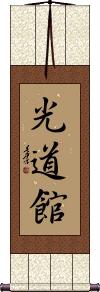
光道館 is Kodokan.
This is the title of an Aikido dojo, studio, or hall.
Be careful in selecting the correct Kodokan, as there are a few different titles that romanize as Kodokan.
Here's how the characters break down in meaning for this one:
1. Light / Bright
2. Way / Path (the Tao/Dao as in Taoism/Daoism)
3. Schoolroom / Building / Establishment / Mansion / Hall (of learning)
Altogether, you get something like “The Path of Light Establishment.”
Kunshi no Ken

君子の拳 is “Kunshi no Ken” in Japanese.
The meaning is literally “Noble Fist” or “Fist of Nobility” but it's often used to describe the effort to concentrate on cultivating oneself to become a well-rounded, respectful individual.
You will see 君子の拳 sometimes written in the full Kanji form of 君子之拳. Both versions mean the same thing. If you want this more traditional Kanji version, just let me know when you place your order.
The Way of Learning Has No End
Kyudo Mugen

究道無限 or Kyudo Mugen can mean “The way of learning has no end,” “The path of study never ends,” or “Infinite Pursuit.”
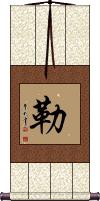
勒 is a Chinese surname that romanizes as Le or Lè and comes from ancient place names (Shu-Le) or ethnic groups like the Huns.
Use caution: There are other surnames in Asia that romanize as Le; here are a few:
Vietnamese (Lê): Most common usage, from Chinese 黎 (Lí), signifying a major royal family like the Lê Dynasty (1428–1788).
Chinese (樂 - Lè): Means "happiness" or "joy," from historical figures or noble lineages.
Korean: Can be a variant of Li or Lee, representing different Chinese characters (e.g., 黎, 呂).
Life Energy / Spiritual Energy
Chi Energy: Essence of Life / Energy Flow
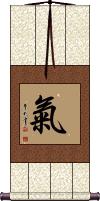
This 氣 energy flow is a fundamental concept of traditional Asian culture.
氣 is romanized as “Qi” or “Chi” in Chinese, “Gi” in Korean, and “Ki” in Japanese.
Chi is believed to be part of everything that exists, as in “life force” or “spiritual energy.” It is most often translated as “energy flow” or literally as “air” or “breath.” Some people will simply translate this as “spirit,” but you must consider the type of spirit we're talking about. I think this is weighted more toward energy than spirit.
The character itself is a representation of steam (or breath) rising from rice. To clarify, the character for rice looks like this: 
Steam was apparently seen as visual evidence of the release of “life energy” when this concept was first developed. The Qi / Chi / Ki character is still used in compound words to mean steam or vapor.
The etymology of this character is a bit complicated. It's suggested that the first form of this character from bronze script (about 2500 years ago) looked like these samples: 

However, it was easy to confuse this with the character for the number three. So the rice radical was added by 221 B.C. (the exact time of this change is debated). This first version with the rice radical looks like this: 
The idea of Qi / Chi / Ki is really a philosophical concept. It's often used to refer to the “flow” of metaphysical energy that sustains living beings. Yet there is much debate that has continued for thousands of years as to whether Qi / Chi / Ki is pure energy or consists partially or fully of matter.
You can also see the character for Qi / Chi / Ki in common compound words such as Tai Chi / Tai Qi, Aikido, Reiki, and Qi Gong / Chi Kung.
In the modern Japanese Kanji, the rice radical has been changed into two strokes that form an X.
 The original and traditional Chinese form is still understood in Japanese, but we can also offer that modern Kanji form in our custom calligraphy. If you want this Japanese Kanji, please click on the character to the right instead of the “Select and Customize” button above.
More language notes: This is pronounced like “chee” in Mandarin Chinese, and like “key” in Japanese.
This is also the same way to write this in Korean Hanja where it is Romanized as “gi” and pronounced like “gee” but with a real G-sound, not a J-sound.
Though Vietnamese no longer use Chinese characters in their daily language, this character is still widely known in Vietnam.
See Also: Supernatural Energy | Life Force | Vitality | Eternal Wheel of Life | Birth Old-Age Sickness Death | Wolf Spirit / Soul of a Wolf
Just as Liquor Turns a Face Red, Gold Turns a Heart Black
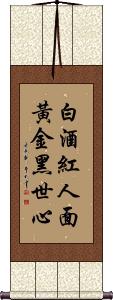
白酒紅人面黃金黑世心 literally says: [Just as] white liquor makes people's faces turn red, [So] yellow gold makes people's hearts turn black.
This is a warning about the nature of greed. The suggestion is that one who lusts for gold and riches will eventually have a black heart (or become a heartless greedy bastard). As a wall scroll, this is a reminder and warning to keep yourself from following the greedy path.
Listen to Both Sides and be Enlightened, Listen to One Side and be in the Dark
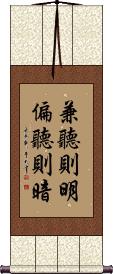
兼聽則明偏聽則暗 is an ancient Chinese proverb about getting all the information from all sides so that you truly understand a situation.
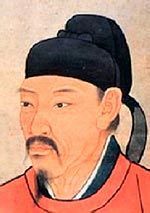
Wei Zheng
A man named Wei Zheng lived between 580-643 AD. He was a noble and wise historian and minister in the court of the early Tang Dynasty. The emperor once asked him, “What should an emperor do to understand the real-world situation, and what makes an emperor out-of-touch with reality?”
Wei Zheng replied, “Listen to both sides and you will be enlightened; listen to only one side and you will be left in the dark.”
Then Wei Zheng went on to cite examples of leaders in history that were victorious after heeding both sides of the story, and other leaders that met their doom because they believed one-sided stories which often came from flattering lips.
Please note that there is an unwritten rule when the same character appears twice in the same phrase, the calligrapher will alter the appearance so that no two characters are exactly alike in the same piece. This calligraphy has two repeating characters that will be written differently than they appear here.
Luong

梁 is the original Chinese character for the Vietnamese surname Luong or Lương.
The meaning of 梁 is good, noble, prosperous, salary, or virtuous. 梁 is also a Chinese surname that romanizes as Liang.
Martial Arts / Budo
Way of the Warrior
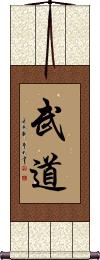
武道 is the very common Japanese way to say “Martial Arts.”
武道 is used mostly in Japanese dojos but is also understood in Chinese and Korean.
Some will use this title to mean chivalry (the conduct of a knight) or military art. The way this word is understood would depend on the context in which it is used.
The first character means “force,” “warlike,” or “essence of a warrior.”
The second character means “method,” “path,” and “the way.” It is the same character used to describe/mean the philosophy of Taoism / Daoism.
Some will also translate this as “The Way of the Warrior”; especially in the context of Korean martial arts.
Men Die for Wealth, Birds Die for Food
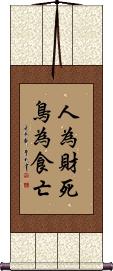
人為財死鳥為食亡 is a Chinese proverb that literally states that human beings will die for riches, just as birds will for food.
Figuratively it means that man will do anything in his means to become rich. Personally, I think dying for food is a more noble cause.
Often translated as “Men die in pursuit of wealth, birds die in pursuit of food. The 人 in this proverb just means human, so “men” is a placeholder for human with that translation - an English language problem that we have no easy gender-neutral nouns.
This proverb is meant to serve as a warning about the follies of greed.
The Middle Way
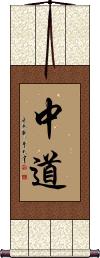
In the most basic translation, 中道 means road through the middle or middle road.
The expanded meaning can be moderation or the golden mean.
But if you are looking for this title, you are probably seeking the Buddhist definition, which is more complex.
中道 is the middle way or middle path of Buddhism. This has various interpretations. In general, it denotes the mean between two extremes and has special reference to the mean between realism and nihilism, or eternal substantial existence and annihilation.
The Buddha teaches that one should not take things to extremes. Don't be extremely evil and engage in debauchery and murder. But do not spend every waking out trying to be a perfect saint. Instead, take the middle path, try to help others, show loving kindness wherever you can, and try not to do harm. If you inadvertently harm another being, make amends if you can, and move on. Realize you are not perfect, but in time, a path of moderation lead toward proper living and enlightenment.
Moral Principles Of Life
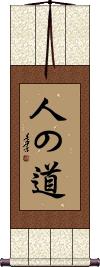
人の道 is the Japanese way to express the “moral way of life,” “correct path,” or “moral principles.”
Mountain Travels Poem by Dumu

This poem was written almost 1200 years ago during the Tang dynasty.
It depicts traveling up a place known as Cold Mountain, where some hearty people have built their homes. The traveler is overwhelmed by the beauty of the turning leaves of the maple forest that surrounds him just as night overtakes the day, and darkness prevails. His heart implores him to stop, and take in all of the beauty around him.
First, before you get to the full translation, I must tell you that Chinese poetry is a lot different than what we have in the west. Chinese words simply don't rhyme in the same way that English or other western languages do. Chinese poetry depends on rhythm and a certain beat of repeated numbers of characters.
I have done my best to translate this poem keeping a certain feel of the original poet. But some of the original beauty of the poem in its original Chinese will be lost in translation.
Far away on Cold Mountain, a stone path leads upwards.
Among white clouds, people's homes reside.
Stopping my carriage I must, as to admire the maple forest at nights fall.
In awe of autumn leaves showing more red than even flowers of early spring.
Hopefully, this poem will remind you to stop, and “take it all in” as you travel through life.
The poet's name is “Du Mu” in Chinese that is: 
 .
.
The title of the poem, “Mountain Travels” is: 

You can have the title, poet's name, and even “Tang Dynasty” written as an inscription on your custom wall scroll if you like.
More about the poet:
Dumu lived from 803-852 AD and was a leading Chinese poet during the later part of the Tang dynasty.
He was born in Chang'an, a city in central China and the former capital of the ancient Chinese empire in 221-206 BC. In present-day China, his birthplace is currently known as Xi'an, the home of the Terracotta Soldiers.
He was awarded his Jinshi degree (an exam administered by the emperor's court which leads to becoming an official of the court) at the age of 25 and went on to hold many official positions over the years. However, he never achieved a high rank, apparently because of some disputes between various factions, and his family's criticism of the government. His last post in the court was his appointment to the office of Secretariat Drafter.
During his life, he wrote scores of narrative poems, as well as a commentary on the Art of War and many letters of advice to high officials.
His poems were often very realistic and often depicted everyday life. He wrote poems about everything, from drinking beer in a tavern to weepy poems about lost love.
The thing that strikes you most is the fact even after 1200 years, not much has changed about the beauty of nature, toils, and troubles of love and beer drinking.
Namu Dai Bosa
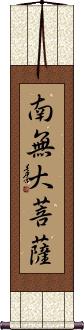
南無大菩薩 means to submit to or pay homage to the great Bodhisattva.
The last three characters, 大菩薩, can mean bodhisattva-mahāsattva, refer to one who has reached enlightenment but vows to save all beings before becoming a buddha or a high and noble monk.
Never Forget
Never forget your vow or path
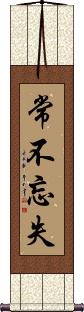
This title is used almost exclusively in a Buddhist context (not all Chinese or Japanese people will recognize it).
常不忘失 means “Never forget your vow/path” in Chinese characters and Japanese Kanji.
Better Late Than Never
It's Never Too Late Too Mend
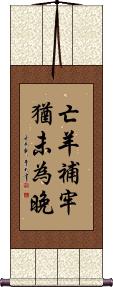
Long ago in what is now China, there were many kingdoms throughout the land. This time period is known as “The Warring States Period” by historians because these kingdoms often did not get along with each other.
Sometime around 279 B.C. the Kingdom of Chu was a large but not particularly powerful kingdom. Part of the reason it lacked power was the fact that the King was surrounded by “yes men” who told him only what he wanted to hear. Many of the King's court officials were corrupt and incompetent which did not help the situation.
The King was not blameless himself, as he started spending much of his time being entertained by his many concubines.
One of the King's ministers, Zhuang Xin, saw problems on the horizon for the Kingdom, and warned the King, “Your Majesty, you are surrounded by people who tell you what you want to hear. They tell you things to make you happy and cause you to ignore important state affairs. If this is allowed to continue, the Kingdom of Chu will surely perish, and fall into ruins.”
This enraged the King who scolded Zhuang Xin for insulting the country and accused him of trying to create resentment among the people. Zhuang Xin explained, “I dare not curse the Kingdom of Chu but I feel that we face great danger in the future because of the current situation.” The King was simply not impressed with Zhuang Xin's words.
Seeing the King's displeasure with him and the King's fondness for his court of corrupt officials, Zhuang Xin asked permission from the King that he may take leave of the Kingdom of Chu, and travel to the State of Zhao to live. The King agreed, and Zhuang Xin left the Kingdom of Chu, perhaps forever.
Five months later, troops from the neighboring Kingdom of Qin invaded Chu, taking a huge tract of land. The King of Chu went into exile, and it appeared that soon, the Kingdom of Chu would no longer exist.
The King of Chu remembered the words of Zhuang Xin and sent some of his men to find him. Immediately, Zhuang Xin returned to meet the King. The first question asked by the King was “What can I do now?”
Zhuang Xin told the King this story:
A shepherd woke one morning to find a sheep missing. Looking at the pen saw a hole in the fence where a wolf had come through to steal one of his sheep. His friends told him that he had best fix the hole at once. But the Shepherd thought since the sheep is already gone, there is no use fixing the hole.
The next morning, another sheep was missing. And the Shepherd realized that he must mend the fence at once. Zhuang Xin then went on to make suggestions about what could be done to reclaim the land lost to the Kingdom of Qin, and reclaim the former glory and integrity of the Kingdom of Chu.
The Chinese idiom shown above came from this reply from Zhuang Xin to the King of Chu almost 2,300 years ago.
It translates roughly into English as...
“Even if you have lost some sheep, it's never too late to mend the fence.”
This proverb, 亡羊补牢犹未为晚, is often used in modern China when suggesting in a hopeful way that someone change their ways, or fix something in their life. It might be used to suggest fixing a marriage, quitting smoking, or getting back on track after taking an unfortunate path in life among other things one might fix in their life.
I suppose in the same way that we might say, “Today is the first day of the rest of your life” in our western cultures to suggest that you can always start anew.
Note: This does have Korean pronunciation but is not a well-known proverb in Korean (only Koreans familiar with ancient Chinese history would know it). Best if your audience is Chinese.
There is No Royal Road to Learning
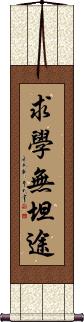
求學無坦途 is a Chinese proverb that translates as “There is no royal road to learning.”
This suggests that the path of learning can never be smooth, there will be difficulties and troubles along the way.
See Also: Learning is Eternal
Noble
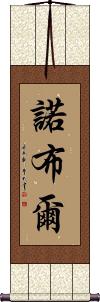
諾布爾 is the name Noble in Chinese (Mandarin).
The Noble Eightfold Path
Ashtangika Marga / Astangika-Marga / Atthangika Magga
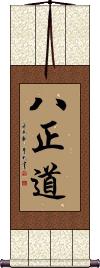
八正道 is a complex set of steps that Buddhists much take to cleanse karma, achieve enlightenment, eventually cease the cycle of rebirth and live in a state of Nirvana.
Note: This term is exclusively used by devout Buddhists. It is not a common term and remains an unknown concept to most Japanese and Chinese people. Sometimes written as 八聖道.
See Also: Buddhism | Enlightenment
All Tenets of the Noble Eightfold Path
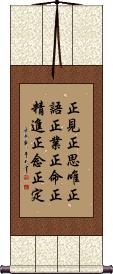
These are the eight tenets of the Buddhist Noble Eightfold Path written altogether.
Here's this list of tenets in English:
1. Right View / Right Understanding / Right Perspective / Perfect View
2. Right Resolve / Right Thought / Right Intention / Perfect Resolve
3. Right Speech / Right Talk / Perfect Speech
4. Right Action / Perfect Conduct
5. Right Living / Right Livelihood / Perfect Livelihood
6. Right Effort / Right Endeavor / Perfect Effort
7. Right Mindfulness / Right Memory / Perfect Mindfulness
8. Right Concentration / Perfect Concentration
Noble
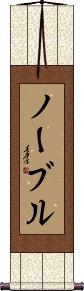
ノーブル is the name Noble in Japanese Katakana.
Note: Because this title is entirely Japanese Katakana, it should be written by a Japanese calligrapher.
Noble Warrior
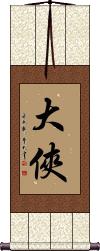
大俠 means knight, swordsman, noble warrior, or chivalrous hero in Chinese.
Mantis / Praying Mantis
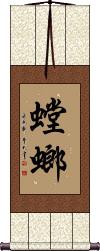
螳螂 is mantis or “praying mantis,” as it's often titled in English.
Technically speaking, this especially applies to the narrow-winged mantis (Tenodera angustipennis)
It is best to use this very common two-character Asian title for the mantis, as the second character alone can mean mantis or dragonfly (totally ambiguous).
This title is antiquated in Japanese, as they tend to write カマキリ (kama kiri) in Katakana to mean praying mantis.
 Note: There is an alternate form of this title which uses the character shown to the right instead of the first character shown above. This is uncommon in both Japan and China (if you really want it anyway, please let us know).
Precious
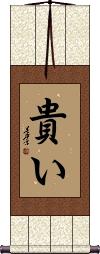
This Japanese word means precious, valuable, priceless, noble, exalted, or sacred.
Pride
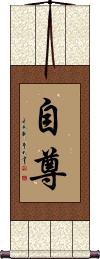
自尊 can mean “pride,” “self-respect,” or “self-esteem.” The first character means “oneself,” and the second can mean revered, valuable, precious, noble, exalted, honorable, or simply “pride.”
I have also seen this two-character word translated as “amour propre,” self-regard, and self-pride.
自尊 is universal between Chinese, Japanese Kanji, and Korean Hanja written languages. It may also be understood in old Vietnamese (they once used Chinese characters as well).
Prideful Mind / Self-Respecting Heart
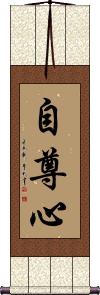
自尊心 is a Japanese and Korean word that means “pride” or “self-respect.”
The first Kanji/Hanja means oneself. The second can mean revered, valuable, precious, noble, or exalted. And the last Kanji/Hanja means heart, mind, and/or spirit.
While these characters make sense and hold the same general meaning in Chinese, this is not a normal Chinese word. This selection should only be used if your audience is Japanese or Korean.
See Also: Respect | Pride | Self-Reliance | Self-Control | Self-Discipline Martial Arts
Reiki
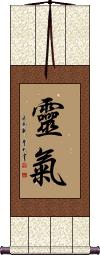
靈氣 is the title of a healing practice now found globally but with origins in Japan.
Special note: Outside of the context of the healing practice of Reiki, this means “aura” or “spiritual essence that surrounds all living things.” A Japanese person unfamiliar with the practice will take the “aura” meaning.
Reiki is a technique for stress reduction and relaxation that also heals. It can be compared to massage but is based on the idea that an unseen “life force energy” flows through us and is what causes us to be alive. If your life force energy is low, you'll be more likely to get sick or feel stressed. If your life force energy is abundant and flowing well, you become more capable of being happy and healthy.
There is many information available if you want to Google this term - my job is to offer the calligraphy while you can decide if it is right for you.

Note: We are showing the ancient (traditional) form of the Reiki Kanji. I have seen Reiki written with the slightly simplified version and this more classic form. If you want the form of Reiki with the two strokes in the shape of an X on the second character and the modern first character, simply click on the Kanji characters to the right.
Note: 靈氣 is also a Chinese word, but in Chinese, these characters create a word that refers to a smart person or someone with high aspirations. It is not read as a healing method in Chinese.
In Korean Hanja, this can be read as a “mysterious atmosphere” by a Korean who is not familiar with the practice of Reiki (still has a cool meaning in Korean).
Respect / Honor / Esteem
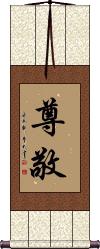
尊敬 is how to express the ideas of respect, honor, reverence, esteem, nobility, and sometimes the state of being noble, all in one word. Most of the time, this is used as “giving respect,” but depending on the context, it can suggest that you should try to be “worthy of respect.”
Although pronounced differently, the Chinese characters, Japanese Kanji, and Korean Hanja are the same across these languages. This is an indication that this word is very old and crosses many barriers and cultures in the Orient (East Asia).
Respect
Politeness, Gratitude and Propriety
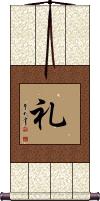
礼 is one of the five tenets of Confucius.
Beyond respect, 礼 can also be translated as propriety, good manners, politeness, rite, worship, or an expression of gratitude.
We show respect by speaking and acting with courtesy. We treat others with dignity and honor the rules of our family, school, and nation. Respect yourself, and others will respect you.
 Please note that Japanese use this simplified 礼 version of the original 禮 character for respect. 礼 also happens to be the same simplification used in mainland China. While 禮 is the traditional and original version, 礼 has been used as a shorthand version for many centuries. Click on the big 禮 character to the right if you want the Traditional Chinese and older Japanese versions.
This is also a virtue of the Samurai Warrior
See our page with just Code of the Samurai / Bushido here
See Also: Confucius
Responsibility
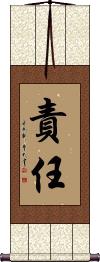
責任 is the Chinese, Japanese, and Korean word for “responsibility.”
責任 can also refer to someone who is willing to take the blame when things go wrong (instead of making excuses or passing the blame to someone else). While this is a noble idea, I think it is getting rare these days in both eastern and western cultures.
Also associated with the idea of “duty.”
Samudaya
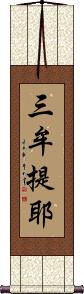
This is the Chinese way to write Samudaya, the second of the Four Noble Truths.
In the Buddhist context, this is the aggregation of suffering.
Seido Juku

正道塾 is the martial arts school Seido Juku in Japanese Kanji.
正道 means the correct path or the right way (often used in the context of Buddhism).
塾 means private school or tutoring center. Just read it as “school” in the context of martial arts.
Self-Discipline Martial Arts

克己武道 can mean “Self-Discipline Martial Way,” or “Self-Discipline Martial Arts.”
克己 = Self-mastery, or overcome the self.
武道 = Martial way, suggesting an ethical/lifelong path of training.
Martial way; ethical/lifelong path of training.
Shiken Haramitsu Daikomyo
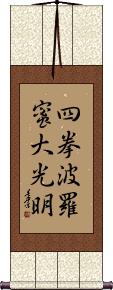
四拳波羅蜜大光明 is “shiken haramitsu daikōmyō,” a famous Japanese Buddhist mantra.
四拳 = shi-ken = four fists (many translate this as “four hearts”).
波羅蜜 = ha-ra-mitsu = A loanword representing pāramitā, or entrance into Nirvana. Awkwardly, it also means jackfruit.
大光明 = dai-kou-myo = big/great light bright (great bright light).
Shiken represents four hearts:
1. The Merciful Heart - Love and caring for all living things.
2. The Sincere Heart - Pursues righteousness, or the right path - sincerely trying to do what is right.
3. The Attuned Heart - Knows that nature and fate have their ways, and thus stay in tune with the universe.
4. The Dedicated Heart - Steadfast on the chosen path to the end.
The Single Life
Dokushin-Kizoku
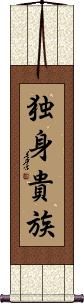
独身贵族 is a Japanese proverb that means “Single Aristocrat” or “Single Noble.”
The understood meaning is that single people can live freely without a spouse or kids to support them. To put it in an old cliché, they are footloose and fancy-free.
If you are a bachelor or bachelorette with few responsibilities and just a thirst for freedom and a worry-free life, this could be your title.
Respectful Heart
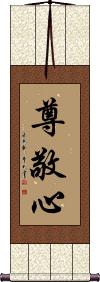
尊敬心 means respectful heart in Japanese, Chinese and Korean.
The root is 尊敬 which means respect, honor, reverence, esteem, and/or nobility. Therefore, you can also define this as an honorable heart, reverent heart, noble heart, etc.
In ancient times, it was thought your brain was the heart in your chest. Therefore, 心 or heart can also mean “mind.” Hence, 尊敬心 can also be translated as respectful mind, honorable mind, etc.
You'll see 尊敬心 romanized as Sonkeishin or Sonkeshin from Japanese.
Success
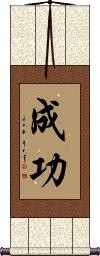
This Chinese and Japanese word for “success” is often used to refer to “career success” but is also used for other successes in life.
It matches the western dictionary definition of “The achievement of something desired, planned, or attempted.” And It's also used in this old Chinese proverb:  which means Failure is the Mother of Success.
Sometimes this word is translated as prosperity, but success, succeed, or successfully are more correct definitions.
See Also: Prosperity
Sword
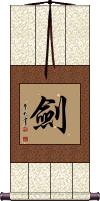
劍 is pronounced “jian” in Chinese. When you say it, imagine that you are making the sound of a sword as it clashes with a metal shield. This might get you closer to the correct pronunciation in Chinese.
I actually wonder if this word came from the metallic ringing sounds of a sword in battle - but such knowledge is lost in history.
The sword is a symbol of a warrior. The one thing that a soldier in ancient China lived and died by. A warrior with his skills and sword proves himself of great value. A warrior who losses his sword instantly becomes worthless.
劍 is an excellent scroll for someone in the military (especially officers of all services - as well as enlisted NCO Marines since they still carry swords even if mainly for ceremonial purposes). Or perhaps someone who practices variations of kung fu or tai chi that involve weapons.
Please note that while this character is understood with the sword meaning in Japanese, you might be looking for the word “katana” which also means sword in Japanese but means “knife” in Chinese.
There are other ways to write sword, and here are a few...


If you are particular about the version you receive, please let me know when you place your order (Note: Special styles are only available from one of our master calligraphers).
See Also: Katana
Taekwondo
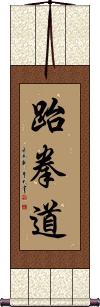
跆拳道 is one of the most widespread types of martial arts in the world as well as being an Olympic sport. Taekwondo was born in Korea with influences of Chinese and Japanese styles combined with traditional Korean combat skills. Some will define it as the “Korean art of empty-handed self-defense.”
In the simplest translation, the first character means “kick,” the second character can mean either “fist” or “punching,” and the third means “way” or “method.” Altogether, you could say this is the “Kick Punch Method.” When heard or read in various Asian languages, all will automatically think of this famous Korean martial art. It is written the same in Japanese Kanji, Chinese, and Korean Hanja characters - so the appearance of the characters is universal. However, you should note that there is another way to write this in modern Korean Hangul characters, which looks like the image to the right. 
We suggest the original Korean Hanja (Chinese characters) for a wall scroll, but if you need the Hangul version, you must use master calligrapher Cao Bin: Order Taekwondo in Korean Hangul
Note: Taekwondo is sometimes Romanized as Tae-Kwondo, Tae Kwon Do, Taekwon-do, Taegwondo, Tae Gweon Do, Tai Kwon Do, Taikwondo, Taekwando, Tae Kwan Do and in Chinese Taiquandao, Tai Quan Dao, Taichuando, or Tai Chuan Tao.
Taoist / Daoist
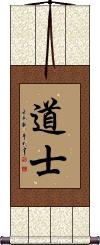
道士 is a Japanese Kanji, Korean Hanja, and Chinese title that means Daoist or Taoist.
This can refer to a Taoist priest or a person of high morals. This can also be applied to Buddhists and Śākyamuni (especially in Japanese). It suggests a person (or soldier) who follows the way or the right path. Thus a person who follows a path of virtue.
Turtle
...also means tortoise
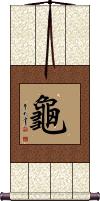
龜 is the generic term for turtle in Chinese and old Korean Hanja. It's like saying “turtle” (or “tortoise”) without being specific about the species of turtle.
Please note that there are many special characters in Chinese and a few in Japanese that denote specific species of turtle and do not include this character. We can't possibly cover all of these species, but if you want a certain one, such as “loggerhead” or a “leatherback,” just contact me, and I'll do my best to research your special species.
If you noticed, I said species names that do not include this character. This is because, in much the same way we can do it in English by just saying, “loggerhead” instead of “loggerhead turtle,” the same can be done in Chinese and Japanese.
 This may be hard to believe, but the image shown to the right is an alternate version of this character, which is currently used in Japan. This was originally an alternate form in ancient China for turtle - but it's so obscure now that most Chinese people would just think this is the Japanese version of turtle (I did many research on this). The version shown in the upper left is traditional Chinese (also used in Korea 100+ years ago). It will generally not be recognized by the new generation of Japanese people. If your audience is Japanese, please click on the Kanji image shown to the right to have the calligrapher write that version (instead of clicking the button above).
Note: In Japanese, this Kanji is also a representation of long life. This is related to the fact that a tortoise can live for hundreds of years.
Warrior’s Path
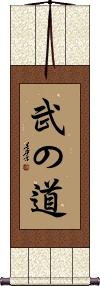
This maeans path of the warrior or warrior’s path in Japanese.
The Way of the Dragon
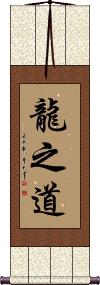
龍之道 is how the way of the dragon is written in Chinese.
龍之道 is not the same as the Chinese movie that was titled in English as “The Way of the Dragon.” 龍之道 is, rather, the literal meaning of the dragon's way. The first character is dragon, the second is a possessive article, and the third character means way or path.
The Way of the Wave
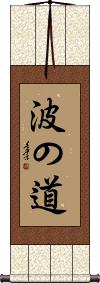
波の道 is the simple way to write “The Way of the Wave” in Japanese.
I added this at the request of several customers. 波の道 is not a very common Japanese phrase.
波 = Wave
の = Of
道 = Way
The word order is the opposite of English. Most Japanese phrases that end in “の道” are translated to English as “The Way of...”
Technically, you could write “波道” as a shorter version of “The Way of the Wave.” However, without context, 波道 can mean channel or suggest a path to redirect ocean flow.
A Wise Man Changes His Mind (but a fool never will)
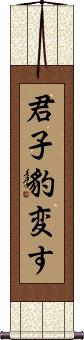
君子豹変す is a Japanese proverb that suggests that a wise man is willing to change his mind, but a fool will stubbornly never change his.
The first word is 君子 (kunshi), a man of virtue, a person of high rank, a wise man.
The second word is 豹変 (hyouhen), sudden change, complete change.
The last part, す (su), modifies the verb to a more humble form.
The “fool” part is merely implied or understood. So if wise and noble people are willing to change their minds, it automatically says that foolish people are unwilling to change.
Zen / Chan / Meditation
...as in Zen Buddhism
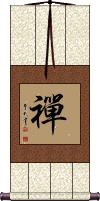
First, let's correct something: The Japanese romanization for this character, “Zen” has penetrated the English language. In English, it's almost always incorrectly used for phrases like “That's so zen.” Nobody says, “That's so meditation” - right? As the title of a sect, this would be like saying, “That's so Baptist!”
禪 by itself just means “meditation.” In that context, it should not be confined to use by any one religion or sect.
Regardless of the dictionary definition, more often than not, this character is associated with Buddhism. And here is one of the main reasons:
Zen is used as the title of a branch of Mahayana Buddhism, which strongly emphasizes meditation practice.
However, it should be noted that Buddhism came from India, and “Chan Buddhism” evolved and developed in medieval China. The Chinese character “Chan” was eventually pronounced as “Zen” in Japanese. Chan Buddhists in China have much in common with Zen Buddhists in Japan.
More about the history of Zen Buddhism here.
Please also note that the Japanese Kanji character for Zen has evolved a little in Japan, and the two boxes (kou) that you see at the top of the right side of the character have been replaced by three dots with tails.
 The original character would still be generally understood and recognized in Japanese (it's considered an ancient version in Japan) but if you want the specifically modern Japanese version, please click on the zen Kanji to the right. Technically, there is no difference between the Tensho and Reisho versions of Zen since they are ancient character styles that existed long before Japan had a written language.
 There is also an alternate/shorthand/simplified Chinese version, which has two dots or tails above the right-side radical. This version is also popular for calligraphy in China. If you want this version, just click the character to the right.
Further notes: Zen is just one of seven sects of Buddhism practiced in Japan. The others are 律 Ritsu (or Risshū), 法相 Hossō, 論 Sanron 華嚴 Kegon, 天台 Tendai, and 眞言 Shingon.
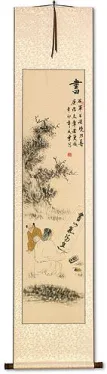
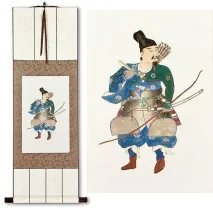
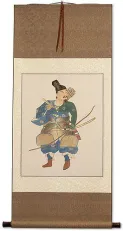
This in-stock artwork might be what you are looking for, and ships right away...



The following table may be helpful for those studying Chinese or Japanese:
| Title | Characters | Romaji (Romanized Japanese) | Various forms of Romanized Chinese | |
| 1. Right Understanding Right Perspective Right View Perfect View | 正見 正见 | sei ken / seiken | zhèng jiàn zheng4 jian4 zheng jian zhengjian | cheng chien chengchien |
| 2. Right Resolve Right Thought Right Intention Perfect Resolve | 正思唯 | sei shi yui seishiyui | zhèng sī wéi zheng4 si1 wei2 zheng si wei zhengsiwei | cheng ssu wei chengssuwei |
| 3. Right Speech Right Talk Perfect Speech | 正語 正语 | sei go / seigo | zhèng yǔ / zheng4 yu3 / zheng yu / zhengyu | cheng yü / chengyü |
| 4. Right Action Perfect Conduct | 正業 正业 | sei gyou / seigyou / sei gyo | zhèng yè / zheng4 ye4 / zheng ye / zhengye | cheng yeh / chengyeh |
| Five Codes of Tang Soo Do | 國家忠誠父母孝道朋友有信殺生有擇臨戰無退 国家忠诚父母孝道朋友有信杀生有择临战无退 | guó jiā zhōng chéng fù mǔ xiào dào péng yǒu yǒu xìn shā shēng yǒu zé lín zhàn wú tuì guo2 jia1 zhong1 cheng2 fu4 mu3 xiao4 dao4 peng2 you3 you3 xin4 sha1 sheng1 you3 ze2 lin2 zhan4 wu2 tui4 guo jia zhong cheng fu mu xiao dao peng you you xin sha sheng you ze lin zhan wu tui | kuo chia chung ch`eng fu mu hsiao tao p`eng yu yu hsin sha sheng yu tse lin chan wu t`ui kuo chia chung cheng fu mu hsiao tao peng yu yu hsin sha sheng yu tse lin chan wu tui |
|
| 5. Right Living Right Livelihood Perfect Livelihood | 正命 | sei myou / seimyou / sei myo | zhèng mìng zheng4 ming4 zheng ming zhengming | cheng ming chengming |
| 6. Right Effort Right Endeavor Perfect Effort | 正精進 正精进 | sei shou jin seishoujin sei sho jin | zhèng jīng jìn zheng4 jing1 jin4 zheng jing jin zhengjingjin | cheng ching chin chengchingchin |
| 7. Right Mindfulness Right Memory Perfect Mindfulness | 正念 | sei nen / seinen | zhèng niàn zheng4 nian4 zheng nian zhengnian | cheng nien chengnien |
| 8. Right Concentration Perfect Concentration | 正定 | sei jou / seijou / sei jo | zhèng dìng zheng4 ding4 zheng ding zhengding | cheng ting chengting |
| In the Abyss of Infinite Bitterness - Turn to the Shore | 苦海無邊回頭是岸 苦海无边回头是岸 | kǔ hǎi wú biān huí tóu shì àn ku3 hai3 wu2 bian1 hui2 tou2 shi4 an4 ku hai wu bian hui tou shi an kuhaiwubianhuitoushian | k`u hai wu pien hui t`ou shih an kuhaiwupienhuitoushihan ku hai wu pien hui tou shih an |
|
| Ardent Fierce | 烈 | retsu | liè / lie4 / lie | lieh |
| Armor | 鎧 铠 | yoroi | kǎi / kai3 / kai | k`ai / kai |
| Bamboo | 竹 | take | zhú / zhu2 / zhu | chu |
| Beautiful Virtue | 美德 美德 / 美徳 | bitoku | měi dé / mei3 de2 / mei de / meide | mei te / meite |
| Beauty Beautiful Princess | 媛 | hime / haru | yuàn / yuan4 / yuan | yüan |
| Bon Voyage | 一路平安 | ichiro heian ichiroheian | yī lù píng ān yi1 lu4 ping2 an1 yi lu ping an yilupingan | i lu p`ing an ilupingan i lu ping an |
| Thorns Bramble Briar Patch Wild Rose | 荊棘 荆棘 | keikyoku | jīng jí / jing1 ji2 / jing ji / jingji | ching chi / chingchi |
| Confucius: Golden Rule Ethic of Reciprocity | 己所不欲勿施於人 己所不欲勿施于人 | jǐ suǒ bú yù wù shī yú rén ji3 suo3 bu2 yu4, wu4 shi1 yu2 ren2 ji suo bu yu, wu shi yu ren jisuobuyu,wushiyuren | chi so pu yü, wu shih yü jen chisopuyü,wushihyüjen |
|
| The Great Path has No Gate | 大道無門 大道无门 | dai dou mu mon daidoumumon dai do mu mon | dà dào wú mén da4 dao4 wu2 men2 da dao wu men dadaowumen | ta tao wu men tataowumen |
| Daoism Taoism | 道 | michi / -do | dào / dao4 / dao | tao |
| Divine Spirit | 御影 | goei | yù yǐng / yu4 ying3 / yu ying / yuying | yü ying / yüying |
| Doctor | 醫生 医生 | yī shēng / yi1 sheng1 / yi sheng / yisheng | i sheng / isheng | |
| Dogen | 道元 | dou gen / dougen / do gen | dào yuán / dao4 yuan2 / dao yuan / daoyuan | tao yüan / taoyüan |
| Enlightened Warrior | 覺醒武士 觉醒武士 | jué xǐng wǔ shì jue2 xing3 wu3 shi4 jue xing wu shi juexingwushi | chüeh hsing wu shih chüehhsingwushih |
|
| Eternal Love | 永恆的愛 永恒的爱 | yǒng héng de ài yong3 heng2 de ai4 yong heng de ai yonghengdeai | yung heng te ai yunghengteai |
|
| Eternal Love | 永遠の愛 | ei en no ai eiennoai | ||
| Extreme Faithfulness | 貞烈 | tei retsu / teiretsu | ||
| Family Household | 家庭 / 傢庭 家庭 | ka tei / katei | jiā tíng / jia1 ting2 / jia ting / jiating | chia t`ing / chiating / chia ting |
| Destiny Determined by Heaven | 天意 | teni | tiān yì / tian1 yi4 / tian yi / tianyi | t`ien i / tieni / tien i |
| Fate Opportunity Chance | 因緣 因缘 / 因縁 | in nen / innen | yīn yuán / yin1 yuan2 / yin yuan / yinyuan | yin yüan / yinyüan |
| Five Elements | 金木水火土 | jīn mù shuǐ huǒ tǔ jin1 mu4 shui3 huo3 tu3 jin mu shui huo tu jinmushuihuotu | chin mu shui huo t`u chinmushuihuotu chin mu shui huo tu |
|
| Flying Tigers AVG | 飛虎隊 飞虎队 | fēi hǔ duì fei1 hu3 dui4 fei hu dui feihudui | fei hu tui feihutui |
|
| Four Noble Truths: Suffering | 苦諦 苦谛 | kutai | kǔ dì / ku3 di4 / ku di / kudi | k`u ti / kuti / ku ti |
| Four Noble Truths: Desire and Attachment | 集諦 集谛 | jittai | jí dì / ji2 di4 / ji di / jidi | chi ti / chiti |
| Four Noble Truths: Elimination of Desire or Attachment | 滅諦 灭谛 | mettai | miè dì / mie4 di4 / mie di / miedi | mieh ti / miehti |
| Four Noble Truths: Path Leading Away From Suffering | 道諦 道谛 | doutai / dotai | dào dì / dao4 di4 / dao di / daodi | tao ti / taoti |
| Four Noble Truths (Buddhism) | 四諦 四谛 | shitai | sì dì / si4 di4 / si di / sidi | ssu ti / ssuti |
| Four Noble Truths (Full List) | 苦諦集諦滅諦道諦 苦谛集谛灭谛道谛 | kutai jittai mettai doutai kutaijittaimettaidoutai kutai jittai mettai dotai | kǔ dì jí dì miè dì dào dì ku3 di4 ji2 di4 mie4 di4 dao4 di4 ku di ji di mie di dao di kudijidimiedidaodi | k`u ti chi ti mieh ti tao ti kutichitimiehtitaoti ku ti chi ti mieh ti tao ti |
| Fudo Myo-o Wisdom King | 不動明王 不动明王 | fu dou myou ou fudoumyouou fu do myo o | bù dòng míng wáng bu4 dong4 ming2 wang2 bu dong ming wang budongmingwang | pu tung ming wang putungmingwang |
| Goju Martial Arts | 剛柔武道 | gō jū bu dō gōjūbudō | gāng róu wǔ dào gang1 rou2 wu3 dao4 gang rou wu dao gangrouwudao | kang jou wu tao kangjouwutao |
| Guan Gong Warrior Saint | 關公 关公 | guān gōng guan1 gong1 guan gong guangong | kuan kung kuankung |
|
| Haidong Gumdo | 海東劍道 海东剑道 | hǎi dǒng jiàn dào hai3 dong3 jian4 dao4 hai dong jian dao haidongjiandao | hai tung chien tao haitungchientao |
|
| Noble Eightfold Path | 八聖道 八圣道 | hasshoudou / hashodo | bā shèng dào ba1 sheng4 dao4 ba sheng dao bashengdao | pa sheng tao pashengtao |
| High Mountain Long River | 山高水長 山高水长 | shān gāo shuǐ cháng shan1 gao1 shui3 chang2 shan gao shui chang shangaoshuichang | shan kao shui ch`ang shankaoshuichang shan kao shui chang |
|
| Honor | 名譽 名誉 | meiyo | míng yù / ming2 yu4 / ming yu / mingyu | ming yü / mingyü |
| Hu | 胡 | hú / hu2 / hu | ||
| Intuitive Wisdom Inner Light | 一道神光 | ichidou no shinkou ichidounoshinkou ichido no shinko | yī dào shén guāng yi1 dao4 shen2 guang1 yi dao shen guang yidaoshenguang | i tao shen kuang itaoshenkuang |
| I walk my own path | 我行我素 | wǒ xíng wǒ sù wo3 xing2 wo3 su4 wo xing wo su woxingwosu | wo hsing wo su wohsingwosu |
|
| Nobleman | 君子 | kun shi / kunshi | jūn zǐ / jun1 zi3 / jun zi / junzi | chün tzu / chüntzu |
| Justice Rectitude Right Decision | 義 义 | gi | yì / yi4 / yi | i |
| Kensho Jobutsu - Enlightenment - Path to Buddha | 見性成佛 見性成仏 | ken shou jou butsu kenshoujoubutsu ken sho jo butsu | ||
| Ken To Ashi Do | 拳と足道 | ken to ashi dou kentoashidou ken to ashi do | ||
| Meet the Buddha, Kill the Buddha | 佛に逢っては佛を殺す | butsu ni atte wa butsu o korosu | ||
| Kodokan | 講道館 讲道馆 | kou dou kan koudoukan ko do kan | ||
| Kodokan | 光道館 讲道馆 | kou dou kan koudoukan ko do kan | ||
| Kunshi no Ken | 君子の拳 | kun shi no ken kunshinoken | ||
| The Way of Learning Has No End | 究道無限 | kyuu do mu gen kyuudomugen kyu do mu gen | ||
| Le | 勒 | lè / le4 / le | ||
| Life Energy Spiritual Energy | 氣 气 / 気 | ki | qì / qi4 / qi | ch`i / chi |
| Just as Liquor Turns a Face Red, Gold Turns a Heart Black | 白酒紅人面黃金黑世心 白酒红人面黄金黑世心 | bái jiǔ hóng rén miàn huáng jīn hēi shì xīn bai2 jiu3 hong2 ren2 mian4 huang2 jin1 hei1 shi4 xin1 bai jiu hong ren mian huang jin hei shi xin | pai chiu hung jen mien huang chin hei shih hsin | |
| Listen to Both Sides and be Enlightened, Listen to One Side and be in the Dark | 兼聽則明偏聽則暗 兼听则明偏听则暗 | jiān tīng zé míng, piān tīng zé àn jian1 ting1 ze2 ming2, pian1 ting1 ze2 an4 jian ting ze ming, pian ting ze an | chien t`ing tse ming, p`ien t`ing tse an chien ting tse ming, pien ting tse an |
|
| Luong | 梁 | liáng / liang2 / liang | ||
| Martial Arts Budo | 武道 | bu dou / budou / bu do | wǔ dào / wu3 dao4 / wu dao / wudao | wu tao / wutao |
| Men Die for Wealth, Birds Die for Food | 人為財死鳥為食亡 人为财死鸟为食亡 | rén wèi cái sǐ niǎo wèi shí wáng ren2 wei4 cai2 si3 niao3 wei4 shi2 wang2 ren wei cai si niao wei shi wang | jen wei ts`ai ssu niao wei shih wang jen wei tsai ssu niao wei shih wang |
|
| The Middle Way | 中道 | chuu dou / chuudou / chu do | zhōng dào zhong1 dao4 zhong dao zhongdao | chung tao chungtao |
| Moral Principles Of Life | 人の道 | hitonomichi | ||
| Mountain Travels Poem by Dumu | 遠上寒山石徑斜白雲生處有人家停車坐愛楓林晚霜葉紅於二月花 远上寒山石径斜白云生处有人家停车坐爱枫林晚霜叶红于二月花 | yuǎn shàng hán shān shí jìng xiá bái yún shēng chù yǒu rén jiā tíng chē zuò ài fēng lín wǎn shuàng yè hóng yú èr yuè huā yuan3 shang4 han2 shan1 shi2 jing4 xia2 bai2 yun2 sheng1 chu4 you3 ren2 jia1 ting2 che1 zuo4 ai4 feng1 lin2 wan3 shuang4 ye4 hong2 yu2 er4 yue4 hua1 yuan shang han shan shi jing xia bai yun sheng chu you ren jia ting che zuo ai feng lin wan shuang ye hong yu er yue hua | yüan shang han shan shih ching hsia pai yün sheng ch`u yu jen chia t`ing ch`e tso ai feng lin wan shuang yeh hung yü erh yüeh hua yüan shang han shan shih ching hsia pai yün sheng chu yu jen chia ting che tso ai feng lin wan shuang yeh hung yü erh yüeh hua |
|
| Namu Dai Bosa | 南無大菩薩 南无大菩萨 | namu dai bosa namudaibosa | ||
| Never Forget | 常不忘失 | jou fu bou shitsu joufuboushitsu jo fu bo shitsu | cháng bú wàng shī chang2 bu2 wang4 shi1 chang bu wang shi changbuwangshi | ch`ang pu wang shih changpuwangshih chang pu wang shih |
| Better Late Than Never | 亡羊補牢猶未為晚 亡羊补牢犹未为晚 | wáng yáng bǔ láo yóu wèi wéi wǎn wang2 yang2 bu3 lao2 you2 wei4 wei2 wan3 wang yang bu lao you wei wei wan | wang yang pu lao yu wei wei wan wangyangpulaoyuweiweiwan |
|
| There is No Royal Road to Learning | 求學無坦途 求学无坦途 | qiú xué wú tǎn tú qiu2 xue2 wu2 tan3 tu2 qiu xue wu tan tu qiuxuewutantu | ch`iu hsüeh wu t`an t`u chiuhsüehwutantu chiu hsüeh wu tan tu |
|
| Noble | 諾布爾 诺布尔 | nuò bù ěr nuo4 bu4 er3 nuo bu er nuobuer | no pu erh nopuerh |
|
| The Noble Eightfold Path | 八正道 | hasshoudou / hashodo | bā zhèng dào ba1 zheng4 dao4 ba zheng dao bazhengdao | pa cheng tao pachengtao |
| All Tenets of the Noble Eightfold Path | 正見正思唯正語正業正命正精進正念正定 正见正思唯正语正业正命正精进正念正定 | shouken shoushiyui shougo shougo shoumyou shoushoujin shounen shoujou shoken shoshiyui shogo shogo shomyo shoshojin shonen shojo | zhèng jiàn zhèng sī wéi zhèng yǔ zhèng yè zhèng mìng zhèng jīng jìn zhèng niàn zhèng dìng zheng4 jian4 zheng4 si1 wei2 zheng4 yu3 zheng4 ye4 zheng4 ming4 zheng4 jing1 jin4 zheng4 nian4 zheng4 ding4 zheng jian zheng si wei zheng yu zheng ye zheng ming zheng jing jin zheng nian zheng ding | cheng chien cheng ssu wei cheng yü cheng yeh cheng ming cheng ching chin cheng nien cheng ting |
| Noble | ノーブル | nooburu / noburu | ||
| Noble Warrior | 大俠 大侠 | dà xiá / da4 xia2 / da xia / daxia | ta hsia / tahsia | |
| Mantis Praying Mantis | 螳螂 / 蟷螂 螳螂 | tou rou / tourou / to ro | táng láng tang2 lang2 tang lang tanglang | t`ang lang tanglang tang lang |
| Precious | 貴い | tattoi | ||
| Pride | 自尊 | jison | zì zūn / zi4 zun1 / zi zun / zizun | tzu tsun / tzutsun |
| Prideful Mind Self-Respecting Heart | 自尊心 | ji son shin jisonshin | zì zūn xīn zi4 zun1 xin1 zi zun xin zizunxin | tzu tsun hsin tzutsunhsin |
| Reiki | 靈氣 灵气 霊気 | reiki | líng qì / ling2 qi4 / ling qi / lingqi | ling ch`i / lingchi / ling chi |
| Respect Honor Esteem | 尊敬 | sonkei | zūn jìng / zun1 jing4 / zun jing / zunjing | tsun ching / tsunching |
| Respect | 禮 礼 | rei | lǐ / li3 / li | |
| Responsibility | 責任 责任 | sekinin | zé rèn / ze2 ren4 / ze ren / zeren | tse jen / tsejen |
| Samudaya | 三牟提耶 | sanmudaiya | sān móu tí yé san1 mou2 ti2 ye2 san mou ti ye sanmoutiye | san mou t`i yeh sanmoutiyeh san mou ti yeh |
| Seido Juku | 正道塾 | sei dou juku seidoujuku sei do juku | ||
| Self-Discipline Martial Arts | 克己武道 | kokki bu dō kokkibudō koki bu dō | kè jǐ wǔ dào ke4 ji3 wu3 dao4 ke ji wu dao kejiwudao | k`o chi wu tao kochiwutao ko chi wu tao |
| Shiken Haramitsu Daikomyo | 四拳波羅蜜大光明 | shi ken ha ra mitsu dai kou myou shi ken ha ra mitsu dai ko myo | ||
| The Single Life | 独身貴族 / 獨身貴族 独身贵族 | do kushin ki zoku dokushinkizoku | ||
| Respectful Heart | 尊敬心 | son kei shin sonkeishin | zūn jìng xīn zun1 jing4 xin1 zun jing xin zunjingxin | tsun ching hsin tsunchinghsin |
| Success | 成功 | seikou / seiko | chéng gōng cheng2 gong1 cheng gong chenggong | ch`eng kung chengkung cheng kung |
| Sword | 劍 剑 | ken / tsurugi | jiàn / jian4 / jian | chien |
| Taekwondo | 跆拳道 | te kon do / tekondo | tái quán dào tai2 quan2 dao4 tai quan dao taiquandao | t`ai ch`üan tao taichüantao tai chüan tao |
| Taoist Daoist | 道士 | dou shi / doushi / do shi | dào shì / dao4 shi4 / dao shi / daoshi | tao shih / taoshih |
| Turtle | 龜 龟 / 亀 | kame | guī / gui1 / gui | kuei |
| Warrior’s Path | 武の道 | bu no dou / bunodou / bu no do | ||
| The Way of the Dragon | 龍之道 龙之道 | lóng zhī dào long2 zhi1 dao4 long zhi dao longzhidao | lung chih tao lungchihtao |
|
| The Way of the Wave | 波の道 | nami no michi naminomichi | ||
| A Wise Man Changes His Mind (but a fool never will) | 君子豹変す | kun shi hyou hen su kunshihyouhensu kun shi hyo hen su | ||
| Zen Chan Meditation | 禪 禅 | zen | chán / chan2 / chan | ch`an / chan |
| In some entries above you will see that characters have different versions above and below a line. In these cases, the characters above the line are Traditional Chinese, while the ones below are Simplified Chinese. | ||||



