The Name An in Japanese/Chinese on a Custom-Made Wall Scroll.
Click the "Customize" button next to your name below to start your personalized an calligraphy artwork...
Switched to secondary search mode due to lack of results using primary.
These secondary results may not be very accurate. Try a different but similar meaning word or phrase for better results. Or:
Look up An in my Japanese Kanji & Chinese Character Dictionary(My dictionary is a different system then the calligraphy search you just tried)
If you want a special phrase, word, title, name, or proverb, feel free to contact me, and I will translate your custom calligraphy idea for you.
4. 1. Right Understanding / Right Perspective / Right View / Perfect View
7. Aaftan
8. Aalyan
9. Aanand
10. Aaniyah
11. Aanya
12. Aarana
13. Aaryan
14. Abdalrahman
15. Abdirahman
16. Abdulrahman
17. Abdulrehman
18. Abhinandan
19. Abian
20. Abrahan
21. Year-In Year-Out Have Abundance
24. Abundane
25. Abyan
27. Acceptance
28. Accountant / CPA
29. Flying Ace / Aviator / Bird Man
30. Ackerman
31. Acupuncture and Moxibustion
33. Adan
34. Adana
35. Adanan
36. Adanary
37. Adelman
38. Adirana
39. Adiyan
40. Adnan
41. Adnanomar
42. Adnanshumi
43. Adoniran
44. Adonis / Handsome Young Man
45. Adrian
46. Adriana
47. Adrianna
48. Adrianne
49. Adriano
50. Adryan
51. Advance Bravely / Indomitable Spirit
52. Aedan
53. Aethan
54. Afghanistan
55. Afnan
56. African
57. Ahsan
58. Aidan
59. Aikido Yoshinkan
1 Corinthians 13:4-8
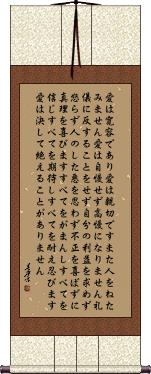
Here is 1st Corinthians 13:4-8 (just the first sentence of verse 8) in Japanese.
In the familiar NIV, this would read:
Love is patient, love is kind. It does not envy, it does not boast, it is not proud.
It does not dishonor others, it is not self-seeking, it is not easily angered, it keeps no record of wrongs.
Love does not delight in evil but rejoices with the truth.
It always protects, always trusts, always hopes, always perseveres.
Love never fails...
The Japanese text is from the 新改訳聖書 (Shinkaiyaku) or New Japanese Bible. Popular among most Protestant denominations in modern Japan.
Note: Because this selection contains some special Japanese Hiragana characters, it should be written by a Japanese calligrapher.
1 Corinthians 13:5
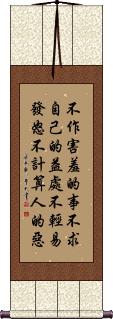
Here is 1 Corinthians 13:5 in Chinese.
The text with punctuation:
不作害羞的事。不求自己的益处。不轻易发怒。不计算人的恶。
Hand-painted calligraphy does not retain punctuation.
This translation is from the Chinese Union Bible.
You may know it from the KJV as:
Doth not behave itself unseemly, seeketh not her own, is not easily provoked, thinketh no evil.
1 Corinthians 14:22
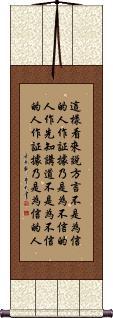
Here is 1 Corinthians 14:22 in Chinese.
The text with punctuation:
这样看来,说方言,不是为信的人作证据,乃是为不信的人。作先知讲道,不是为不信的人作证据,乃是为信的人。
Hand-painted calligraphy does not retain punctuation.
This translation is from the Chinese Union Bible.
You may know it from the KJV as:
Wherefore tongues are for a sign, not to them that believe, but to them that believe not: but prophesying serveth not for them that believe not, but for them which believe.
1. Right Understanding / Right Perspective / Right View / Perfect View
Samyag Dristhi / Samyag Drsti / Samma Ditthi
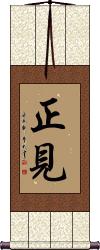
正見 is one of the Noble Eightfold Paths of Buddhism. Right View, along with the Right Thought, constitutes the path to Wisdom.
To get to the correct view of the world, you must first understand and follow Four Noble Truths.
Note: This term is exclusively used by devout Buddhists. It is not a common term, and remains an unknown concept to most Japanese and Chinese people.
See Also: Buddhism | Enlightenment | Noble Eightfold Path
Ten perfect Mahayana rules
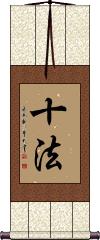
十法 is the title of the ten perfect or perfecting Mahāyāna rules.
The order of rules is as follows:
1. right belief.
2. right conduct.
3. right spirit.
4. the joy of the bodhi mind.
5. joy in the dharma.
6. joy in meditation.
7. pursuing the correct dharma.
8. obedience to, or accordance with dharma.
9. departing from pride, desire, etc.
10. comprehending the inner teaching of Buddha and taking no pleasure in attaining such knowledge or noting the ignorance of others.
This title is only used in the context of Buddhism. Japanese and Chinese people who are not familiar with Buddhism will not recognize this title.
Five Codes of Tang Soo Do
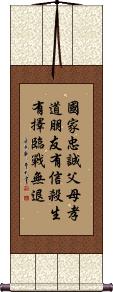
国家忠诚父母孝道朋友有信杀生有择临战无退 are the five codes of Tang Soo Do.
I suggest you have this arranged in five columns when you get to the options page for your custom calligraphy wall scroll.
Here are my translations of each of the five codes:
國家忠誠 Be loyal to your country.
父母孝道 Regarding parents, behave in a filial way.
朋友有信 Be faithful in friendship.
殺生有擇 When fighting for life and death, make noble choices.
臨戰無退 No retreat in battle.
Note: “Tang Soo Do” is a romanization of 唐手道. It's 당수도 in Korean Hangul. It can also be romanized as “Tangsudo” or “Dangsudo.”
Aaftan
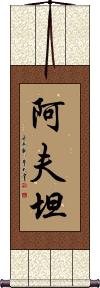
阿夫坦 is the name Aaftan in Chinese (Mandarin).
Aaftan

アーフタン is the name Aaftan in Japanese Katakana.
Note: Because this title is entirely Japanese Katakana, it should be written by a Japanese calligrapher.
Aalyan
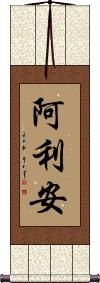
阿利安 is the name Aalyan in Chinese (Mandarin).
Aalyan

アリアン is the name Aalyan in Japanese Katakana.
Note: Because this title is entirely Japanese Katakana, it should be written by a Japanese calligrapher.
Aanand
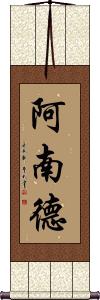
阿南德 is the name Aanand in Chinese (Mandarin).
Aanand
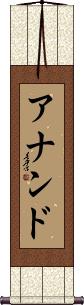
アナンド is the name Aanand in Japanese.
Note: Because this title is entirely Japanese Katakana, it should be written by a Japanese calligrapher.
Aaniyah

阿尼雅 is the name Aaniyah in Chinese (Mandarin).
Aaniyah

アニーヤ is the name Aaniyah in Japanese Katakana.
Note: Because this title is entirely Japanese Katakana, it should be written by a Japanese calligrapher.
Aanya
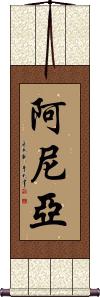
阿尼亞 is the name Aanya in Chinese (Mandarin).
Aanya

アーニャ is the name Aanya in Japanese Katakana.
Note: Because this title is entirely Japanese Katakana, it should be written by a Japanese calligrapher.
Aarana
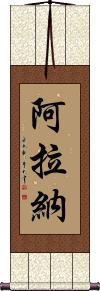
阿拉納 is the name Aarana in Chinese (Mandarin).
Aarana
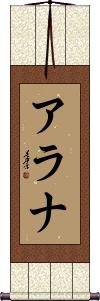
アラナ is the name Aarana in Japanese Katakana.
Note: Because this title is entirely Japanese Katakana, it should be written by a Japanese calligrapher.
Aaryan
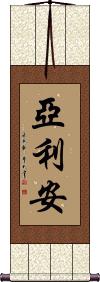
亞利安 is the name Aaryan in Chinese (Mandarin).
Aaryan

アーリアン is the name Aaryan in Japanese (Katakana).
Note: Because this title is entirely Japanese Katakana, it should be written by a Japanese calligrapher.
Abdalrahman
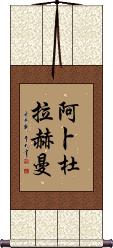
阿卜杜拉赫曼 is the name Abdalrahman in Chinese (Mandarin).
Abdalrahman
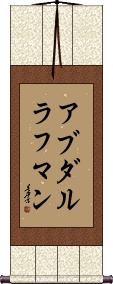
アブダルラフマン is the name Abdalrahman in Japanese Katakana.
Note: Because this title is entirely Japanese Katakana, it should be written by a Japanese calligrapher.
Abdirahman
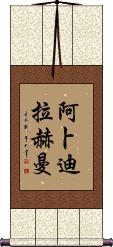
阿卜迪拉赫曼 is the name Abdirahman in Chinese (Mandarin).
Abdirahman
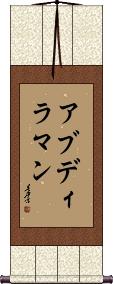
アブディラマン is the name Abdirahman in Japanese Katakana.
Note: Because this title is entirely Japanese Katakana, it should be written by a Japanese calligrapher.
Abdulrahman
阿卜杜拉赫曼 is the name Abdulrahman in Chinese (Mandarin).
Abdulrahman
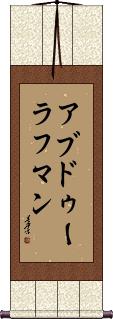
アブドゥーラフマン is the name Abdulrahman in Japanese (Katakana).
Note: Because this title is entirely Japanese Katakana, it should be written by a Japanese calligrapher.
Abdulrehman

阿卜杜勒拉赫曼 is the name Abdulrehman in Chinese (Mandarin).
Abdulrehman

アブドゥルレマン is the name Abdulrehman in Japanese Katakana.
Note: Because this title is entirely Japanese Katakana, it should be written by a Japanese calligrapher.
Abhinandan
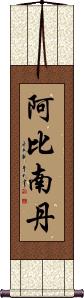
阿比南丹 is the name Abhinandan in Chinese (Mandarin).
Abhinandan
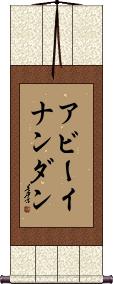
アビーイナンダン is the name Abhinandan in Japanese (Katakana).
Note: Because this title is entirely Japanese Katakana, it should be written by a Japanese calligrapher.
Abian
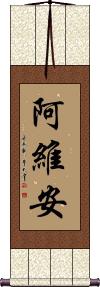
阿維安 is the transliteration to Mandarin Chinese for the Latin / Spanish name Abian.
Abian

エビアン is the name Abian in Japanese.
Note: Because this title is entirely Japanese Katakana, it should be written by a Japanese calligrapher.
Abrahan
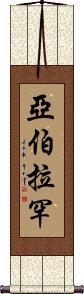
This is a common Mandarin Chinese transliteration for the male Portuguese/Latin name Abrahan.
Abrahan

アブラーン is the name Abrahan in Japanese (Katakana).
Note: Because this title is entirely Japanese Katakana, it should be written by a Japanese calligrapher.
Year-In Year-Out Have Abundance
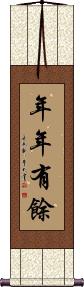
年年有餘 is a common proverb or wish of prosperity you'll hear around the time of Chinese New Year.
Directly translated character by character, it means “Year Year Have Surplus.” A more natural English translation including the deeper meaning would be “Every Year may you Have Abundance in your life.”
On a side note, this phrase often goes with a gift of something related to fish. This is because the last character, “yu” which means surplus or abundance, has exactly the same pronunciation in Mandarin as the word for “fish.”
This is also one of the most common titles for traditional paintings that feature koi fish.
In China, this phrase might make an odd wall scroll - a customer asked especially for this common phrase which is why it appears here. See my other abundance-related words if you want a wall scroll that will seem more comfortable in Chinese culture.
Note: This can be pronounced in Korean, but it's not a commonly used term.
See Also: Prosperity | House of Good Fortune
Abundance / Prosperous
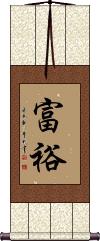
富裕 means prosperous, having an abundance, well-to-do, or well-off.
It's a simple word that suggests “you have made it” in Chinese, Japanese Kanji, and Korean Hanja.
See Also: House of Good Fortune
Abundance and Prosperity
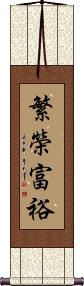
繁榮富裕 is a proverb about “Prosperity and Abundance.”
This presents and reinforces the ideas of being prosperous, a booming economy, well-to-do, well-off, wealthy, riches, and opulence.
While this is the ancient/traditional Chinese way to write this, most Japanese can fully read and understand it. It's also the correct form of old Korean Hanja (though few Koreans of the current generation will be able to read this).
See Also: House of Good Fortune
Abundane

阿邦丹 is the name Abundane in Chinese (Mandarin).
Abundane

アバンダン is the name Abundane in Japanese Katakana.
Note: Because this title is entirely Japanese Katakana, it should be written by a Japanese calligrapher.
Abyan

阿比揚 is the name Abyan in Chinese (Mandarin).
Abyan

アビヤン is the name Abyan in Japanese Katakana.
Note: Because this title is entirely Japanese Katakana, it should be written by a Japanese calligrapher.
Acceptance / Tolerate
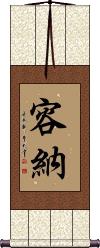
容納 speaks of being tolerant of other opinions or being accepting of other people's ideas or ways of doing things.
Other definitions of this word include having the capacity for, to accommodate, or to tolerate.
Acceptance
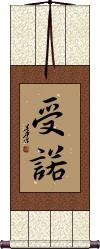
受諾 is a simple Japanese word for acceptance.
Because it's a general term, it can mean acceptance in many different contexts (acceptance of your friends, family, differences, faults, etc.).
Accountant / CPA
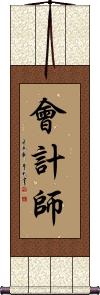
會計師 is the occupational or legal title of an accountant in Chinese and Korean.
In Asia, particular studies and certifications are needed to obtain this title. Therefore, this is the closest match to the English term for Certified Public Accountant. Such a professional might have a sign on his desk or a name badge that has their name on it and this title in Chinese characters. It's not too common to see this on a wall scroll in Asia, but you can take such liberties in the west.
Accountant / CPA
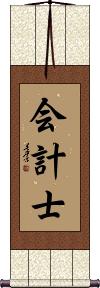
會計士 is how to write accountant (specifically CPA) in Japanese Kanji.
Flying Ace / Aviator / Bird Man
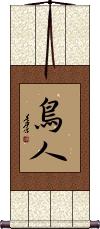
鳥人 means “bird man” or “bird person,” but it is used colloquially in Japanese to mean a flying ace or aviator.
Ackerman

阿克曼 is the name Ackerman in Chinese (Mandarin).
Ackerman

アッカーマン is the name Ackerman in Japanese Katakana.
Note: Because this title is entirely Japanese Katakana, it should be written by a Japanese calligrapher.
Acupuncture and Moxibustion
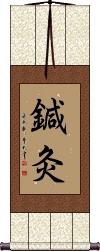
鍼灸 is the Chinese, Japanese Kanji, and old Korean Hanja word for acupuncture-moxibustion.
Adamantine / King Kong
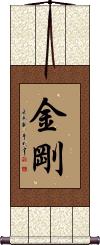
金剛 can translate as adamantine from Chinese, Japanese, and old Korean.
Other meanings and translations can include diamond, thunderbolt, Indra's indestructible weapon, a Buddhist symbol of the indestructible truth, Vajra (a mythical weapon), guardian deity, hardness, indestructibility, power, the least frangible of minerals.
The Chinese pronunciation of “Jīn Gāng” became the loanword used in English as “King Kong.” You can see King Kong as the indestructible ape guardian deity depending on how you read the story.
Adan
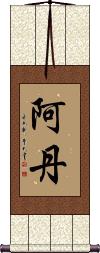
阿丹 is the transliteration to Mandarin Chinese for the Latin / Spanish name Adán.
Adan

アダン is the name Adan in Japanese.
Note: Because this title is entirely Japanese Katakana, it should be written by a Japanese calligrapher.
Adana
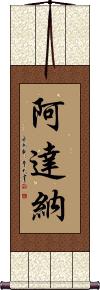
阿達納 is the name Adana in Chinese (Mandarin).
Adana
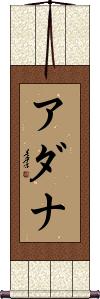
アダナ is the name Adana in Japanese (Katakana).
Note: Because this title is entirely Japanese Katakana, it should be written by a Japanese calligrapher.
Adanan
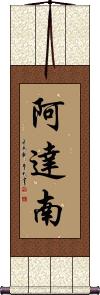
阿達南 is the name Adanan in Chinese (Mandarin).
Adanan

アダナン is the name Adanan in Japanese Katakana.
Note: Because this title is entirely Japanese Katakana, it should be written by a Japanese calligrapher.
Adanary
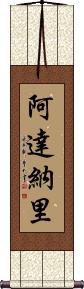
阿達納里 is the name Adanary in Chinese (Mandarin).
Adanary

アダナリー is the name Adanary in Japanese Katakana.
Note: Because this title is entirely Japanese Katakana, it should be written by a Japanese calligrapher.
Adelman

阿德爾曼 is the name Adelman in Chinese (Mandarin).
Adelman

アデルマン is the name Adelman in Japanese Katakana.
Note: Because this title is entirely Japanese Katakana, it should be written by a Japanese calligrapher.
Adirana

阿迪拉納 is the name Adirana in Chinese (Mandarin).
Adirana

アディラナ is the name Adirana in Japanese Katakana.
Note: Because this title is entirely Japanese Katakana, it should be written by a Japanese calligrapher.
Adiyan
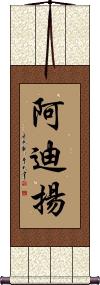
阿迪揚 is the name Adiyan in Chinese (Mandarin).
Adiyan
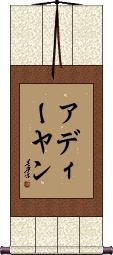
アディーヤン is the name Adiyan in Japanese (Katakana).
Note: Because this title is entirely Japanese Katakana, it should be written by a Japanese calligrapher.
Adnan
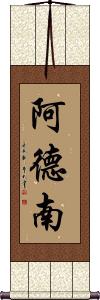
阿德南 is the name Adnan in Chinese (Mandarin).
Adnan

アドナン is the name Adnan in Japanese.
Note: Because this title is entirely Japanese Katakana, it should be written by a Japanese calligrapher.
Adnanomar
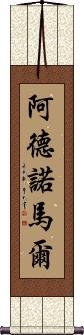
阿德諾馬爾 is the name Adnanomar in Chinese (Mandarin).
Adnanomar
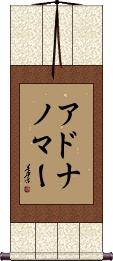
アドナノマー is the name Adnanomar in Japanese Katakana.
Note: Because this title is entirely Japanese Katakana, it should be written by a Japanese calligrapher.
Adnanshumi

アドナンシュミ is the name Adnanshumi in Japanese Katakana.
Note: Because this title is entirely Japanese Katakana, it should be written by a Japanese calligrapher.
Adoniran
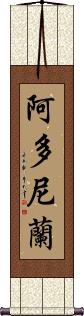
阿多尼蘭 is the name Adoniran in Chinese (Mandarin).
Adoniran

アドニラン is the name Adoniran in Japanese Katakana.
Note: Because this title is entirely Japanese Katakana, it should be written by a Japanese calligrapher.
Adonis / Handsome Young Man
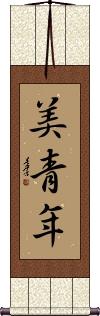
美青年 means handsome young man, or figuratively, Adonis, in Japanese.
Adrian
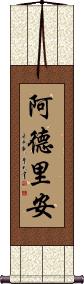
阿德里安 is the transliteration to Mandarin Chinese for the English name Adrian.
Adrian

エイドアン is the name Adrian in Japanese.
Note: Because this title is entirely Japanese Katakana, it should be written by a Japanese calligrapher.
Adrian
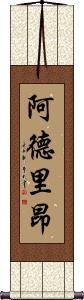
阿德里昂 is the transliteration to Mandarin Chinese for the Latin / Spanish name Adrian.
Adriana
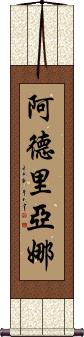
阿德里亞娜 is the transliteration to Mandarin Chinese for the Latin / Spanish name Adriana.
Adriana
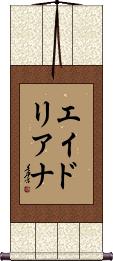
エイドリアナ is the name Adriana in Japanese.
Note: Because this title is entirely Japanese Katakana, it should be written by a Japanese calligrapher.
Adrianna
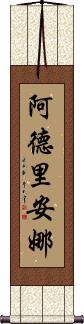
阿德里安娜 is the name Adrianna in Chinese (Mandarin).
Adrianna
エイドリアナ is the name Adrianna in Japanese.
Note: Because this title is entirely Japanese Katakana, it should be written by a Japanese calligrapher.
Adrianne
阿德里安 is the name Adrianne in Chinese (Mandarin).
Adrianne
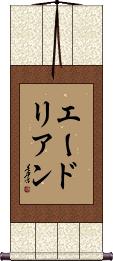
エードリアン is the name Adrianne in Japanese (Katakana).
Note: Because this title is entirely Japanese Katakana, it should be written by a Japanese calligrapher.
Adriano
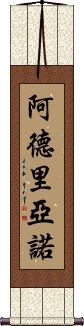
阿德里亞諾 is the name Adriano in Chinese (Mandarin).
Adriano
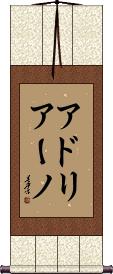
アドリアーノ is the name Adriano in Japanese Katakana.
Note: Because this title is entirely Japanese Katakana, it should be written by a Japanese calligrapher.
Adryan
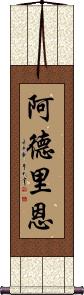
阿德里恩 is the name Adryan in Chinese (Mandarin).
Adryan
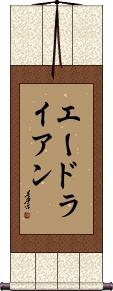
エードライアン is the name Adryan in Japanese (Katakana).
Note: Because this title is entirely Japanese Katakana, it should be written by a Japanese calligrapher.
Advance Bravely / Indomitable Spirit
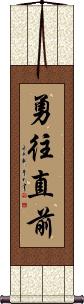
This proverb creates an image of a warrior bravely advancing against an enemy regardless of the odds.
This proverb can also be translated as “indomitable spirit” or “march fearlessly onward.”
See Also: Perseverance / Indomitable / Invincible Fortitude | Perseverance / Indomitable / Invincible Fortitude
Aedan
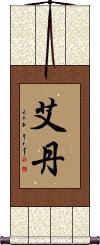
艾丹 is the name Aedan in Chinese (Mandarin).
Aedan

エイダン is the name Aedan in Japanese Katakana.
Note: Because this title is entirely Japanese Katakana, it should be written by a Japanese calligrapher.
Aethan
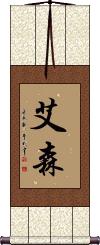
艾森 is the name Aethan in Chinese (Mandarin).
Aethan

エイサン is the name Aethan in Japanese Katakana.
Note: Because this title is entirely Japanese Katakana, it should be written by a Japanese calligrapher.
Afghanistan
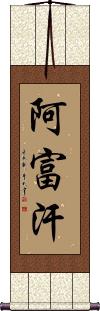
Afghanistan
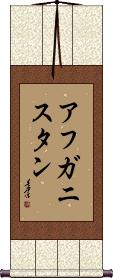
This is Afghanistan in Japanese Katakana.
Note: Because this title is entirely Japanese Katakana, it should be written by a Japanese calligrapher.
Afnan

阿夫南 is the name Afnan in Chinese (Mandarin).
Afnan

アフナン is the name Afnan in Japanese Katakana.
Note: Because this title is entirely Japanese Katakana, it should be written by a Japanese calligrapher.
African

非洲人 is the word African (a person from Africa) in Chinese.
African
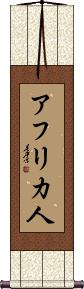
This is the word African in Japanese Katakana.
Note: Because this selection contains some special Japanese Katakana characters, it should be written by a Japanese calligrapher.
Ahsan

阿赫桑 is the name Ahsan in Chinese (Mandarin).
Ahsan

アフサン is the name Ahsan in Japanese Katakana.
Note: Because this title is entirely Japanese Katakana, it should be written by a Japanese calligrapher.
Aidan
艾丹 is the name Aidan in Chinese (Mandarin).
Aidan
エイダン is the name Aidan in Japanese.
Note: Because this title is entirely Japanese Katakana, it should be written by a Japanese calligrapher.
Aikido Yoshinkan
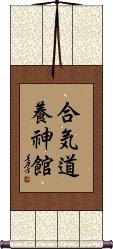
合気道養神館 is the title Aikidō Yōshinkan in Japanese Kanji.




