I am shipping orders on Saturday this week. News and More Info
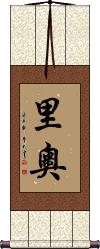
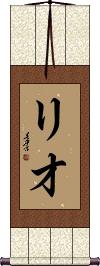
Click the "Customize" button next to your name below to start your personalized rio calligraphy artwork...
Switched to secondary search mode due to lack of results using primary.
These secondary results may not be very accurate. Try a different but similar meaning word or phrase for better results. Or...
Look up Rio in my Japanese Kanji & Chinese Character Dictionary(My dictionary is a different system then the calligraphy search you just tried)
If you want a special phrase, word, title, name, or proverb, feel free to contact me, and I will translate your custom calligraphy idea for you.
1. Amarion
2. Apolinario
3. Arion
4. Asterio
5. Barrionuevo
6. Belisario
7. Benerio
9. Briona
10. Candelario
11. Cario
12. Clotario
14. Daredevil Warrior / Soul of a Warrior
15. Dario
16. Darion
17. Demeterio
18. Demetrio
19. Desiderio
20. Dimitrios
21. Dragon Warrior
22. Eleuterio
23. Emeterio
26. The Mysterious Bond Between People
28. Ghost Warrior
29. God in the Glorious Center of Heaven
30. Gregorio
31. Gualterio
33. Industrious / Hard Working
36. Hilario
37. Holy Warrior
38. Inner Warrior
39. Intense / Serious / Deep / Profound
40. Jario
41. Lotario
42. Macario
43. Mario
44. Mariol
45. Mariola
46. Marion
47. Mariorie
48. Marriot
50. Nerio
51. Noble Warrior
52. Olegario
53. Oliverio
54. Oriol
55. Orion’s Belt
56. Patriot
57. Peaceful Warrior
58. Porferio
59. Porfirio
60. Quiet Warrior
勇士 is the Chinese, Japanese Kanji, and old Korean Hanja for a brave warrior, a brave person, a hero, or a brave man.
In Japanese, this can be a given name, Yuuji.
好奇 means curiosity or inquisitive in Chinese, Japanese Kanji, and old Korean Hanja.
It is a rather positive word in all three languages - though not as commonly used in Japanese.
鬼武者 is an unusual title that can be translated two ways, daredevil warrior or demon warrior.
The most common is probably the daredevil warrior. However, the first character means demon, ghost, or soul of the departed. Therefore, it can mean the soul of a warrior or a demon warrior.
This title is Japanese only, and should not be used if your audience is Chinese.
覺醒武士 is not a commonly used title in Chinese but is sometimes used in Martial arts and military contexts to refer to a warrior who seems always to be fully aware, enlightened, knowledgeable, noble, and just.
The first two characters are a word that means: to awaken; to come to realize; awakened to the truth; the truth dawns upon one; scales fall from the eyes; to become aware.
The last two characters mean warrior but can also refer to a samurai, soldier, or fighter.
The invisible force that brings people together forever
緣 represents the fate that brings and bonds people together.
緣 is a complicated single character. It can mean a lot of different things depending on how you read it.
In Japanese, it can mean fate, destiny, a mysterious force that binds two people together, a relationship between two people, bond, link, connection, family ties, affinity, opportunity, or chance (to meet someone and start a relationship). It can also mean “someone to rely on,” relative, reminder, memento, or the female given name, Yori.
It's the same in Chinese, where it's defined as cause, reason, karma, fate, or predestined affinity.
In the Buddhist context, it's Pratyaya. This is the concept of indirect conditions, as opposed to direct causes. It's when something happens (meeting someone) by circumstance or a contributing environment. Instead of a direct cause or act, it is a conditioning cause without direct input or action by the involved people.
Occasionally, this character is used in a facetious way to say hem, seam, or edge of clothing. In this case, it's the seam that brings or holds the clothing together.
Note: Japanese will tend to use the variant of this Kanji shown to the right. If you want this version (and are ordering this from the Japanese master calligrapher), click on the Kanji at the right instead of the button above.
Danger: Means prostitute in Japanese!
玄人 literally means “Mysterious Person/Woman.”
In Japanese, this is associated with a “geisha,” which matches this definition of a “mysterious woman.” However, this is the colloquial way to say “professional geisha” or “expert prostitute” in Japanese. It, therefore, might not be what you want on your wall.
Notes: This is a "Japanese only" term, though a Chinese person who sees these characters will think of a geisha or an alluring Japanese female musician.
While not often seen in Korean Hanja, this would mean a "dark woman," as in a woman that you cannot easily see through.
天之御中主神 is a phrase submitted by a customer.
I do not have information on the origin of this phrase.
關公 is a Chinese title, Guan Gong, that means Lord Guan (The warrior saint of ancient China).
While his real name was Guan Yu / 關羽, he is commonly known by the title of Guan Gong (關公).
Some Chinese soldiers still pray to Guan Gong for protection. They would especially do this before going into battle. Statues of Guan Gong are seen throughout China.
愛崗敬業 is used to refer to someone who puts forth maximum effort and achieves much.
We might call this kind of person a “go-getter” in English.
See Also: Dedication | Tenacious | Devotion
天力士 means “Heavenly Warrior,” or “Hero of Heaven,” in Chinese, old Korean, and Japanese.
Often used in a Buddhist context.
深刻 is a Chinese word that is the form of intense that describes a person who is deep, serious, and a true thinker.
If you find yourself contemplating the world and coming up with profound ideas, this might be the word for you. In some contexts (especially Korean), it can mean seriousness, gravity, or acuteness.
In Japanese, this can mean “serious problem” or can be a rare given name, Misa. You should not use this if your audience is Japanese.
愛國者 is the most common way to write patriot in Traditional Chinese and old Korean Hanja.
In another context, this can refer to the MIM-104 Patriot surface-to-air missile.
This literally translates as “love [of] country person.”
平和的武士 means “Peaceful Warrior” in Chinese. This does in fact sound like an oxymoron in Chinese - but many of you have asked for this special title.
Note this is not the same thing as “warrior for peace.”
See Also: Peace
平和の武士 can be read as “Peaceful Warrior” or “Warrior for Peace” in Japanese. This sounds like an oxymoron in Japanese, so it's a weird title. Expect Japanese people to be perplexed when they see it.
Character breakdown:
平和 (heiwa) peace; harmony.
の (no) possessive particle.
武士 (bushi) warrior; samurai; soldier.
靜武士 is the shortest way to write “Quiet Warrior” or “Tranquil Warrior” in Chinese.
See Also: Peaceful Warrior
All of our calligraphy wall scrolls are handmade.
When the calligrapher finishes creating your artwork, it is taken to my art mounting workshop in Beijing where a wall scroll is made by hand from a combination of silk, rice paper, and wood.
After we create your wall scroll, it takes at least two weeks for air mail delivery from Beijing to you.
Allow a few weeks for delivery. Rush service speeds it up by a week or two for $10!
When you select your calligraphy, you'll be taken to another page where you can choose various custom options.
The wall scroll that Sandy is holding in this picture is a "large size"
single-character wall scroll.
We also offer custom wall scrolls in small, medium, and an even-larger jumbo size.
Professional calligraphers are getting to be hard to find these days.
Instead of drawing characters by hand, the new generation in China merely type roman letters into their computer keyboards and pick the character that they want from a list that pops up.
There is some fear that true Chinese calligraphy may become a lost art in the coming years. Many art institutes in China are now promoting calligraphy programs in hopes of keeping this unique form
of art alive.
Even with the teachings of a top-ranked calligrapher in China, my calligraphy will never be good enough to sell. I will leave that to the experts.
The same calligrapher who gave me those lessons also attracted a crowd of thousands and a TV crew as he created characters over 6-feet high. He happens to be ranked as one of the top 100 calligraphers in all of China. He is also one of very few that would actually attempt such a feat.
Some people may refer to this entry as Rio Kanji, Rio Characters, Rio in Mandarin Chinese, Rio Characters, Rio in Chinese Writing, Rio in Japanese Writing, Rio in Asian Writing, Rio Ideograms, Chinese Rio symbols, Rio Hieroglyphics, Rio Glyphs, Rio in Chinese Letters, Rio Hanzi, Rio in Japanese Kanji, Rio Pictograms, Rio in the Chinese Written-Language, or Rio in the Japanese Written-Language.