I am shipping orders on Saturday this week. News and More Info

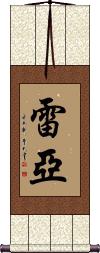
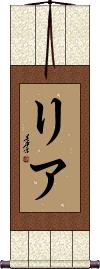
The Name Rea in Japanese/Chinese on a Custom-Made Wall Scroll.

Click the "Customize" button next to your name below to start your personalized rea calligraphy artwork...

Switched to secondary search mode due to lack of results using primary.
These secondary results may not be very accurate. Try a different but similar meaning word or phrase for better results. Or...

Look up Rea in my Japanese Kanji & Chinese Character Dictionary(My dictionary is a different system then the calligraphy search you just tried)

If you want a special phrase, word, title, name, or proverb, feel free to contact me, and I will translate your custom calligraphy idea for you.


  1. Andrea

  2. Andrean

  3. Andreane

  4. Andreanne

  5. Andreas

  6. Great Aspirations / Ambition

  7. Great Expectations

  8. Audreanne

  9. Aurea

10. Awesome / Really Cool

11. Beautiful Dreamer

12. Big Dream

13. Brea

14. Breadyn

15. Breann

16. Breanna

17. Breath of Life

18. Breathe

19. The Buddha Realm / Buddhahood

20. Create / Creation

21. The Law of Creation and Destruction

22. Creative / Creativity

23. Unbridled Creativity

24. Creativity

25. Every Creature Has A Domain

26. Great Peace

27. Great Wisdom

28. Great Illumination of Wisdom

29. The Great Path has No Gate

30. Daimyo / Great Name

31. Desirea

32. Stay Strong / Indestructible / Unbreakable

33. Door of Great Wisdom

34. Dread

35. Dream / Dreams

36. Dream / Vision

37. Dream Big / Big Dreams

38. Dream Come True / Enjoy Success

39. Dreamer

40. Realize Your Ambitions / Embrace Your Ambition

41. Great Endeavor / To Strive

42. Sky / Ether / Void / Emptiness / Unreality

43. Everything Happens for a Reason

44. Far-Reaching / Ambitious

45. The one who retreats 50 paces mocks the one to retreats 100

46. Doing good is the greatest source of happiness

47. Protect Guard Treasure Cherish

48. Great Britain

49. Big Dream / Great Hope

50. The Great Wall of China

51. Greatest Love

52. Greatest Infinite Love

53. Grand Master / Great Teacher

54. Great Responsibility

55. Grim Reaper / God of Death

56. Heroic Spirit / Great Ambition

57. Isreal

58. Jarrease

59. Three Treasures of Chinese Medicine

60. Kirin / Giraffe / Mythical Creature

61. Korean CKD Virtues

62. Life in Every Breath

63. Life Is But A Dream

64. Realize Your Dreams

65. Great Lord / Tycoon

66. Lorea

67. Love Without Reason

68. McCrea

69. Sense of Shame / Sense of Honor / Integrity / Modesty

70. Montreal

71. Nerea

72. North Korea

73. Great Sea

74. Great Power

75. Police / Public Security Bureau


 ān dé lì yà
Andrea Scroll

安德麗婭 is the transliteration to Mandarin Chinese for the Latin / Spanish name Andréa.

 andorea
Andrea Scroll

アンドレア is the name Andrea in Japanese.


Note: Because this title is entirely Japanese Katakana, it should be written by a Japanese calligrapher.

 ān dé liè
Andrean Scroll

安德烈 is the name Andrean in Chinese (Mandarin).

 andorian
Andrean Scroll

アンドリアン is the name Andrean in Japanese Katakana.


Note: Because this title is entirely Japanese Katakana, it should be written by a Japanese calligrapher.

 ān dé liè ān
Andreane Scroll

安德烈安 is the name Andreane in Chinese (Mandarin).

 andorean
Andreane Scroll

アンドレアン is the name Andreane in Japanese Katakana.


Note: Because this title is entirely Japanese Katakana, it should be written by a Japanese calligrapher.

 áng dé lěi ān
Andreanne Scroll

This is a common Mandarin Chinese transliteration for the female French name Andréanne or Andreanne.

 andorian
Andreanne Scroll

アンドリアン is the name Andreanne in Japanese (Katakana).


Note: Because this title is entirely Japanese Katakana, it should be written by a Japanese calligrapher.

 ān dé léi sī
Andreas Scroll

This is a common Mandarin Chinese transliteration for the male European name Andreas.

 ān dé liè yà sī
Andreas Scroll

安德烈亞斯 is the second most common transliteration to Mandarin Chinese for the name Andreas.

 andoreasu
Andreas Scroll

アンドレアス is the name Andreas in Japanese (Katakana).


Note: Because this title is entirely Japanese Katakana, it should be written by a Japanese calligrapher.

Great Aspirations / Ambition

 hóng hú zhī zhì
Great Aspirations / Ambition Scroll

鴻鵠之誌 is a Chinese proverb that implies that having grand ambitions also means that others will not understand your great expectations and ideas.

Though the actual words come from a longer saying of Confucius, which goes, “The little swallows living under the eaves wouldn't understand the lofty ambitions of a swan (who flies far and wide).”

This Confucius quote has led to this idiomatic expression in China that means “think big.” What you'd be saying is “The lofty ambitions of a swan.”

Note that Chinese people sometimes refer to the little swallow as one who does not “think big” but is, instead, stuck in a rut or just leading a mundane life. Therefore, it's a compliment to be called a swan but not a good thing to be called a swallow.

Great Aspirations / Ambition

 tai shi wo idaku
Great Aspirations / Ambition Scroll

大志を抱 is a single Japanese word that kind of reads like a short proverb.

It suggests that you should have “high aims,” “ambitions,” or “aspirations” in your life.

Great Expectations

 wàng
 bou / nozomi
 
Great Expectations Scroll

望 holds the ideas of ambition, hope, desire, aspiring to, expectations, looking towards, to gaze (into the distance), and in some contexts, full moon rising.

望 is one of those single characters that is vague but in that vagueness, it also means many things.

望 is a whole word in Chinese and old Korean but is seldom seen alone in Japanese. Still, it holds the meanings noted above in all three languages.

 ào dé lěi ān
Audreanne Scroll

This is a common Mandarin Chinese transliteration for the female French name Audréanne or Audreanne.

 oodorian
Audreanne Scroll

オードリアン is the name Audreanne in Japanese (Katakana).


Note: Because this title is entirely Japanese Katakana, it should be written by a Japanese calligrapher.

 ào lè ā
Aurea Scroll

奧樂阿 is the transliteration to Mandarin Chinese for the Latin / Spanish name Aurea.

 ooria
Aurea Scroll

オーリア is the name Aurea in Japanese (Katakana).


Note: Because this title is entirely Japanese Katakana, it should be written by a Japanese calligrapher.

Awesome / Really Cool

Chinese Slang

 zhēn niú
Awesome / Really Cool Scroll

真牛 is Chinese slang for something really cool or awesome.

真牛 is probably not appropriate for a calligraphy wall scroll unless you have a specific reason.

This literally translates as “the real bull” or “the genuine cow.”

Beautiful Dreamer

 měi lì de mèng shén
Beautiful Dreamer Scroll

美麗的夢神 is the Chinese title for the song Beautiful Dreamer.

It translates as Beautiful Dream Saint.

 dà mèng
 daimu
Big Dream Scroll

大夢 means “Big Dream” in Chinese and Japanese.

大夢 is primarily a Buddhist term referring to the great dream that represents a long and winding life that feels like a dream (since reality is an illusion anyway in Buddhism).

This can also be a female given name, Hiromu, or Oomu, in Japanese. Also, more rare unisex given names Daimu or Taimu.

 bù lì
Brea Scroll

布麗 is the name Brea in Chinese (Mandarin).

 burea
Brea Scroll

ブレア is the name Brea in Japanese.


Note: Because this title is entirely Japanese Katakana, it should be written by a Japanese calligrapher.

 bù léi dīng
Breadyn Scroll

布雷丁 is the name Breadyn in Chinese (Mandarin).

 buredin
Breadyn Scroll

ブレディン is the name Breadyn in Japanese Katakana.


Note: Because this title is entirely Japanese Katakana, it should be written by a Japanese calligrapher.

 bù lǐ ān
Breann Scroll

布里安 is the name Breann in Chinese (Mandarin).

 burian
Breann Scroll

ブリアン is the name Breann in Japanese (Katakana).


Note: Because this title is entirely Japanese Katakana, it should be written by a Japanese calligrapher.

 bù lǐ ān nà
Breanna Scroll

布里安娜 is the name Breanna in Chinese (Mandarin).

 burianna
Breanna Scroll

ブリアンナ is the name Breanna in Japanese.


Note: Because this title is entirely Japanese Katakana, it should be written by a Japanese calligrapher.

Breath of Life

 qì xī
 kisoku
Breath of Life Scroll

氣息 can mean breath of life or panting for want of breath in the Buddhist context.

In other contexts, it can mean breath, smell, odor, or flavor.

 hū xī
 ko kyuu
Breathe Scroll

呼吸 means to breathe, breathing or breath in Chinese characters, old Korean Hanja, and Japanese Kanji.

These two characters mean to exhale and inhale. Maybe this will remind you to “just breathe.”

The Buddha Realm / Buddhahood

 fó jìng
 bukkyou
The Buddha Realm / Buddhahood Scroll

佛境 means the spiritual region of Buddhas, the state of the Buddha, or the Buddha realm.

佛境 is Bukkyō in Japanese and Fójìng in Mandarin Chinese.

If you are contemplating the Metaverse, in contrast, 佛境 is the Buddha-sphere or Buddhaverse.

Create / Creation

 chuàng zào
 sou zou
Create / Creation Scroll

創造 means to create, to bring about, to produce, or simply creative or creation.

The first character here means to create, Genesis, or origin.
The second means to make or build.

The Law of Creation and Destruction

 shì shēng miè fǎ
 zeshoumeppou
The Law of Creation and Destruction Scroll

是生滅法 is a Buddhist term for “the law of arising and ceasing,” or, “the law of creation and destruction.”

Everything has a beginning and an end, birth and death, etc. All things follow this law.

Creative / Creativity

 chuàng yì
 sou i
Creative /  Creativity Scroll

創意 is creative or creativity in Chinese characters, old Korean Hanja, and Japanese Kanji.

It can also refer to an original idea or originality.

Unbridled Creativity

 bù jū yī gé
Unbridled Creativity Scroll

不拘一格 is a Chinese proverb that speaks of exploring different styles and not being stuck in conventional thinking.

It can also be translated as “not sticking to one pattern” or “not limited to one type (or style).” The most simple translation is “being creative” or “unbridled creativity.” Some may also say this means “not being stuck in a rut,” in the context of a designer or artist.

If you translate this, the first two characters mean “not stick to” or “not confine oneself to.”
The second two characters mean “one mode,” “one pattern,” “one form,” “one style,” or “one rule.”

 chuàng zào lì
 souzouryoku
Creativity Scroll

創造力 is a word that means “strength of creativity” or sort of “creativity (is your) strength.”

This can also be translated as “ingenuity.”

Creativity is the power of imagination. It is discovering your own special talents. Daring to see things in new ways and find different ways to solve problems. With your creativity, you can bring something new into the world.

The first character means “to create,” and the second means “to make or build.” Together they mean “creative.” The third character means “strength.”

Every Creature Has A Domain

 hǎi wéi lóng shì jiè yún shì hè jiā xiāng
Every Creature Has A Domain Scroll

海為龍世界雲是鶴家鄉 is a somewhat poetic way to say that everyone and everything has its place in the world.

Every Creature has a Domain The first line (which is the column on the right) says, “The Ocean is the World of the Dragon.” The next column says, “The Clouds are the Domain of the Cranes.”

The image to the right is what this calligraphy can look like in xing-kaishu style by a Master Calligrapher.

 daiannon
Great Peace Scroll

大安穏 means great peace, great repose, nirvanic peace, or great tranquility.

Great Wisdom

 dà zhì
 daichi
Great Wisdom Scroll

大智 is a Zen Buddhist title that means supreme wisdom, great wisdom, Buddha-wisdom, omniscience, or transcendental wisdom.

Great Illumination of Wisdom

 dà zhì míng
 dai chi myou
Great Illumination of Wisdom Scroll

大智明 is a Zen Buddhist title that means the great illumination of wisdom.

This refers to wisdom so bright that it shines through obviously to all in its presence.

The Great Path has No Gate

 dà dào wú mén
 dai dou mu mon
The Great Path has No Gate Scroll

大道無門 is a Buddhist proverb that means “The Great Way has no entrance,” “The Great Way is gateless,” or “The Great Path lacks a gate.”

This can be translated in many other ways.

This concept was authored within a long sacred text by 無門慧開 (known as Wúmén Huìkāi in Chinese or Mumon Ekai in Japanese). He was a Chinese Chan Master (in Japanese, a Zen Master) who lived between 1183 and 1260 AD. His most famous work was a 48-koan collection titled “The Gateless Barrier” or “The Gateless Gate” (無門關 Wú Mén Guān in Chinese, or 無門関 Mu Mon Kan in Japanese). This calligraphy title is a notable line from this collection.


I like this reference to the source of this proverb: The Gateless Gate 無門關

Daimyo / Great Name

 dà míng
 dai myou
Daimyo / Great Name Scroll

大名 is the title Daimyō in Japanese, which means “lord” or “great name.”

This has the same meaning in Chinese as “great name,” or “your distinguished name.” In ancient Japan, this referred to a feudal lord.

Also sometimes romanized from Japanese as Daimio, Daimyou, Oomiyou, or Oomyou.

 dé xī léi yà
Desirea Scroll

德西雷亞 is the name Desirea in Chinese (Mandarin).

 dejirea
Desirea Scroll

デジレア is the name Desirea in Japanese Katakana.


Note: Because this title is entirely Japanese Katakana, it should be written by a Japanese calligrapher.

Stay Strong / Indestructible / Unbreakable

 jīn gāng bù huài
 kon gou fu e
Stay Strong / Indestructible / Unbreakable Scroll

金剛不壞 is originally a Buddhist term for “The diamond indestructible.”

Sometimes, it's written 金剛不壞身, The diamond-indestructible body.

Outside that context, it still means firm and solid, sturdy and indestructible, unshakable, or adamantine (a mythological indestructible material).


壊 Note: If you order this from the Japanese master calligrapher, the last Kanji will look like the one shown to the right.

Door of Great Wisdom

 dà zhì huì mén
 dai chi e mon
Door of Great Wisdom Scroll

大智慧門 is the title for “The Great Wisdom Door,” or “The Gate to Great Wisdom.”

This refers to a portal to all wisdom and knowledge in Buddhism.

 doreddo
Dread Scroll

ドレッド is the name Dread in Japanese Katakana.


Note: Because this title is entirely Japanese Katakana, it should be written by a Japanese calligrapher.

Dream / Dreams

 mèng
 yume
 
Dream / Dreams Scroll

夢 is the very simple word for dreams in Chinese and Japanese.

It can also mean having a vision or simply an illusion.

Dream / Vision

 mèng xiǎng
 mu sou
Dream / Vision Scroll

夢想 is the two-character version of dream or dreaming, which can mean “to dream of [something],” vision, imagine, or reverie.

Be careful, as, in some contexts, it can mean dreaming of something in vain.

Dream Big / Big Dreams

 yuǎn dà mèng xiǎng
Dream Big / Big Dreams Scroll

遠大夢想 is a way to say “dream big” or “big dreams” in Mandarin Chinese.

Dream Come True / Enjoy Success

 dé zhì
Dream Come True / Enjoy Success Scroll

得誌 is a Chinese word that means to accomplish one's ambition, a dream come true, or to enjoy your success.

 mèng xiǎng jiā
 mu sou ka
Dreamer Scroll

夢想家 means “dreamer” or “visionary” in Chinese, Japanese Kanji, and old Korean Hanja.

Realize Your Ambitions / Embrace Your Ambition

 taishi wo Idaku
Realize Your Ambitions / Embrace Your Ambition Scroll

大志を抱く is a Japanese proverb that suggests you should embrace, pursue, and realize your ambitions.

The first part means ambitions or aspirations.

The last part means to embrace or to hold in your arms.

Here's the character breakdown:
大志 (taishi) ambition; aspiration.
を (o) particle
抱く (idaku) to embrace; to hold in the arms (e.g. a baby); to hug; to harbor/harbour; to bear (e.g., a grudge); to entertain (e.g., suspicion); to sleep with; to sit on eggs.


Note: Because this selection contains some special Japanese Hiragana characters, it should be written by a Japanese calligrapher.

Great Endeavor / To Strive

 nǔ lì
 doryoku
Great Endeavor / To Strive Scroll

努力 means great effort; to strive; to try hard; great effort; great exertion; great endeavor (endeavour); great effort; to strive.

This “striving endeavor” word is valid in Chinese, Japanese Kanji, and old Korean Hanja.

Sky / Ether / Void / Emptiness / Unreality

(Used in Japanese version of five elements)

 kōng
 kuu / kara / sora / ron
 
Sky / Ether / Void / Emptiness / Unreality Scroll

空 is a single character that means empty, void, hollow, vacant, vacuum, blank, nonexistent, vacuity, voidness, emptiness, non-existence, immateriality, unreality, the false or illusory nature of all existence, and being unreal.

In the Buddhist context, this relates to the doctrine that all phenomena and the ego have no reality but are composed of a certain number of skandhas or elements, which disintegrate. The void, the sky, space. The universal, the absolute, complete abstraction without relativity. The doctrine further explains that all things are compounds, or unstable organisms, possessing no self-essence, i.e. are dependent, or caused, come into existence only to perish. The underlying reality, the principle of eternal relativity, or non-infinity, i.e. śūnya, permeates all phenomena making possible their evolution.

From Sanskrit and/or Pali, this is the translation to Chinese and Japanese of the title śūnya or śūnyatā.

In Japanese, when pronounced as “ron” (sounds like “roan”) this can be a given name. It should be noted that this Kanji has about 5 different possible pronunciations in Japanese: kuu, kara, sora, ron, and uro. 空 is also an element in the Japanese version of the five elements.

Everything Happens for a Reason

 wàn shì jiē yīn guǒ
Everything Happens for a Reason Scroll

萬事皆因果 means “Everything happens for a reason” in Chinese.

The first two characters mean “all things” or “everything.”

The middle character kind of means “in all cases.”

The last two characters create a complex word that can be defined in many ways, such as “karma,” “cause and effect,” “fate,” and “every cause has its effect, as every effect arises from a cause.”

Keep in mind that Chinese grammar is a bit different than English, so trust me that this makes a natural-sounding proverb in Chinese.

Everything Happens for a Reason

 monogoto ha subete riyuu ga at te okiru
Everything Happens for a Reason Scroll

物事は全て理由があって起きる means everything happens for a reason.

However, this is a work in progress. We're still trying to decide the best way to express this in Japanese. If you order this, we might have a discussion about the best version that fits you. Here's how the characters break down by meaning (keep in mind, Japanese grammar and sentence construction is very different from English, so it doesn't make complete sense in English)...

物事 = things, everything
は particle
全て all, the whole, entirely
理由 reason
が particle
あっ be, exist, have, take place, happens
て particle
起きる to occur, to happen; to take place (usually unfavorable incidents)


Note: Because this selection contains some special Japanese Hiragana characters, it should be written by a Japanese calligrapher.

Far-Reaching / Ambitious

 yuǎn dà
 en dai
Far-Reaching / Ambitious Scroll

遠大 is a Chinese, Japanese Kanji, and old Korean Hanja word that means far-reaching, broad, ambitious, and/or promising.

The one who retreats 50 paces mocks the one to retreats 100

The pot calls the kettle black

 wù shí bù xiào bǎi bù
The one who retreats 50 paces mocks the one to retreats 100 Scroll

五十步笑百步 is a Chinese proverb that means the one who retreats 50 paces mocks the one who retreats 100 paces.

During the Warring States Period of what is now China (475 - 221 B.C.), the King of Wei was in love with war. He often fought with other kingdoms just for spite or fun.

One day, the King of Wei asked the philosopher Mencius, “I love my people, and all say I do the best for them. I move the people from famine-stricken areas to places of plenty and transport grains from rich areas to the poor. Nobody goes hungry in my kingdom, and I treat my people far better than other kings. But why does the population of my kingdom not increase, and why does the population of other kingdoms not decrease?”

Mencius answered, “Since you love war, I will make this example: When going to war, and the drums beat to start the attack, some soldiers flee for their lives in fear. Some run 100 paces in retreat, and others run 50 steps. Then the ones who retreated 50 paces laugh and taunt those who retreated 100 paces, calling them cowards mortally afraid of death. Do you think this is reasonable?

The King of Wei answered, “Of course not! Those who run 50 paces are just as timid as those who run 100 paces.”

Mencius then said, “You are a king who treats his subjects better than other kings treat their people, but you are so fond of war that your people suffer from great losses in battle. Therefore, your population does not grow. While other kings allow their people to starve to death, you send your people to die in war. Is there any difference?”

This famous conversation led to the six-character proverb shown here. It serves as a warning to avoid hypocrisy. It goes hand-in-hand with the western phrase, “The pot calls the kettle black,” or the Biblical phrase, “Before trying to remove a splinter from your neighbor's eye, first remove the plank from your own eye.”

Doing good is the greatest source of happiness

 wéi shàn zuì lè
Doing good is the greatest source of happiness Scroll

為善最樂 can be translated as “Doing good is the greatest source of happiness” or “doing good deeds brings the greatest joy.”

The origin is not known but is sometimes used in the context of Buddhism. However, this Chinese proverb or philosophy is a relatively mainstream idea of benevolence.

Protect Guard Treasure Cherish

 hù xí
 goshaku
Protect Guard Treasure Cherish Scroll

護惜 is a Zen Buddhist word that means to protect, guard, treasure, and/or cherish.

Great Britain

 dà bù liè diān
Great Britain Scroll

This is the Chinese name for Great Britain.


See Also:  England | United Kingdom | Scotland | Ireland | Europe

Great Britain

 ei koku
Great Britain Scroll

This is Great Britain written in Japanese.

Big Dream / Great Hope

 tai mou
Big Dream / Great Hope Scroll

大望 is one of a few ways to write “dream big” in Japanese.

This is a good title if you want that to inspire ambition or high aspirations. 大望 is also a way to say “great expectations.”

The Great Wall of China

 cháng chéng
 chou jou
The Great Wall of China Scroll

長城 is the Chinese name for the Great Wall.

Built at the northern border of China to protect from Mongol attack.


Notes:
In Japanese, this can be a surname Nagaki. Japanese often use a longer title for the Great Wall of China.
In Korean, this refers to Changsŏng (a city in Changsŏng-kun county, Chŏllanam-to province).

The Great Wall of China

 ban ri no chou jou
The Great Wall of China Scroll

万里の長城 is the Japanese name for the Great Wall of China.

Greatest Love

 zuì wěi dà de ài
Greatest Love Scroll

最偉大的愛 means “the greatest love” in Chinese.

Keeping in mind that Chinese is different than English, the first character is like “-est” or adding “the most” as a modifier to the next word.
The 2nd and 3rd characters mean great, mighty, and/or large.
The 4th is a possessive article.
The last is the character for love.

When you put it all together, you get a phrase that means the greatest love, enormous love, or the mightiest love.

Greatest Infinite Love

 bu gen dai no ai
Greatest Infinite Love Scroll

無限大の愛 is a Japanese title meaning infinite great love, unlimited great love, or eternal love.

無 means never, not, or like a prefix “un-.”

限 means limited, restricted, or bound.
大 means great or big.
の is a possessive article.
愛 means love or affection.

Grand Master / Great Teacher

 dà shī
 daishi
Grand Master / Great Teacher Scroll

大師 is a way to title a great master, grand master, or great teacher.

This can be used in the context of martial arts or a Buddhist teacher. Thus, it can be used to title a living Buddha, Bodhisattva, or high-ranking monk.

Great Responsibility

 zhòng dàn
 juu tan
Great Responsibility Scroll

重擔 means heavy burden, difficult task, heavy load, or great responsibility.

Grim Reaper / God of Death

 sǐ shén
 shinigami
Grim Reaper / God of Death Scroll

死神 is the title of the mythological figure (often called the Grim Reaper in western culture) in charge of taking the souls of those who die.

This title can be translated directly as “god of death” or “spirit of death.” The first character literally means “death,” and the second means “spirit” or “god.”

死神 is a very strange title for a calligraphy wall scroll. I'm not even sure if my calligraphers will write it, as it has some bad superstitious feelings attached to it.

Heroic Spirit / Great Ambition

 xióng xīn
 yuushin
Heroic Spirit / Great Ambition Scroll

雄心 are the Chinese characters and Japanese Kanji for great ambition, lofty aspiration, or heroic spirit.

 yǐ sè liè
Isreal Scroll

以色列 is the name Isreal in Chinese (Mandarin).

 isuraeru
Isreal Scroll

イスラエル is the name Isreal in Japanese Katakana.


Note: Because this title is entirely Japanese Katakana, it should be written by a Japanese calligrapher.

 jiǎ léi sī
Jarrease Scroll

賈雷斯 is the name Jarrease in Chinese (Mandarin).

 jariisu
Jarrease Scroll

ジャリース is the name Jarrease in Japanese (Katakana).


Note: Because this title is entirely Japanese Katakana, it should be written by a Japanese calligrapher.

Three Treasures of Chinese Medicine

 jīng qì shén
Three Treasures of Chinese Medicine Scroll

精, 氣, 神 are the characters jing, qi, and shen.

As a set, these three characters are known in English as the treasures of traditional Chinese medicine, the treasures of Qi Gong, or the three treasures of Taoism / Daoism.

Sometimes this set is titled 三寶 (sānbǎo) or “three treasures,” but here, we're writing each treasure out.

Here's how these characters are perceived in this context...
Jing: nutritive essence; refined; perfected; pure
Qi: vitality; energy; force; breath; vigor
Shen: spirit; soul; mind; being

To keep it simple, you can use “essence, vitality, and spirit” to define these.

Kirin / Giraffe / Mythical Creature

 qí lǐn
 keilun
 kirin
Kirin / Giraffe / Mythical Creature Scroll

麒麟 is the title of a mythical beast of Asia.

The animal is thought to be related to the giraffe, and in some ways, it is a giraffe. However, it is often depicted with the horns of a dragon or deer and sometimes with the body like a horse, but many variations exist.

In Japanese, it is pronounced “Kirin” as in “Kirin Ichiban” beer.

Kirin - Mythical Beast and Great Japanese Beer!
Notes:

1. This is sometimes spelled as “kylin.”

2. In Japanese, this is the only Kanji word for giraffe. Therefore in Japan, this word needs context to know whether you are talking about the mythical creature or the long-necked giraffe of Africa.

3. Apparently, this was the first word used for regular giraffes in China (some were brought from Africa to China during the Ming Dynasty - probably around the year 1400). Though the mythical creature may have existed before, the name “qilin” was given to the “new giraffe.” This is because, more than 600 years ago, giraffes somewhat matched the mythical creature's description when Chinese people saw them for the first time. Later, to avoid such an ambiguous title, a three-character word was devised to mean a “giraffe of Africa.” The characters for “qilin” shown here are only for the mythological version in modern Chinese.

4. More information about the qilin / kirin from Wikipedia.

5. This creature is sometimes translated as the “Chinese Unicorn,” although it is generally portrayed with two horns. I think this is done more for the fantasy aspect of the unicorn and because most westerners don't know what a qilin or kirin is (this avoids a long explanation by the translator).

6. In Korean, this can mean kirin or simply giraffe (usually, the mythological creature is what they would think of when seeing these characters alone on a wall scroll).

Korean CKD Virtues

 qiān xùn zhèng zhí wēn róu rěn nài kè jǐ bù qū
Korean CKD Virtues Scroll

谦逊正直温柔忍耐克己不屈 are the virtues used by Choi Kwang Do Martial Arts.

EnglishHanjaHangulPronunciation
1. Humility (Humble / Modesty)謙遜겸손gyeom son
2. Honesty (Integrity)正直정직jeong jig
3. Gentleness溫柔온유on yu
4. Perseverance (To Endure)忍耐인내in nae
5. Self-Control (Self-Restraint)克己극기geug gi
6. Unbreakable Spirit (Unyielding / Unbending)不屈불굴bur gur

The characters shown here are in the ancient Korean Hanja form of writing. If you wish for a Korean Hangul form of these tenets, we can arrange that with our Master Calligrapher Xing An-Ping (click on the Hangul next to the South Korean flag above to order this in Hangul).

Life in Every Breath

 shēng huó zhōng de měi yī cì hū xī
Life in Every Breath Scroll

生活中的每一次呼吸 means “life in every breath” in Chinese.

This phrase is more like “every breath in life” as if it's a quantity of breaths that makes up your life.


There are many ways to understand this phrase in English, so this is one of a few ways it could be translated into Chinese. If you’re looking for a different meaning, please contact me.

Life in Every Breath

 hakuiki hitotsu nimo seimei ga yadori
Life in Every Breath Scroll

吐く息一つにも生命が宿り means “life in every breath” in Japanese.

This phrase is more like “every single breath as you live and dwell.”

The characters breakdown this way:
吐く息 (hakuiki) to breathe; exhaled air; one's breath; breathing.
一つ (hitotsu) one; only; just.
にも (nimo) also; too; as well; even.
生命 (seimei) life; existence; living.
が (ga) particle.
宿り (yadori) to lodge; to dwell; lodging; abode; shelter.


Note: Because this selection contains some special Japanese Hiragana characters, it should be written by a Japanese calligrapher.

Life Is But A Dream

 rén shēng rú mèng
Life Is But A Dream Scroll

人生如夢 is an old Chinese proverb that suggests, “life is but a dream.”

This kind of follows the Buddhist idea that the world is a temporal place, where reality may not be as real as you think.

Realize Your Dreams

 shí xiàn nǐ de mèng xiǎng
Realize Your Dreams Scroll

實現你的夢想 means “realize your dreams” or “live your dreams” in Chinese.

實現 means to achieve, to implement, to realize, or to bring about.

The characters 你的 effectively mean “your.”

夢想 means to dream, imagine, or have a vision.

Great Lord / Tycoon

 tai kun
Great Lord / Tycoon Scroll

大君 is the Japanese word Taikun. It's defined directly as liege, lord, or an alternate title for a shogunate.

The sound of this Japanese word entered the English lexicon by the 1800s but took the spelling of “tycoon.” Even President Lincoln was referred to as a Tycoon in the 1860s.

In Japan, this is still understood as “Great Lord” or “Big Boss.” In America, it means “Bill Gates” and “Warren Buffet.”

 luó lěi yà
Lorea Scroll

羅蕾婭 is the transliteration to Mandarin Chinese for the Latin / Spanish name Lorea.

 roria
Lorea Scroll

ロリア is the name Lorea in Japanese (Katakana).


Note: Because this title is entirely Japanese Katakana, it should be written by a Japanese calligrapher.

Love Without Reason

 ài ér wú yóu
Love Without Reason Scroll

愛而無由 is how to write “love without reason” in Mandarin Chinese (using proper grammar, etc).

This is not a commonly used or ancient phrase in Chinese.

Love Without Reason

 ai ni ri yuu wa na i
Love Without Reason Scroll

愛に理由は無い is a Japanese phrase that means “love without reason,” or “love doesn't need a reason.” It's a pretty cool phrase in Japanese


Note: Because this selection contains some special Japanese Hiragana characters, it should be written by a Japanese calligrapher.

 mài kè léi
McCrea Scroll

麥克雷 is the name McCrea in Chinese (Mandarin).

 makurea
McCrea Scroll

マクレア is the name McCrea in Japanese Katakana.


Note: Because this title is entirely Japanese Katakana, it should be written by a Japanese calligrapher.

Sense of Shame / Sense of Honor / Integrity / Modesty (Korean)

 lián chǐ
 ren chi
Sense of Shame / Sense of Honor / Integrity / Modesty (Korean) Scroll

廉恥 simultaneously means “sense of honor” and “sense of shame” in Korean.

This term is often used as a tenet of Taekwondo, where the English terms “integrity” and “modesty” are applied.

廉恥 is also a Chinese word, though it is usually read with the “sense of shame” meaning, and is a poor choice for a wall scroll if your audience is Chinese.

 méng tè lì ěr
Montreal Scroll

蒙特利爾 is the name Montreal in Chinese (Mandarin).

 montoreru
Montreal Scroll

モントレル is the name Montreal in Japanese (Katakana).


Note: Because this title is entirely Japanese Katakana, it should be written by a Japanese calligrapher.

 nèi léi yà
Nerea Scroll

內雷亞 is the transliteration to Mandarin Chinese for the Latin / Spanish name Nerea.

 neria
Nerea Scroll

ネリア is the name Nerea in Japanese (Katakana).


Note: Because this title is entirely Japanese Katakana, it should be written by a Japanese calligrapher.

 běi cháo xiǎn
 kita chousen
North Korea Scroll

北朝鮮 is the Chinese and Japanese name for the country of North Korea.

The official English name being Democratic People's Republic of Korea.


See Also:  South Korea | Asia

 hokusen
North Korea Scroll

This short Japanese name for the country of North Korea (Democratic People's Republic of Korea).

There is a 3-character name, 北朝鮮 that is a lot more common.


See Also:  South Korea | Asia

 dà yáng
 tai you
Great Sea Scroll

This is a rarely-used word for ocean in Japanese, Chinese, and Korean. This is here mostly for reference - please order a different ocean for your custom calligraphy wall scroll.

The first character means “big” or “great.”
The second means “ocean” or “body of water” (it can sometimes mean “foreign” but not in this case).
The first character designates that you are talking about a great or huge body of water (certainly a major ocean and not a smaller sea).

 dà lì
 dai riki
Great Power Scroll

大力 can mean immense physical strength or great power.

This can also act as an adjective for expressing how energetically or vigorously something is.

This can also be a given name, Dairiki, in Japanese.

Police / Public Security Bureau

 gōng ān
 kou an
Police / Public Security Bureau Scroll

公安 is the Chinese, Japanese Kanji, and old Korean Hanja title for (The Ministry of) Public Security. 公安 can also generally mean public safety, public security, or public welfare. It is a positive term in Japan, where some even name their daughters “Kouan” (this title).

In China, this is the kinder name for the PSB or Public Security Bureau. It's really the national police of China - occasionally brutal and seldom properly-trained or educated. Once in a while, you find a PSB officer who lives up to the title of 公安. Before the 1989 massacre, it was the PSB officers who refused to stop nor kill any of the protesting college students (so they're not all bad). The Chinese government had to call in soldiers from Inner Mongolia to kill thousands of protesters.


Dictionary

Lookup Rea in my Japanese & Chinese Dictionary

All of our calligraphy wall scrolls are handmade.

When the calligrapher finishes creating your artwork, it is taken to my art mounting workshop in Beijing where a wall scroll is made by hand from a combination of silk, rice paper, and wood.
After we create your wall scroll, it takes at least two weeks for air mail delivery from Beijing to you.

Allow a few weeks for delivery. Rush service speeds it up by a week or two for $10!

When you select your calligraphy, you'll be taken to another page where you can choose various custom options.


A nice Chinese calligraphy wall scroll

The wall scroll that Sandy is holding in this picture is a "large size"
single-character wall scroll.
We also offer custom wall scrolls in small, medium, and an even-larger jumbo size.

A professional Chinese Calligrapher

Professional calligraphers are getting to be hard to find these days.
Instead of drawing characters by hand, the new generation in China merely type roman letters into their computer keyboards and pick the character that they want from a list that pops up.

There is some fear that true Chinese calligraphy may become a lost art in the coming years. Many art institutes in China are now promoting calligraphy programs in hopes of keeping this unique form of art alive.

Trying to learn Chinese calligrapher - a futile effort

Even with the teachings of a top-ranked calligrapher in China, my calligraphy will never be good enough to sell. I will leave that to the experts.

A high-ranked Chinese master calligrapher that I met in Zhongwei

The same calligrapher who gave me those lessons also attracted a crowd of thousands and a TV crew as he created characters over 6-feet high. He happens to be ranked as one of the top 100 calligraphers in all of China. He is also one of very few that would actually attempt such a feat.


Some people may refer to this entry as Rea Kanji, Rea Characters, Rea in Mandarin Chinese, Rea Characters, Rea in Chinese Writing, Rea in Japanese Writing, Rea in Asian Writing, Rea Ideograms, Chinese Rea symbols, Rea Hieroglyphics, Rea Glyphs, Rea in Chinese Letters, Rea Hanzi, Rea in Japanese Kanji, Rea Pictograms, Rea in the Chinese Written-Language, or Rea in the Japanese Written-Language.