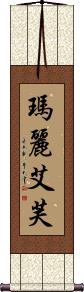
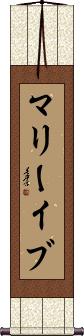
I am shipping orders on Saturday this week. News and More Info

The Name Eve in Japanese/Chinese on a Custom-Made Wall Scroll.

Click the "Customize" button next to your name below to start your personalized eve calligraphy artwork...

Switched to secondary search mode due to lack of results using primary.
These secondary results may not be very accurate. Try a different but similar meaning word or phrase for better results. Or...

Look up Eve in my Japanese Kanji & Chinese Character Dictionary(My dictionary is a different system then the calligraphy search you just tried)

If you want a special phrase, word, title, name, or proverb, feel free to contact me, and I will translate your custom calligraphy idea for you.


  1. Even a fool may sometimes come up with a good idea

  2. 17 Seventeen

  3. Aceveda

  4. Acevedo

  5. Achievement

  6. Achievement / Accomplishment

  7. Believe

  8. Believe / Faith / Trust

  9. Believe in Yourself

10. Believer

11. Beverley

12. Beverly

13. Chevel

14. Chevelle

15. Cleve

16. Cleveland

17. Clever

18. Clever / Superb / Wonderful

19. Every Creature Has A Domain

20. Determination to Achieve

21. Deven

22. Deveni

23. DeVera

24. Drinking the water of a well: One should never forget who dug it

25. Esteve

26. Eternal Friendship / Friends Forever

27. Eternal Life / Everlasting Life / Immortality

28. Eternity / Forever

29. Eternity / Always and Forever

30. Eve

31. Evee

32. Evei

33. Evelin

34. Evelina

35. Eveline

36. Evelyn

37. Evelyne

38. Evelynn

39. Even Monkeys Fall From Trees

40. Evens

41. Everardo

42. Everet

43. Everett

44. Everette

45. Everlee

46. Everleigh

47. Everline

48. Everly

49. Everlyn

50. Everton

51. Everyday Life

52. Everything Happens for a Reason

53. Evette

54. Fall Down Seven Times, Get Up Eight

55. Family Over Everything

56. Flourish and Blossom Everywhere

57. Forever In My Heart

58. Forever Love

59. Forever Young

60. Forever Young / Eternal Youth

61. Forever Young / Long Life

62. Forever Family

63. Forever Sisters

64. Perseverance / Fortitude


Even a fool may sometimes come up with a good idea

 qiān lǜ yī dé
 senryonoittoku
Even a fool may sometimes come up with a good idea Scroll

千慮一得 means “1000 tries, one success,” or “[a] thousand tries [leads to] one success.”

This proverb is a humble way to express your success, ideas, or accomplishments. As if you are a fool who just got lucky in inventing or creating something.

Translations for this proverb include:
Even without any notable ability on my part, I may still get it right sometimes by good luck.
Even a fool may sometimes come up with a good idea.

Compare this to the English idiom, “Even a broken clock is right twice a day.”

17 Seventeen

 shí qī
 juunana / juushichi
17 Seventeen Scroll

十七 is the Chinese, Japanese, and Korean for the number seventeen (17).

 ā sài wéi dá
Aceveda Scroll

阿塞韋達 is the name Aceveda in Chinese (Mandarin).

 aseveda
Aceveda Scroll

アセヴェダ is the name Aceveda in Japanese Katakana.


Note: Because this title is entirely Japanese Katakana, it should be written by a Japanese calligrapher.

 ā sāi wéi duō
Acevedo Scroll

阿塞維多 is the transliteration to Mandarin Chinese for the Latin / Spanish name Acevedo.

 asebudo
Acevedo Scroll

アセブド is the name Acevedo in Japanese (Katakana).


Note: Because this title is entirely Japanese Katakana, it should be written by a Japanese calligrapher.

 chéng jì
 seiseki
Achievement Scroll

成績 is a Chinese, Japanese, and old Korean Hanja word that means achievement.

Depending on the context, it can also mean performance records, grades, or results.

Achievement / Accomplishment

 chéng jiù
 jouju
Achievement / Accomplishment Scroll

成就 is the word most often used in Chinese, Korean and Japanese to mean accomplishment or achievement.

成就 can also be used to mean success, attain a result, fulfillment, realization, or completion.

 xiāng xìn
Believe Scroll

相信 is the Chinese way to say believe.

This specifically means to be convinced that something is true or to accept something as true or real.

This can also be translated as “convinced of,” “have trust in,” or “have faith in.”

Believe / Faith / Trust

śraddhā

 xìn
 shin
 
Believe / Faith / Trust Scroll

信 can mean to believe, truth, faith, fidelity, sincerity, trust, and confidence in Chinese, old Korean Hanja, and Japanese Kanji.

This single character is often part of other words with similar meanings.

It is one of the five basic tenets of Confucius.

In Chinese, it sometimes has the secondary meaning of a letter (as in the mail) depending on context but it will not be read that way when seen on a wall scroll.

In the Buddhist context, this is śraddhā (faith through hearing or being taught).


See Also:  Faith | Trust | Confucius

Believe in Yourself

 xiāng xìn zì jǐ
Believe in Yourself Scroll

相信自己 means “believe in yourself” in Chinese.

Believe in Yourself

 jibun o shinjiru
Believe in Yourself Scroll

自分を信じる means “believe in yourself,” “have faith in yourself,” or “believe in myself” (can be myself or yourself depending on if you're saying it to yourself or someone else).


Note: Because this selection contains some special Japanese Hiragana characters, it should be written by a Japanese calligrapher.

 xìn tú
 shinto
Believer Scroll

信徒 is the Chinese, Japanese Kanji, and old Korean Hanja word for “believer.”

Just as in English, this word can be used for a follower of virtually any religion.

This word can also be translated into English as layman, adherent, follower, laity, disciple, or devotee.

 bèi fú lì
Beverley Scroll

This is the most common Mandarin Chinese transliteration for the female French name Beverley.

 bèi fú lì
Beverley Scroll

貝弗利 is another common transliteration to Mandarin Chinese for the name Beverley.

 bivarii
Beverley Scroll

ビヴァリー is the name Beverley in Japanese.


Note: Because this title is entirely Japanese Katakana, it should be written by a Japanese calligrapher.

 bèi fú lì
Beverly Scroll

貝弗麗 is the name Beverly in Chinese (Mandarin).

 bivarii
Beverly Scroll

ビヴァリー is the name Beverly in Japanese.


Note: Because this title is entirely Japanese Katakana, it should be written by a Japanese calligrapher.

 qiè wéi ěr
Chevel Scroll

切維爾 is the name Chevel in Chinese (Mandarin).

 sheberu
Chevel Scroll

シェベル is the name Chevel in Japanese Katakana.


Note: Because this title is entirely Japanese Katakana, it should be written by a Japanese calligrapher.

 xiè wéi ěr
Chevelle Scroll

謝維爾 is the name Chevelle in Chinese (Mandarin).

 sheberu
Chevelle Scroll

シェベル is the name Chevelle in Japanese Katakana.


Note: Because this title is entirely Japanese Katakana, it should be written by a Japanese calligrapher.

 kè lì fú
Cleve Scroll

克利夫 is the name Cleve in Chinese (Mandarin).

 kuriibu
Cleve Scroll

クリーブ is the name Cleve in Japanese Katakana.


Note: Because this title is entirely Japanese Katakana, it should be written by a Japanese calligrapher.

 kè lì fū lán
Cleveland Scroll

克利夫蘭 is the name Cleveland in Chinese (Mandarin).

 kuriiburando
Cleveland Scroll

クリーブランド is the name Cleveland in Japanese (Katakana).


Note: Because this title is entirely Japanese Katakana, it should be written by a Japanese calligrapher.

 mǐn
 bin
 
Clever Scroll

敏 means quick, nimble, agile, clever, smart, ingenious, and/or witty.

Clever / Superb / Wonderful

 miào
 myou
 
Clever / Superb / Wonderful Scroll

The meanings for 妙 include: clever; wonderful; strange; unusual; superb; excellent; beautiful; mystic; supernatural; profound; mysterious; good; surpassing; fine, lovely, charming; special; outstanding; incomparable.

As you can see, this single character can mean a lot of things (a bit ambiguous).

Every Creature Has A Domain

 hǎi wéi lóng shì jiè yún shì hè jiā xiāng
Every Creature Has A Domain Scroll

海為龍世界雲是鶴家鄉 is a somewhat poetic way to say that everyone and everything has its place in the world.

Every Creature has a Domain The first line (which is the column on the right) says, “The Ocean is the World of the Dragon.” The next column says, “The Clouds are the Domain of the Cranes.”

The image to the right is what this calligraphy can look like in xing-kaishu style by a Master Calligrapher.

Determination to Achieve

 ichi nen ho kki
Determination to Achieve Scroll

一念発起 is a Japanese proverb, “Ichinen Hokki,” which suggests being resolved to do something or having a wholehearted intention to accomplish something.

Some will translate this as “the determination to accomplish something,” or “turning over a new leaf and being determined to find success.”

 dé wén
Deven Scroll

德文 is the name Deven in Chinese (Mandarin).

 deven
Deven Scroll

デヴェン is the name Deven in Japanese Katakana.


Note: Because this title is entirely Japanese Katakana, it should be written by a Japanese calligrapher.

 dé wéi ní
Deveni Scroll

德維尼 is the name Deveni in Chinese (Mandarin).

 debeni
Deveni Scroll

デベニ is the name Deveni in Japanese Katakana.


Note: Because this title is entirely Japanese Katakana, it should be written by a Japanese calligrapher.

 dé wéi lā
DeVera Scroll

德維拉 is the name De Vera or DeVera in Chinese (Mandarin).

 debera
DeVera Scroll

デベラ is the name De Vera or DeVera in Japanese Katakana.


Note: Because this title is entirely Japanese Katakana, it should be written by a Japanese calligrapher.

Drinking the water of a well: One should never forget who dug it

 chī shuǐ bú wàng jué jǐng rén
Drinking the water of a well: One should never forget who dug it Scroll

This proverb suggests that one should always be grateful to those who helped one succeed.

And remember your ancestors and those that came before you whose sacrifices made your present life better.

Some Chinese will separate the intended meaning from this proverb and translate this as “Don't forget the people who once helped you.” In Modern China, this idiom is virtually never used to refer to an actual well.

Note: This can be pronounced in Korean but it's not a commonly used phrase.

 āi sī tè wéi
Esteve Scroll

埃斯特韋 is the transliteration to Mandarin Chinese for the Latin / Spanish name Esteve.

Eternal Friendship / Friends Forever

 ei en no yuu
Eternal Friendship / Friends Forever Scroll

永遠の友 is a Japanese phrase about eternal friendship.

The first two characters mean eternal, eternity, perpetuity, forever, immortality, and permanence.

The third character is a possessive article which sort of makes this selection mean “Love, of the eternal kind.”

The last character is “friend” or “Friendship.”


See Also:  Best Friends

Eternal Life / Everlasting Life / Immortality

 yǒng shēng
 eisei
Eternal Life / Everlasting Life / Immortality Scroll

永生 are the last two words from John 3:16 in the Chinese Union Bible.

Although not specifically Christian, this is the way to express ever-lasting life or eternal life in Chinese.

In Japanese, this can either mean eternal life or immortality.


See Also:  Eternity | Rebirth | Reincarnation | Immortality

Eternity / Forever

 yǒng
 ei
 
Eternity / Forever Scroll

永 is the simplest form of eternity or “always and forever.”

永 can sometimes mean forever, always, perpetual, infinite, or “without end,” depending on context.

Note: Not often seen as a single Kanji in Japanese. Best if your audience is Chinese.


See Also:  Forever | Ever Lasting

Eternity / Always and Forever

 yǒng yuǎn
 ei-en
Eternity / Always and Forever Scroll

永遠 is the Chinese, Korean and Japanese word for forever.

If we take this word apart, the first character means always, forever, or perpetual. While the second character means far or distant.


See Also:  Immortality

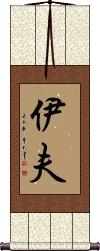
 yī fū
Eve Scroll

This is a common Mandarin Chinese transliteration for the female name Eve.

 iivu
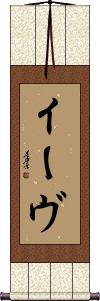
Eve Scroll

イーヴ is the name Eve in Japanese.


Note: Because this title is entirely Japanese Katakana, it should be written by a Japanese calligrapher.

 yī wéi
Evee Scroll

伊維 is the name Evee in Chinese (Mandarin).

 ivii
Evee Scroll

イヴィー is the name Evee in Japanese Katakana.


Note: Because this title is entirely Japanese Katakana, it should be written by a Japanese calligrapher.

 āi wéi
Evei Scroll

埃維 is the name Evei in Chinese (Mandarin).

 evei
Evei Scroll

エヴェイ is the name Evei in Japanese Katakana.


Note: Because this title is entirely Japanese Katakana, it should be written by a Japanese calligrapher.

 yī fū lín hè
Evelin Scroll

伊夫琳赫 is the name Evelin in Chinese (Mandarin).

 evurin
Evelin Scroll

エヴリン is the name Evelin in Japanese.


Note: Because this title is entirely Japanese Katakana, it should be written by a Japanese calligrapher.

 eburina
Evelina Scroll

エブリナ is the name Evelina in Japanese (Katakana).


Note: Because this title is entirely Japanese Katakana, it should be written by a Japanese calligrapher.

 ài wéi lín
Eveline Scroll

艾維琳 is the name Eveline in Chinese (Mandarin).

 everin
Eveline Scroll

エヴェリン is the name Eveline in Japanese Katakana.


Note: Because this title is entirely Japanese Katakana, it should be written by a Japanese calligrapher.

 ài fú lín
Evelyn Scroll

艾芙琳 is the name Evelyn in Chinese (Mandarin).

 iverin
Evelyn Scroll

イヴリン is the name Evelyn in Japanese.


Note: Because this title is entirely Japanese Katakana, it should be written by a Japanese calligrapher.

 ài fú lín
Evelyne Scroll

艾芙琳 is the name Evelyne in Chinese (Mandarin).

 eeriinu
Evelyne Scroll

エヴリーヌ is the name Evelyne in Japanese Katakana.


Note: Because this title is entirely Japanese Katakana, it should be written by a Japanese calligrapher.

 yī fú lín
Evelynn Scroll

伊芙琳 is the name Evelynn in Chinese (Mandarin).

 eburin
Evelynn Scroll

エブリン is the name Evelynn in Japanese (Katakana).


Note: Because this title is entirely Japanese Katakana, it should be written by a Japanese calligrapher.

Even Monkeys Fall From Trees

Meaning: Anyone can make a mistake

 saru mo ki kara ochiru
Even Monkeys Fall From Trees Scroll

猿も木から落ちる is the Japanese proverb, “Even monkeys fall from trees.”

It suggests that even the most skilled, can make a mistake in something they should be a master of. Or, to put it simply, “Anyone can make a mistake.”


Note: Because this selection contains some special Japanese Hiragana characters, it should be written by a Japanese calligrapher.

 yī wén sī
Evens Scroll

伊文斯 is the name Evens in Chinese (Mandarin).

 ebunsu
Evens Scroll

エブンス is the name Evens in Japanese (Katakana).


Note: Because this title is entirely Japanese Katakana, it should be written by a Japanese calligrapher.

 āi wéi lā duō
Everardo Scroll

埃韋拉多 is the name Everardo in Chinese (Mandarin).

 eburarudo
Everardo Scroll

エブラルド is the name Everardo in Japanese (Katakana).


Note: Because this title is entirely Japanese Katakana, it should be written by a Japanese calligrapher.

 āi fú lǐ tè
Everet Scroll

埃弗里特 is the name Everet in Chinese (Mandarin).

 everetto
Everet Scroll

エヴェレット is the name Everet in Japanese Katakana.


Note: Because this title is entirely Japanese Katakana, it should be written by a Japanese calligrapher.

 ài fú lěi tè
Everett Scroll

愛芙蕾特 is the name Everett in Chinese (Mandarin).

 everetto
Everett Scroll

エヴェレット is the name Everett in Japanese.


Note: Because this title is entirely Japanese Katakana, it should be written by a Japanese calligrapher.

 āi fú lǐ tè
Everette Scroll

埃弗里特 is the name Everette in Chinese (Mandarin).

 eberetto
Everette Scroll

エベレット is the name Everette in Japanese Katakana.


Note: Because this title is entirely Japanese Katakana, it should be written by a Japanese calligrapher.

 āi fú lì
Everlee Scroll

埃弗利 is the name Everlee in Chinese (Mandarin).

 ebaarii
Everlee Scroll

エバーリー is the name Everlee in Japanese Katakana.


Note: Because this title is entirely Japanese Katakana, it should be written by a Japanese calligrapher.

 āi fú lì
Everleigh Scroll

埃弗利 is the name Everleigh in Chinese (Mandarin).

 ebaarii
Everleigh Scroll

エバーリー is the name Everleigh in Japanese Katakana.


Note: Because this title is entirely Japanese Katakana, it should be written by a Japanese calligrapher.

 āi fú lín
Everline Scroll

埃弗林 is the name Everline in Chinese (Mandarin).

 ebaarin
Everline Scroll

エバーリン is the name Everline in Japanese Katakana.


Note: Because this title is entirely Japanese Katakana, it should be written by a Japanese calligrapher.

 ài fú lì
Everly Scroll

This is a common transliteration to Mandarin Chinese for the name Everly.

 evaari
Everly Scroll

エヴァーリ is the name Everly in Japanese Katakana.


Note: Because this title is entirely Japanese Katakana, it should be written by a Japanese calligrapher.

 āi fú lín
Everlyn Scroll

埃弗林 is the name Everlyn in Chinese (Mandarin).

 evarin
Everlyn Scroll

エヴァリン is the name Everlyn in Japanese Katakana.


Note: Because this title is entirely Japanese Katakana, it should be written by a Japanese calligrapher.

 āi fú dùn
Everton Scroll

埃弗頓 is the name Everton in Chinese (Mandarin).

This also can refer to the town in northwest England and/or the Everton soccer team.

 eburuton
Everton Scroll

エブルトン is the name Everton in Japanese (Katakana).


Note: Because this title is entirely Japanese Katakana, it should be written by a Japanese calligrapher.

Everyday Life

 rì cháng shēng huó
 nichi jou sei katsu
Everyday Life Scroll

日常生活 simply means everyday life or regular life.

You can also translate it as “Living day to day.”

Everything Happens for a Reason

 wàn shì jiē yīn guǒ
Everything Happens for a Reason Scroll

萬事皆因果 means “Everything happens for a reason” in Chinese.

The first two characters mean “all things” or “everything.”

The middle character kind of means “in all cases.”

The last two characters create a complex word that can be defined in many ways, such as “karma,” “cause and effect,” “fate,” and “every cause has its effect, as every effect arises from a cause.”

Keep in mind that Chinese grammar is a bit different than English, so trust me that this makes a natural-sounding proverb in Chinese.

Everything Happens for a Reason

 monogoto ha subete riyuu ga at te okiru
Everything Happens for a Reason Scroll

物事は全て理由があって起きる means everything happens for a reason.

However, this is a work in progress. We're still trying to decide the best way to express this in Japanese. If you order this, we might have a discussion about the best version that fits you. Here's how the characters break down by meaning (keep in mind, Japanese grammar and sentence construction is very different from English, so it doesn't make complete sense in English)...

物事 = things, everything
は particle
全て all, the whole, entirely
理由 reason
が particle
あっ be, exist, have, take place, happens
て particle
起きる to occur, to happen; to take place (usually unfavorable incidents)


Note: Because this selection contains some special Japanese Hiragana characters, it should be written by a Japanese calligrapher.

 āi wéi tè
Evette Scroll

埃維特 is the name Evette in Chinese (Mandarin).

 ebutto
Evette Scroll

エブット is the name Evette in Japanese (Katakana).


Note: Because this title is entirely Japanese Katakana, it should be written by a Japanese calligrapher.

Fall Down Seven Times, Get Up Eight

Always rising after a fall or repeated failures

 shichi ten hakki / nana korobi ya oki
Fall Down Seven Times, Get Up Eight Scroll

七転八起 is a Japanese proverb that relays the vicissitudes of life, with the meaning “seven times down eight times up.”

Some would more naturally translate it into English as “Always rising after a fall or repeated failures” or compare it to the English, “If at first, you don't succeed, try, try again.”

The first Kanji is literally “7.” The second means “fall down” (sometimes this Kanji means “turn around,” “revolve” or “turn over” but in this case, it holds the meaning of “fall”). The third is “8.” And the last is “get up,” “rouse,” or “rise.”

Basically, if you fail 7 times, you should recover from those events and be prepared to rise an 8th time. This also applies if it is the world or circumstances that knock you down seven times...
...just remember that you have the ability to bounce back from any kind of adversity.

Note: This can be pronounced in two ways. One is “shichi ten hakki” or “shichitenhakki.” The other is “nana korobi ya oki” also written, “nanakorobi-yaoki.”

Special Note: The second character is a Kanji that is not used in China. Therefore, please select a Japanese calligrapher for this title.

Family Over Everything

 jiā tíng zhì shàng
Family Over Everything Scroll

家庭至上 is a Chinese phrase that means “family above all else.”

The first two characters mean family, household, or home (they will be read as “family” in this case).

The last two characters mean supreme, paramount, or above all else.

Flourish and Blossom Everywhere

 biàn dì kāi huā
Flourish and Blossom Everywhere Scroll

遍地開花 is a Chinese proverb that means “to blossom everywhere,” “to spring up all over the place,” or “to flourish on a large scale.”

遍地 = everywhere
開花 = opening flowers

Forever In My Heart

 yǒng yuǎn zài wǒ xīn zhōng
Forever In My Heart Scroll

永远在我心中 means “forever in my heart” or “always in my heart” in Chinese.

Forever In My Heart

 yǒng yuǎn zài wǒ xīn
Forever In My Heart Scroll

永遠在我心 means “forever in my heart” or “always in my heart” in Chinese.

This is the shorter, somewhat lyrical version of this phrase.

永遠 forever/eternal
在 at/in/exists
我 me/myself/my
心 heart/mind/soul

Forever In My Heart

  i tsu ma de mo watashi no kokoro no naka ni
Forever In My Heart Scroll

いつまでも私の心の中に means “forever in my heart” or “always in my heart” in Japanese.


Note: Because this selection contains some special Japanese Hiragana characters, it should be written by a Japanese calligrapher.

Forever In My Heart

 ei en ni watashi no kokoro no naka ni
Forever In My Heart Scroll

永遠に私の心の中に means “forever in my heart” or “always in my heart” in Japanese.

The character breakdown:
永遠 (eien) eternity; perpetuity; immortality; permanence.
に (ni) indicates the location of a person or thing.
私の (watashi no) my; mine.
心の中 (kokoro no naka) the middle of one's mind; the midst of one's heart.
に (ni) indicates the location of a person or thing (makes this “in” the middle of one's heart).


Note: There’s more than one way to say "Forever in My Heart" in Japanese, so you’ll find another version in our database. This is the very verbose version.


Note: Because this selection contains some special Japanese Hiragana characters, it should be written by a Japanese calligrapher.

Forever Love

 yǒng yuǎn de ài
Forever Love Scroll

永遠的愛 refers to love that will last forever.

The first two characters mean forever, eternal, eternity, perpetuity, immortality, and/or permanence.

The third character is a possessive article which sort of makes this selection mean “The forever kind of love.”

The last character is “love.”


See Also:  Eternal Love Always

Forever Young

 yǒng yuǎn nián qīng
Forever Young Scroll

永遠年輕 is “forever young” in Chinese characters.

Forever Young / Eternal Youth

 fu rou
Forever Young / Eternal Youth Scroll

不老 is a Japanese word that means “perpetual youth” or “forever young.”

It contains the idea of never getting old. It literally means “never aging,” or “not [getting] old.”

Forever Young / Long Life

 fu rou chou ju
Forever Young / Long Life Scroll

This Japanese phrase means “perpetual youth and longevity.”

It contains the ideas of never getting old and eternal life.

Forever Family

 yǒng yuǎn de jiā
Forever Family Scroll

永遠的家 is a special phrase that we composed for a “family by adoption” or “adoptive family.”

It's the dream of every orphan and foster child to be formally adopted and find their “forever family.”

The first two characters mean forever, eternal, eternity, perpetuity, immortality, and/or permanence. The third character connects this idea with the last character which means “family” and/or “home.”


See Also:  Family

Forever Sisters

 yǒng yuàn de jiě mèi
Forever Sisters Scroll

This literally means forever sisters in Chinese.

This is a weird phrase in Chinese, as by default, sisters are forever. I added this because people were searching for it.

Perseverance / Fortitude

 jiǎn rěn
 ken nin
Perseverance / Fortitude Scroll

堅忍 means persistent, steadfast, fortitude, and/or perseverance.

The first character means strong, solid, firm, unyielding, or resolute.
The second character means to beat, endure, or tolerate.
Together they speak of the strength from within yourself. Some may also translate this as long-suffering in a more Biblical sense.

堅忍 is a common term in Chinese and Korean Hanja but a little less commonly used in modern Japanese Kanji. For that reason, this selection is best if your audience is Chinese or Korean.


忍忍 Note that when writing this as Kanji, Japanese will tend to write the second Kanji a little differently. If you select our Japanese master calligrapher, please expect the form where the little horizontal stroke crosses the vertical stroke. See differences in the images to the right. Technically, they are both the same character, and will be read the same in either language.


Dictionary

Lookup Eve in my Japanese & Chinese Dictionary

All of our calligraphy wall scrolls are handmade.

When the calligrapher finishes creating your artwork, it is taken to my art mounting workshop in Beijing where a wall scroll is made by hand from a combination of silk, rice paper, and wood.
After we create your wall scroll, it takes at least two weeks for air mail delivery from Beijing to you.

Allow a few weeks for delivery. Rush service speeds it up by a week or two for $10!

When you select your calligraphy, you'll be taken to another page where you can choose various custom options.


A nice Chinese calligraphy wall scroll

The wall scroll that Sandy is holding in this picture is a "large size"
single-character wall scroll.
We also offer custom wall scrolls in small, medium, and an even-larger jumbo size.

A professional Chinese Calligrapher

Professional calligraphers are getting to be hard to find these days.
Instead of drawing characters by hand, the new generation in China merely type roman letters into their computer keyboards and pick the character that they want from a list that pops up.

There is some fear that true Chinese calligraphy may become a lost art in the coming years. Many art institutes in China are now promoting calligraphy programs in hopes of keeping this unique form of art alive.

Trying to learn Chinese calligrapher - a futile effort

Even with the teachings of a top-ranked calligrapher in China, my calligraphy will never be good enough to sell. I will leave that to the experts.

A high-ranked Chinese master calligrapher that I met in Zhongwei

The same calligrapher who gave me those lessons also attracted a crowd of thousands and a TV crew as he created characters over 6-feet high. He happens to be ranked as one of the top 100 calligraphers in all of China. He is also one of very few that would actually attempt such a feat.


Some people may refer to this entry as Eve Kanji, Eve Characters, Eve in Mandarin Chinese, Eve Characters, Eve in Chinese Writing, Eve in Japanese Writing, Eve in Asian Writing, Eve Ideograms, Chinese Eve symbols, Eve Hieroglyphics, Eve Glyphs, Eve in Chinese Letters, Eve Hanzi, Eve in Japanese Kanji, Eve Pictograms, Eve in the Chinese Written-Language, or Eve in the Japanese Written-Language.