I am shipping orders on Saturday this week. News and More Info

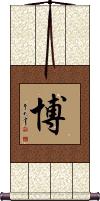
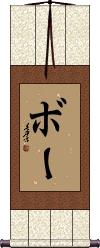
The Name Bo in Japanese/Chinese on a Custom-Made Wall Scroll.

Click the "Customize" button next to your name below to start your personalized bo calligraphy artwork...

Switched to secondary search mode due to lack of results using primary.
These secondary results may not be very accurate. Try a different but similar meaning word or phrase for better results. Or...

Look up Bo in my Japanese Kanji & Chinese Character Dictionary(My dictionary is a different system then the calligraphy search you just tried)

If you want a special phrase, word, title, name, or proverb, feel free to contact me, and I will translate your custom calligraphy idea for you.


  1. Wood Pig/Boar

  2. Fire Pig/Boar

  3. Earth Pig/Boar

  4. Golden/Metal Pig/Boar

  5. Water Pig/Boar

  6. Abbot

  7. Abbott

  8. Abou

  9. Always with a Book in Hand

10. ...And this above all to thine own self be true

11. Aristobolo

12. Aubouin

13. Baboo

14. Babor

15. Bamboo

16. Bamboo Moon

17. Barbora

18. Black Flag Gate / Hek Ki Boen

19. Bo

20. Boaz

21. Bob

22. Bobbi

23. Bobbie

24. Bobby

25. Bobert

26. Bobo

27. Bobu

28. Boden

29. Bodhi - Awakening Enlightenment

30. The Tree of Enlightenment / The Bodhi Tree

31. Bodhicitta: Enlightened Mind

32. Bodhidharma

33. The Bodhi Mind

34. Bodhisattva

35. Body

36. Body / Karada

37. Body and Mind

38. Body and Earth in Unity

39. Body Mind Spirit

40. Boeriis

41. Bogdan

42. Bogg

43. Bogusław

44. Bohai

45. Bohdan

46. Boji

47. Bojutsu / Bojitsu

48. Boldt

49. Bolivia

50. Bolo

51. Bolton

52. Bon Voyage

53. Bond

54. Bones

55. Boni

56. Bonifacio

57. Bonita

58. Bonni

59. Bonnie

60. Bonny

61. Bonsai / Penzai

62. Booba

63. Book

64. Booker

65. Boone


Wood Pig/Boar

The Year of the Wood Pig/Boar

 mù zhū
Wood Pig/Boar Scroll

木豬 is Wood Pig/Boar in Chinese.

In the Chinese zodiac and sexagenary (60-year) cycle, this combination occurs in years that include 1875, 1935, 1995, and 2055.

In the sexagenary cycle, this year is represented by 乙亥.


See Also:  Pig/Boar

Fire Pig/Boar

The Year of the Fire Pig/Boar

 huǒ zhū
Fire Pig/Boar Scroll

火豬 is Fire Pig/Boar in Chinese.

In the Chinese zodiac and sexagenary (60-year) cycle, this combination occurs in years that include 1887, 1947, 2007, and 2067.

In the sexagenary cycle, this year is represented by 丁亥.


See Also:  Pig/Boar

Earth Pig/Boar

The Year of the Earth Pig/Boar

 tǔ zhū
Earth Pig/Boar Scroll

土豬 is Earth Pig/Boar in Chinese.

In the Chinese zodiac and sexagenary (60-year) cycle, this combination occurs in years that include 1899, 1959, 2019, and 2079.

In the sexagenary cycle, this year is represented by 己亥.


See Also:  Pig/Boar

Golden/Metal Pig/Boar

The Year of the Golden/Metal Pig/Boar

 jīn zhū
Golden/Metal Pig/Boar Scroll

金豬 is Golden/Metal Pig/Boar in Chinese.

In the Chinese zodiac and sexagenary (60-year) cycle, this combination occurs in years that include 1911, 1971, 2031, and 2091.

In the sexagenary cycle, this year is represented by 辛亥.


See Also:  Pig/Boar

Water Pig/Boar

The Year of the Water Pig/Boar

 shuǐ zhū
Water Pig/Boar Scroll

水豬 is Water Pig/Boar in Chinese.

In the Chinese zodiac and sexagenary (60-year) cycle, this combination occurs in years that include 1923, 1983, 2043, and 2103.

In the sexagenary cycle, this year is represented by 癸亥.


See Also:  Pig/Boar

 ā bó tè
Abbot Scroll

阿博特 is the name Abbot in Chinese (Mandarin).

 abotto
Abbot Scroll

アボット is the name Abbot in Japanese.


Note: Because this title is entirely Japanese Katakana, it should be written by a Japanese calligrapher.

 ā bó tè
Abbott Scroll

阿博特 is the name Abbott in Chinese (Mandarin).

 abotto
Abbott Scroll

アボット is the name Abbott in Japanese.


Note: Because this title is entirely Japanese Katakana, it should be written by a Japanese calligrapher.

 ā bù
Abou Scroll

阿布 is the name Abou in Chinese (Mandarin).

 abuu
Abou Scroll

アブー is the name Abou in Japanese Katakana.


Note: Because this title is entirely Japanese Katakana, it should be written by a Japanese calligrapher.

Always with a Book in Hand

 shǒu bù shì juàn
Always with a Book in Hand Scroll

手不釋卷 is a Chinese proverb that literally means “always with a book in hand.”

It's a proverb said of a hardworking scholar or student.

This may refer to a student or scholar who is diligent and hardworking. It's a great gift for a student or scholar who loves books.

...And this above all to thine own self be true

A line from Shakespeare's Hamlet

 yóu qí yào jǐn de nǐ bì xū duì nǐ zì jǐ zhōng shí
...And this above all to thine own self be true Scroll

尤其要緊的你必須對你自己忠實 is the classic translation of a line from Shakespeare's Hamlet into Chinese.

 ā lǐ sī tuō wò fū
Aristobolo Scroll

阿里斯托沃夫 is the transliteration to Mandarin Chinese for the Latin / Spanish name Aristóbolo.

 ào bù áng
Aubouin Scroll

This is a common Mandarin Chinese transliteration for the male French name Aubouin.

 bā bù
Baboo Scroll

巴布 is the name Baboo in Chinese (Mandarin).

 babuu
Baboo Scroll

バブー is the name Baboo in Japanese Katakana.


Note: Because this title is entirely Japanese Katakana, it should be written by a Japanese calligrapher.

 bā bó
Babor Scroll

巴博 is the name Babor in Chinese (Mandarin).

 beibaa
Babor Scroll

ベイバー is the name Babor in Japanese Katakana.


Note: Because this title is entirely Japanese Katakana, it should be written by a Japanese calligrapher.

 zhú
 take
 
Bamboo Scroll

竹 is the character that means bamboo in Chinese, Japanese Kanji, and old Korean Hanja.

In Asian cultures, bamboo is often seen as a symbol of a noble gentleman (tall, straight, and honest).

There are also some multi-character bamboo words that regard individual bamboo plants, species of bamboo, bamboo as lumber, and edible bamboo shoots. However, this single character seems most appropriate for a wall scroll and covers the whole category of Asian bamboo.

 yuè zhú
 tsuki take
Bamboo Moon Scroll

月竹 is the title, “Bamboo Moon” - Technically, it's in the order of “moon bamboo,” but that's the most natural order in Chinese and Japanese.

With a little research, I found this title has been used as the name of a linen company, a band, a song title, an actual person's name, the title for a piece of artwork featuring bamboo with a moon in the background, and a few other things. I added it here because many people searched for “bamboo moon” on my website, so here it is for you.


The typical Japanese pronunciation would probably be "tsu-ki ta-ke." However, this would not be the only possible pronunciation in Japanese (especially if used as a given name).

 bā bó lā
Barbora Scroll

巴博拉 is the name Barbora in Chinese (Mandarin).

 baabora
Barbora Scroll

バーボラ is the name Barbora in Japanese Katakana.


Note: Because this title is entirely Japanese Katakana, it should be written by a Japanese calligrapher.

Black Flag Gate / Hek Ki Boen

 hēi qí mén
 hak ki mun
Black Flag Gate / Hek Ki Boen Scroll

黑旗門 is often romanized as “Hek Ki Boen” in Cantonese, this is the title for a certain branch school of Wing Chun or Eng Chun martial arts.

 bó
Bo Scroll

博 is the name Bo in Chinese (Mandarin).

 boo
Bo Scroll

ボー is the name Bo in Japanese (Katakana).


Note: Because this title is entirely Japanese Katakana, it should be written by a Japanese calligrapher.

 bō ā sī
Boaz Scroll

波阿斯 is the name Boaz in Chinese (Mandarin).

 boazu
Boaz Scroll

ボアズ is the name Boaz in Japanese Katakana.


Note: Because this title is entirely Japanese Katakana, it should be written by a Japanese calligrapher.

 bào bù
Bob Scroll

This is a common Mandarin Chinese transliteration for the male name Bob.

 bobu
Bob Scroll

ボブ is the name Bob in Japanese.


Note: Because this title is entirely Japanese Katakana, it should be written by a Japanese calligrapher.

 bào bó
Bob Scroll

鮑勃 is the second most common transliteration to Mandarin Chinese for the name Bob.

 bó bǐ
Bobbi Scroll

博比 is the name Bobbi in Chinese (Mandarin).

 bobii
Bobbi Scroll

ボビー is the name Bobbi in Japanese.


Note: Because this title is entirely Japanese Katakana, it should be written by a Japanese calligrapher.

 bó bǐ
Bobbie Scroll

博比 is the name Bobbie in Chinese (Mandarin).

 bobii
Bobbie Scroll

ボビー is the name Bobbie in Japanese.


Note: Because this title is entirely Japanese Katakana, it should be written by a Japanese calligrapher.

 bào bǐ
Bobby Scroll

鮑比 is the name Bobby in Chinese (Mandarin).

 bobii
Bobby Scroll

ボビー is the name Bobby in Japanese.


Note: Because this title is entirely Japanese Katakana, it should be written by a Japanese calligrapher.

 bào bó tè
Bobert Scroll

鮑伯特 is the name Bobert in Chinese (Mandarin).

 bobaato
Bobert Scroll

ボバート is the name Bobert in Japanese Katakana.


Note: Because this title is entirely Japanese Katakana, it should be written by a Japanese calligrapher.

 bō bō
Bobo Scroll

波波 is the name Bobo in Chinese (Mandarin).

 bobo
Bobo Scroll

ボボ is the name Bobo in Japanese Katakana.


Note: Because this title is entirely Japanese Katakana, it should be written by a Japanese calligrapher.

 bó bù
Bobu Scroll

博布 is the name Bobu in Chinese (Mandarin).

 Bobu
Bobu Scroll

ボブ is the name Bobu in Japanese (Katakana).


Note: Because this title is entirely Japanese Katakana, it should be written by a Japanese calligrapher.

 bó dēng
Boden Scroll

博登 is the name Boden in Chinese (Mandarin).

 booden
Boden Scroll

ボーデン is the name Boden in Japanese Katakana.


Note: Because this title is entirely Japanese Katakana, it should be written by a Japanese calligrapher.

Bodhi - Awakening Enlightenment

 pú tí
 bodai
Bodhi - Awakening Enlightenment Scroll

The Bodhi or 菩提 is the moment of completion in Buddhism.

It is when all things become known and you have completed your journey to enlightenment.

The reference is to the Bodhi tree where Siddhartha Gautama (the legendary man who established the Buddhist religion) achieved enlightenment. Sometimes this is referred to as “the tree of enlightenment,” but if you want the full version with the character for a tree at the end, please see the Bodhi Tree entry.


See Also:  Buddhism | Buddha | Nirvana | Enlightenment

The Tree of Enlightenment / The Bodhi Tree

 pú tí shù
 bodaiju
The Tree of Enlightenment / The Bodhi Tree Scroll

菩提樹 is the full title of the Bodhi tree (a fig tree) under which Siddhartha Gautama (the legendary man who established the Buddhist religion), achieved enlightenment.

Sometimes this is referred to as “the tree of enlightenment.” If you don't have a Bodhi tree to sit under, maybe you can achieve enlightenment under a wall scroll with this title.

Bodhicitta: Enlightened Mind

 mào dì zhì duō
 boujiishitta
Bodhicitta: Enlightened Mind Scroll

冒地質多 is a Chinese and Japanese way to write Bodhicitta.

冒地質多 is often translated as “the enlightened mind” or “enlightened heart.”

This title is strictly Buddhist and won't make sense to Chinese or Japanese people who do not have an expansive background in Buddhist terms, concepts, and scripture.

 pú tí dá mó
 bodai daruma
Bodhidharma Scroll

菩提達磨 is the title Bodhidharma in Chinese and Japanese.

Bodhidharma, commonly known as Damo, is reputed as the founder of the Chan (Zen) or Intuitional or Mystic School.

He likely came from south India and spread Mahayana Buddhism throughout China (even meeting the Emperor) and his disciples likely spread this all the way to Korea, Japan, and beyond in the 5th and 6th centuries.

Sometimes the last character varies in Chinese to 摩 instead of 磨 - let me know if you need a certain variation when you order.

 pú tí dá mó
 bo dai daru ma
Bodhidharma Scroll

菩提達摩 is the Chinese Bodhidharma.

This refers to a man commonly known as Damo, reputed as the founder of Chan (Zen) Buddhism. His original name is believed to be Bodhitara (菩提多羅).


Note: Often, the last character is written as 磨 versus 摩.

The Bodhi Mind

 pú tí xīn
 bo dai shin
The Bodhi Mind Scroll

菩提心 means Bodhi-mind or Bodhi-heart.

This title represents the will to realize supreme enlightenment. The awakening of the Bodhi-mind is of utmost importance in Buddhist training.

Other definitions include the mind for or of bodhi, the awakened, enlightened mind, or having Buddha-nature.

 pú sà
 bosatsu
Bodhisattva Scroll

菩薩 is the title of a Buddhist deity that exists to help you reach enlightenment.

In Buddhist beliefs, a bodhisattva (bodhisatta) is dedicated to helping us achieve enlightenment. Bodhisattva means enlightenment truth which is bodhi sattva in Sanskrit.

This term is sometimes used to refer to a kindhearted person, one who will sacrifice himself/herself for others and lacks ego or desire but is instead devoted to the good and well-being of others.


See Also:  Buddha | Namo Amitabha

 shēn
 mi
 
Body Scroll

身 is how to write “body” as in your human body, in Chinese, Japanese Kanji, and Korean Hanja.

Depending on the context and certain language issues, this character can also mean: main part, hull, oneself, somebody, person, I, me, sword, lifetime, one's station in life, etc.

While this written word is universal in three languages, it still makes a rather odd selection for a wall scroll. Also, they tend to use 体 (karada) in Japanese for the body (depending on context).


See Also:  Karada

Body / Karada

 tǐ
 karada / tai / te
 
Body / Karada Scroll

体 is used in Japanese to mean “body.”

体 can also refer to the form, style, corporeal existence, appearance, identity, or state of something or someone. 體 is also used in Buddhism in regard to the corporeal existence of someone (their earthy vessel). It's kind of a broad term that can be used in a lot of different ways.

As a single character, it's usually pronounced “karada” but it can also be pronounced “tai” or “te” (Japanese pronunciation borrowed from the original Chinese).

體 is not a common Kanji to use for a wall scroll. Only select this if you have a personal and meaningful reason to do so. Also, consider this version to be “Japanese only” - see below...


體 In Chinese and old Korean Hanja, this character is written in the traditional form shown to the right. If you want this version, click on the character to the right instead of the button above.

Body and Mind

 shēn xīn
 shin jin
Body and Mind Scroll

身心 means “body and mind” or “mental and physical” in Chinese and Japanese.

In the Buddhist context, body and mind encompass the five elements (skandha) of a sentient being.
The body is the physical material (rūpa) of life. The mind embraces the other four skandhas, which are consciousness, perception, action, and knowledge.

Body and Earth in Unity

 shindofuni / shindofuji
Body and Earth in Unity Scroll

身土不二 (Shindofuni) is originally a Buddhist concept or proverb referring to the inseparability of body-mind and geographical circumstances.

This reads, “Body [and] earth [are] not two.”

Other translations or matching ideas include:
Body and land are one.
Body and earth can not be separated.
Body earth sensory curation.
You are what you eat.
Indivisibility of the body and the land (because the body is made from food and food is made from the land).

Going further, this speaks of our human bodies and the land from which we get our food being closely connected. This phrase is often used when talking about natural and organic vegetables coming directly from the farm to provide the healthiest foods in Japan.

Character notes: 身(shin) in this context does not just mean your physical body but a concept including both body and mind.
土 (do) refers to the soil, earth, clay, land, or in some cases, locality. It's not the proper name of Earth, the planet. However, it can refer to the land or realm we live in.

Japanese note: This has been used in Japan, on and off, since 1907 as a slogan for a governmental healthy eating campaign (usually pronounced as shindofuji instead of the original shindofuni in this context). It may have been hijacked from Buddhism for this propaganda purpose, but at least this is “healthy propaganda.”

Korean note: The phrase 身土不二 was in use by 1610 A.D. in Korea, where it can be found in an early medical journal.
In modern South Korea, it's written in Hangul as 신토불이. Korea used Chinese characters (same source as Japanese Kanji) as their only written standard form of the language until about a hundred years ago. Therefore, many Koreans will recognize this as a native phrase and concept.


See Also:  Strength and Love in Unity

Body Mind Spirit

 mi shin rei
Body Mind Spirit Scroll

身心霊 means “body mind spirit” in Japanese.

This refers to your physical, mental, and spiritual presence.

This can also be translated as “body heart spirit” as 心 can mean mind or heart.


Note that this is a "word list" and not a proper phrase (with a subject, verb, and object) nor a typical title in Japanese. So it's not too commonly seen in Japan. However, the term 身心霊整合性医療 that refers to holistic medicine is gaining popularity.

 bó lǐ sī
Boeriis Scroll

博里斯 is the name Boeriis in Chinese (Mandarin).

 boerisu
Boeriis Scroll

ボエリス is the name Boeriis in Japanese Katakana.


Note: Because this title is entirely Japanese Katakana, it should be written by a Japanese calligrapher.

 bó gé dān
Bogdan Scroll

伯格丹 is the name Bogdan in Chinese (Mandarin).

 bogudan
Bogdan Scroll

ボグダン is the name Bogdan in Japanese.


Note: Because this title is entirely Japanese Katakana, it should be written by a Japanese calligrapher.

 bó gé
Bogg Scroll

博格 is the name Bogg in Chinese (Mandarin).

 boggu
Bogg Scroll

ボッグ is the name Bogg in Japanese (Katakana).


Note: Because this title is entirely Japanese Katakana, it should be written by a Japanese calligrapher.

 bó gǔ sī wǎ fū
Bogusław Scroll

This is a common Mandarin Chinese transliteration for the male Polish name Bogusław or Boguslaw.

 bó hǎi
Bohai Scroll

渤海 is the name Bohai in Chinese (Mandarin).

 bó hè dān
Bohdan Scroll

博赫丹 is the name Bohdan in Chinese (Mandarin).

 bodan
Bohdan Scroll

ボダン is the name Bohdan in Japanese Katakana.


Note: Because this title is entirely Japanese Katakana, it should be written by a Japanese calligrapher.

 bó jí
Boji Scroll

博吉 is the name Boji in Chinese (Mandarin).

 boji
Boji Scroll

ボジ is the name Boji in Japanese Katakana.


Note: Because this title is entirely Japanese Katakana, it should be written by a Japanese calligrapher.

Bojutsu / Bojitsu

The art of using a stick as a weapon

 bàng shù
 bou jutsu
Bojutsu / Bojitsu Scroll

棒術 is the title Bōjutsu (though some use the romanization Bojitsu).

棒術 is a martial art centered around using a “bō” or staff as a weapon.

This title is a combination of the Japanese word “bō” (which means staff, stick, club, rod, pole, or cudgel) with the Japanese word “jutsu” (which means art or technique).

While this word can be pronounced in Chinese (bang shu), it's not a common term in China. Please consider this title to be “Japanese only.”

 bó ěr tè
Boldt Scroll

博爾特 is the name Boldt in Chinese (Mandarin).

 boruto
Boldt Scroll

ボルト is the name Boldt in Japanese Katakana.


Note: Because this title is entirely Japanese Katakana, it should be written by a Japanese calligrapher.

 bō lì wéi yà
Bolivia Scroll

This is the Chinese name for the country of Bolivia.


See Also:  South America

 boribia
Bolivia Scroll

ボリビア is the most common Japanese name for Bolivia.

A few other variations exist. For example, it used to be written in Kanji as 玻里非.


Note: Because this title is entirely Japanese Katakana, it should be written by a Japanese calligrapher.

 bó luò
Bolo Scroll

博洛 is the name Bolo in Chinese (Mandarin).

 boro
Bolo Scroll

ボロ is the name Bolo in Japanese (Katakana).


Note: Because this title is entirely Japanese Katakana, it should be written by a Japanese calligrapher.

 bó ěr dùn
Bolton Scroll

博爾頓 is the name Bolton in Chinese (Mandarin).

 boruton
Bolton Scroll

ボルトン is the name Bolton in Japanese (Katakana).


Note: Because this title is entirely Japanese Katakana, it should be written by a Japanese calligrapher.

 yī lù píng ān
 ichiro heian
Bon Voyage Scroll

一路平安 is a wish for someone to have a pleasant journey.

It's probably the closest way to translate “bon voyage” into Chinese.

The first two characters mean one road or one path. The second two characters mean “safe and sound” or “without mishap.”

一路平安 means the same thing in Japanese but is not the most common selection for a wall scroll.

 bàn
 kizuna
 
Bond Scroll

This Kanji represents a bond, as in the bond between mother and daughter, father and son, family ties, or a family bond.

絆 is the kind of character that says, no matter what happens (difficult times), we have this bond that cannot be broken.

If you go to the Japanese dictionary, the definition is the bonds (between people), (emotional) ties, relationship, connection, link, tether, or fetters.


Read this before ordering...
This Kanji is best if your audience is Japanese. While this is also a Chinese character, it has a completely different meaning in Chinese (it means to hinder or stumble in Chinese). it’s a very rare character in Korean Hanja but does mean bond in Korean (used in Korean words for certain kinds of glue and sticking plaster).

 gǔ
 hone / kotsu
 
Bones Scroll

骨 is Chinese, Japanese, and Korean for bone or bones.

If your name happens to be Bone or Bones, this is a cool character for a wall scroll to hang in your home or office.

 bó ní
Boni Scroll

博尼 is the name Boni in Chinese (Mandarin).

 boni
Boni Scroll

ボニ is the name Boni in Japanese (Katakana).


Note: Because this title is entirely Japanese Katakana, it should be written by a Japanese calligrapher.

 bó ní fǎ xī ào
Bonifacio Scroll

博尼法西奧 is the transliteration to Mandarin Chinese for the Latin / Spanish name Bonifacio.

 bonifeeshio
Bonifacio Scroll

ボニフェーシオ is the name Bonifacio in Japanese (Katakana).


Note: Because this title is entirely Japanese Katakana, it should be written by a Japanese calligrapher.

 bó ní tǎ
Bonita Scroll

博尼塔 is the name Bonita in Chinese (Mandarin).

 boniita
Bonita Scroll

ボニータ is the name Bonita in Japanese (Katakana).


Note: Because this title is entirely Japanese Katakana, it should be written by a Japanese calligrapher.

 bāng ní
Bonni Scroll

邦尼 is the name Bonni in Chinese (Mandarin).

 boni
Bonni Scroll

ボニ is the name Bonni in Japanese (Katakana).


Note: Because this title is entirely Japanese Katakana, it should be written by a Japanese calligrapher.

 bó ní
Bonnie Scroll

伯尼 is the name Bonnie in Chinese (Mandarin).

 bonii
Bonnie Scroll

ボニー is the name Bonnie in Japanese.


Note: Because this title is entirely Japanese Katakana, it should be written by a Japanese calligrapher.

 bāng ní
Bonny Scroll

邦尼 is the name Bonny in Chinese (Mandarin).

 bonii
Bonny Scroll

ボニー is the name Bonny in Japanese Katakana.


Note: Because this title is entirely Japanese Katakana, it should be written by a Japanese calligrapher.

Bonsai / Penzai

Dwarf Tree Culture

 pén zāi
 bon sai
Bonsai / Penzai Scroll

盆栽 is the word that refers to the culture, hobby, and to miniature trees themselves that have become popular around the world.

Like many things, this art migrated from China to Japan some time ago, but we tend to associate it with Japanese culture and even use the Japanese word in English.

Granted, in the present day, this hobby seems to be more popular in Japan but still has a great following in China and even a little in Korea as well.

Note: Many people confuse the title of the bonsai tree with “banzai” which is a form of “hooray” in Japanese. I have also seen it misspelled as “bansai.” The correct Romanization (Romaji) is “bonsai.”

 bù bā
Booba Scroll

布巴 is the name Booba in Chinese (Mandarin).

 buuba
Booba Scroll

ブーバ is the name Booba in Japanese (Katakana).


Note: Because this title is entirely Japanese Katakana, it should be written by a Japanese calligrapher.

 shū
 sho
 
Book Scroll

書 is the most simple way to say “book” in Chinese, Japanese, and Korean.

書 is usually read as “book” but can refer to a letter, or document.

In a certain context, it can refer to writing, penmanship, or handwriting. Especially in Chinese, it can be a short way to say calligraphy.

If you love books or want to write books, this is the simple, all-encompassing character for you.

 bù kè
Booker Scroll

布克 is the name Booker in Chinese (Mandarin).

 bukkaa
Booker Scroll

ブッカー is the name Booker in Japanese.


Note: Because this title is entirely Japanese Katakana, it should be written by a Japanese calligrapher.

 bù ēn
Boone Scroll

布恩 is the name Boone in Chinese (Mandarin).

 buun
Boone Scroll

ブーン is the name Boone in Japanese.


Note: Because this title is entirely Japanese Katakana, it should be written by a Japanese calligrapher.


Dictionary

Lookup Bo in my Japanese & Chinese Dictionary

All of our calligraphy wall scrolls are handmade.

When the calligrapher finishes creating your artwork, it is taken to my art mounting workshop in Beijing where a wall scroll is made by hand from a combination of silk, rice paper, and wood.
After we create your wall scroll, it takes at least two weeks for air mail delivery from Beijing to you.

Allow a few weeks for delivery. Rush service speeds it up by a week or two for $10!

When you select your calligraphy, you'll be taken to another page where you can choose various custom options.


A nice Chinese calligraphy wall scroll

The wall scroll that Sandy is holding in this picture is a "large size"
single-character wall scroll.
We also offer custom wall scrolls in small, medium, and an even-larger jumbo size.

A professional Chinese Calligrapher

Professional calligraphers are getting to be hard to find these days.
Instead of drawing characters by hand, the new generation in China merely type roman letters into their computer keyboards and pick the character that they want from a list that pops up.

There is some fear that true Chinese calligraphy may become a lost art in the coming years. Many art institutes in China are now promoting calligraphy programs in hopes of keeping this unique form of art alive.

Trying to learn Chinese calligrapher - a futile effort

Even with the teachings of a top-ranked calligrapher in China, my calligraphy will never be good enough to sell. I will leave that to the experts.

A high-ranked Chinese master calligrapher that I met in Zhongwei

The same calligrapher who gave me those lessons also attracted a crowd of thousands and a TV crew as he created characters over 6-feet high. He happens to be ranked as one of the top 100 calligraphers in all of China. He is also one of very few that would actually attempt such a feat.


Some people may refer to this entry as Bo Kanji, Bo Characters, Bo in Mandarin Chinese, Bo Characters, Bo in Chinese Writing, Bo in Japanese Writing, Bo in Asian Writing, Bo Ideograms, Chinese Bo symbols, Bo Hieroglyphics, Bo Glyphs, Bo in Chinese Letters, Bo Hanzi, Bo in Japanese Kanji, Bo Pictograms, Bo in the Chinese Written-Language, or Bo in the Japanese Written-Language.