I am shipping orders on Saturday this week. News and More Info
Click the "Customize" button next to your name below to start your personalized art calligraphy artwork...
Switched to secondary search mode due to lack of results using primary.
These secondary results may not be very accurate. Try a different but similar meaning word or phrase for better results. Or...
Look up Art in my Japanese Kanji & Chinese Character Dictionary(My dictionary is a different system then the calligraphy search you just tried)
If you want a special phrase, word, title, name, or proverb, feel free to contact me, and I will translate your custom calligraphy idea for you.
1. Earth Tiger
2. Earth Rabbit
3. Earth Rat
5. Earth Dog
7. Earth Monkey
9. Earth Horse
10. Earth Goat/Sheep
11. Earth Dragon
12. Earth Snake
13. Aarti
14. Agobart
15. Heart of Aikido
16. You are Always in My Heart
17. Amartrell
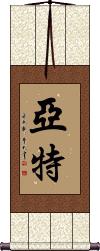
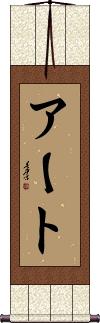
18. Art
19. Artem
20. Artemis
21. Arther
22. Arthur
23. Arti
24. Artin
25. Art of Healing
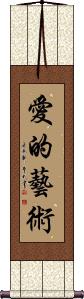
26. The Art of Love
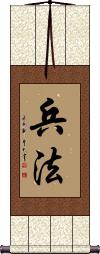
27. Art of War
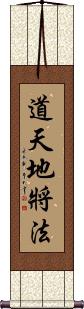
28. Art of War: 5 Points of Analysis
30. Art
31. Artur
32. Arturo
33. Bart
34. Bartek
35. Bartholomew
36. Bartlett
37. Bartley
38. Bartlomiej
39. Bartolmeu
40. Bartolo
41. Bartolome
42. Bartolomeo
43. Barton
44. Beautiful Heart / Beautiful Mind
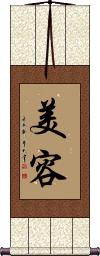
45. Beauty: The art of makeup / cosmetics
46. Beautiful Heart / Beautiful Spirit
47. Benevolent Heart
49. Brave Heart
50. Broken Hearted
51. Buddha Heart / Mind of Buddha
52. Cart
53. Carter
54. Cartier
55. Cartwright
57. Compassionate Heart / Benevolent Heart
58. Confidence / Faithful Heart
59. Dienhart
60. Dojo / Martial Arts Studio
61. Duarte
62. Earth
63. Earth Dragon
65. Earth
66. Eckhart
68. Fair / Impartial
The Year of the Earth Tiger
土虎 is Earth Tiger in Chinese.
In the Chinese zodiac and sexagenary (60-year) cycle, this combination occurs in years that include 1878, 1938, 1998, and 2058.
In the sexagenary cycle, this year is represented by 戊寅.
See Also: Tiger
The Year of the Earth Rabbit
土兔 is Earth Rabbit in Chinese.
In the Chinese zodiac and sexagenary (60-year) cycle, this combination occurs in years that include 1879, 1939, 1999, and 2059.
In the sexagenary cycle, this year is represented by 己卯.
See Also: Rabbit
The Year of the Earth Rat
土鼠 is Earth Rat in Chinese.
In the Chinese zodiac and sexagenary (60-year) cycle, this combination occurs in years that include 1888, 1948, 2008, and 2068.
In the sexagenary cycle, this year is represented by 戊子.
See Also: Rat
The Year of the Earth Ox/Bull
土牛 is Earth Ox/Bull in Chinese.
In the Chinese zodiac and sexagenary (60-year) cycle, this combination occurs in years that include 1889, 1949, 2009, and 2069.
In the sexagenary cycle, this year is represented by 己丑.
See Also: Ox/Bull
The Year of the Earth Dog
土狗 is Earth Dog in Chinese.
In the Chinese zodiac and sexagenary (60-year) cycle, this combination occurs in years that include 1898, 1958, 2018, and 2078.
In the sexagenary cycle, this year is represented by 戊戌.
See Also: Dog
The Year of the Earth Pig/Boar
土豬 is Earth Pig/Boar in Chinese.
In the Chinese zodiac and sexagenary (60-year) cycle, this combination occurs in years that include 1899, 1959, 2019, and 2079.
In the sexagenary cycle, this year is represented by 己亥.
See Also: Pig/Boar
The Year of the Earth Monkey
土猴 is Earth Monkey in Chinese.
In the Chinese zodiac and sexagenary (60-year) cycle, this combination occurs in years that include 1908, 1968, 2028, and 2088.
In the sexagenary cycle, this year is represented by 戊申.
See Also: Monkey
The Year of the Earth Rooster
土雞 is Earth Rooster in Chinese.
In the Chinese zodiac and sexagenary (60-year) cycle, this combination occurs in years that include 1909, 1969, 2029, and 2089.
In the sexagenary cycle, this year is represented by 己酉.
See Also: Rooster
The Year of the Earth Horse
土馬 is Earth Horse in Chinese.
In the Chinese zodiac and sexagenary (60-year) cycle, this combination occurs in years that include 1918, 1978, 2038, and 2098.
In the sexagenary cycle, this year is represented by 戊午.
See Also: Horse
The Year of the Earth Goat/Sheep
土羊 is Earth Goat/Sheep in Chinese.
In the Chinese zodiac and sexagenary (60-year) cycle, this combination occurs in years that include 1919, 1979, 2039, and 2099.
In the sexagenary cycle, this year is represented by 己未.
See Also: Goat/Sheep
The Year of the Earth Dragon
土龍 is Earth Dragon in Chinese.
In the Chinese zodiac and sexagenary (60-year) cycle, this combination occurs in years that include 1868, 1928, 1988, and 2048.
In the sexagenary cycle, this year is represented by 戊辰.
See Also: Dragon
The Year of the Earth Snake
土蛇 is Earth Snake in Chinese.
In the Chinese zodiac and sexagenary (60-year) cycle, this combination occurs in years that include 1869, 1929, 1989, and 2049.
In the sexagenary cycle, this year is represented by 己巳.
See Also: Snake
Aikido no Kokoro
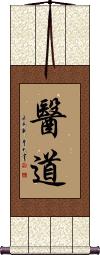
醫道 means the art of healing or medical skill.
This can also refer to a Korean TV show, Hur Jun about an ancient doctor. The Chinese-subtitled version of the show is also quite popular in China.
While this is a common title in Chinese and Korean, it's not used as often in Japanese where someone might read it as “medical course” or “the way of medicine.”
道天地將法 is a list of five key points to analyzing your situation from the first chapter of Sun Tzu's Art of War.
This reads like a 5-part military proverb. Sun Tzu says that to sharpen your skills, you must plan. To plan well, you must know your situation. Therefore, you must consider and discuss the following:
1. Philosophy and Politics: Make sure your way or your policy is agreeable among all of your troops (and the citizens of your kingdom as well). For when your soldiers believe in you and your way, they will follow you to their deaths without hesitation and will not question your orders.
2. Heaven/Sky: Consider climate / weather. This can also mean considering whether God is smiling upon you. In the modern military, this could be waiting for clear skies so that you can have air support for an amphibious landing.
3. Ground/Earth: Consider the terrain in which the battle will take place. This includes analyzing defensible positions, and exit routes, while using varying elevations to your advantage. When you plan an ambush, you must know your terrain and the best location from which to stage that ambush. This knowledge will also help you avoid being ambushed, as you will know where the likely places in which to expect an ambush from your enemy.
4. Leadership: This applies to you as the general and your lieutenants. A leader should be smart and be able to develop good strategies. Leaders should keep their word, and if they break a promise, they should punish themselves as harshly as they would punish subordinates. Leaders should be benevolent to their troops, with almost a fatherly love for them. Leaders must have the ability to make brave and fast decisions. Leaders must have steadfast principles.
5. [Military] Methods: This can also mean laws, rules, principles, models, or systems. You must have an efficient organization in place to manage both your troops and supplies. In the modern military, this would be a combination of how your unit is organized and your SOP (Standard Operating Procedure).
Notes: This is a simplistic translation and explanation. Much more is suggested in the actual text of the Art of War (Bing Fa). It would take a lot of study to master all of these aspects. In fact, these five characters can be compared to the modern military acronyms such as BAMCIS or SMEAC.
CJK notes: I have included the Japanese and Korean pronunciations but in Chinese, Korean and Japanese, this does not make a typical phrase (with subject, verb, and object) it is a list that only someone familiar with Sun Tzu’s writings would understand.
military strategy, tactics, and procedure
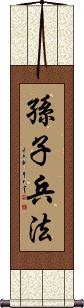
孫子兵法 is the full title of the most famous book of military proverbs about warfare.
The English title is “Sun Tzu's The Art of War.”
The last two characters have come to be known in the west as “The Art of War,” but a better translation would be “military strategy and tactics,” “military skills” or “army procedures.”
Note: Sometimes the author's name is Romanized as “Sun Zi” or “Sunzi.”
It's written the same in Chinese, Japanese Kanji, and Korean Hanja.
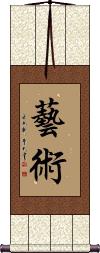
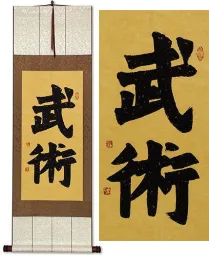
藝術 is a Chinese, Japanese, and old Korean Hanja word that means art, as in fine art, the arts, or artwork.
In Chinese, 美容 is the title for the art of beauty, as applying makeup or cosmetics to enhance beauty.
Note: In Japanese and Korean, this takes the meaning of beautiful face or beauty of figure or form. Be sure you know who your audience is and have matched the desired meaning.
慈悲の心 means benevolent heart, compassionate heart, or merciful heart in Japanese.
This is a Japanese-only phrase and should be ordered from our Japanese master calligrapher. This is because the third character is unique Hiragana.
Chances are you are into Inuyasha and are seeking the title of chapter 471 which is often translated as “Merciful Heart.”
身土不二 (Shindofuni) is originally a Buddhist concept or proverb referring to the inseparability of body-mind and geographical circumstances.
This reads, “Body [and] earth [are] not two.”
Other translations or matching ideas include:
Body and land are one.
Body and earth can not be separated.
Body earth sensory curation.
You are what you eat.
Indivisibility of the body and the land (because the body is made from food and food is made from the land).
Going further, this speaks of our human bodies and the land from which we get our food being closely connected. This phrase is often used when talking about natural and organic vegetables coming directly from the farm to provide the healthiest foods in Japan.
Character notes: 身(shin) in this context does not just mean your physical body but a concept including both body and mind.
土 (do) refers to the soil, earth, clay, land, or in some cases, locality. It's not the proper name of Earth, the planet. However, it can refer to the land or realm we live in.
Japanese note: This has been used in Japan, on and off, since 1907 as a slogan for a governmental healthy eating campaign (usually pronounced as shindofuji instead of the original shindofuni in this context). It may have been hijacked from Buddhism for this propaganda purpose, but at least this is “healthy propaganda.”
Korean note: The phrase 身土不二 was in use by 1610 A.D. in Korea, where it can be found in an early medical journal.
In modern South Korea, it's written in Hangul as 신토불이. Korea used Chinese characters (same source as Japanese Kanji) as their only written standard form of the language until about a hundred years ago. Therefore, many Koreans will recognize this as a native phrase and concept.
See Also: Strength and Love in Unity
In Chinese, this can mean losing one's love; to breaking up (in a romantic relationship); to feel jilted.
In Japanese Kanji, this means disappointing love, broken heart, unrequited love, or being lovelorn.
失戀 is also valid in old Korean Hanja, which means unrequited love, unreturned love, a disappointment in love, or a broken heart.
Note: In modern Japan, they will tend to write the more simple 失恋 form instead of 失戀. If you order this from the Japanese master calligrapher, expect the more simple modern version to be written (unless you give us instructions to use the older or more traditional version).
佛心 means the Buddha's mind, Buddha-heart, or the spiritually enlightened heart/mind.
The Buddha Heart is detached from good and evil and other such constructs. The Buddha Heart has mercy, compassion, and loving-kindness for all sentient life, the good, the wicked, and all in between.
The heart and mind (心) are the same concepts in the ancient Orient, so you can use heart and mind interchangeably in this context.
Also: Clean / Innocent / Pure
純潔 is associated with “chastity” but with the direct meaning of clean, innocent, and pure.
If you were expressing the idea of a “pure heart” in Chinese, while not literal, this would be the word you would use.
In Japanese, this word is sometimes used to express purity.
In Korean, it describes purity, chastity, virginity, and innocence (basically the same as the Chinese definition).
信心 is a Chinese, Japanese, and Korean word that means confidence, faith, or belief in somebody or something.
The first character means faith, and the second can mean heart or soul. Therefore, you could say this means “faithful heart” or “faithful soul.”
In Korean especially, this word has a religious connotation.
In the old Japanese Buddhist context, this was a word for citta-prasāda (clear or pure heart-mind).
In modern Japan (when read by non-Buddhists), this word is usually understood as “faith,” “belief,” or “devotion.”
See Also: Self-Confidence
道場 is the Japanese term for a room or hall in which martial arts are taught.
道場 is often spelled “dojo” which has become a word in the English lexicon. However, the true Romaji is doujou or dōjō.
Please note: The Chinese definition of these characters is quite different. In Chinese, this is a place where Buddhist or Taoist mass is held. It could also be a place where spiritual or psychic events are performed.
地球 is the name of the earth (our planet) in Chinese, old Korean Hanja and Japanese Kanji.
If you love the earth, or want to be reminded of where your home is in the solar system, this is the wall scroll for you.
(One of the five elements)
土 is earth, soil, ground, or Terra.
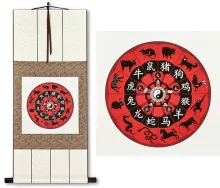
Earth is one of the five elements that ancient Chinese believed all things were composed of. These elements are also part of the cycle of Chinese astrology. Every person has both an animal sign, and one of the five elements according to the date of their birth.
See Also: Five Elements | Chinese Zodiac
(Used in Japanese version of five elements)
地 is the single-character element and title of the planet Earth in Chinese, old Korean Hanja, and Japanese Kanji.
Because this is a single character, the definition is a little ambiguous and can have many meanings depending on the context in which it is used. These meanings include: earth, ground, land, soil, dirt, place, territory, bottom (of a package, book, etc.), earth (one of the Japanese five elements), the region in question, the local area, skin, texture, fabric, material, weave, base, background, one's true nature, narrative (i.e. descriptive part of a story), real life, actuality, etc.
In Japanese, this Kanji can be pronounced several ways, including chi, ji, tsushi, or tsuchi.
地 is also an element of the Japanese version of the five elements (the original Chinese version uses a different version of earth).
熱心 literally means “warm-hearted” (can also mean warm-spirited or warm-souled).
This is one of a few ways to say Enthusiasm in Chinese, Japanese Kanji, and old Korean Hanja.
熱心 is also used to express the ideas of earnestness or eagerness.
Can mean “zeal” in Japanese.
永駐我心 is one of a few ways to write “always in my heart” or “forever in my heart” in Chinese.
The first character means eternal, forever, or always.
The second character means resides, in, or stationed (in the case of troops).
The third character means me, my, or mine.
The last character means heart (but can also mean mind or soul).
All of our calligraphy wall scrolls are handmade.
When the calligrapher finishes creating your artwork, it is taken to my art mounting workshop in Beijing where a wall scroll is made by hand from a combination of silk, rice paper, and wood.
After we create your wall scroll, it takes at least two weeks for air mail delivery from Beijing to you.
Allow a few weeks for delivery. Rush service speeds it up by a week or two for $10!
When you select your calligraphy, you'll be taken to another page where you can choose various custom options.
The wall scroll that Sandy is holding in this picture is a "large size"
single-character wall scroll.
We also offer custom wall scrolls in small, medium, and an even-larger jumbo size.
Professional calligraphers are getting to be hard to find these days.
Instead of drawing characters by hand, the new generation in China merely type roman letters into their computer keyboards and pick the character that they want from a list that pops up.
There is some fear that true Chinese calligraphy may become a lost art in the coming years. Many art institutes in China are now promoting calligraphy programs in hopes of keeping this unique form
of art alive.
Even with the teachings of a top-ranked calligrapher in China, my calligraphy will never be good enough to sell. I will leave that to the experts.
The same calligrapher who gave me those lessons also attracted a crowd of thousands and a TV crew as he created characters over 6-feet high. He happens to be ranked as one of the top 100 calligraphers in all of China. He is also one of very few that would actually attempt such a feat.
Some people may refer to this entry as Art Kanji, Art Characters, Art in Mandarin Chinese, Art Characters, Art in Chinese Writing, Art in Japanese Writing, Art in Asian Writing, Art Ideograms, Chinese Art symbols, Art Hieroglyphics, Art Glyphs, Art in Chinese Letters, Art Hanzi, Art in Japanese Kanji, Art Pictograms, Art in the Chinese Written-Language, or Art in the Japanese Written-Language.